







South Africa
“No Amount of Political Education Can Cure Narcissism”: Floyd Shivambu Exposes the Cracks in the EFF, Zuma’s MK Party and South Africa’s Political System
From EFF co-founder to MK Party insider and Afrika Mayibuye leader, Floyd Shivambu makes explosive claims about corruption, leadership and South Africa’s political future. But can he escape his own political history?


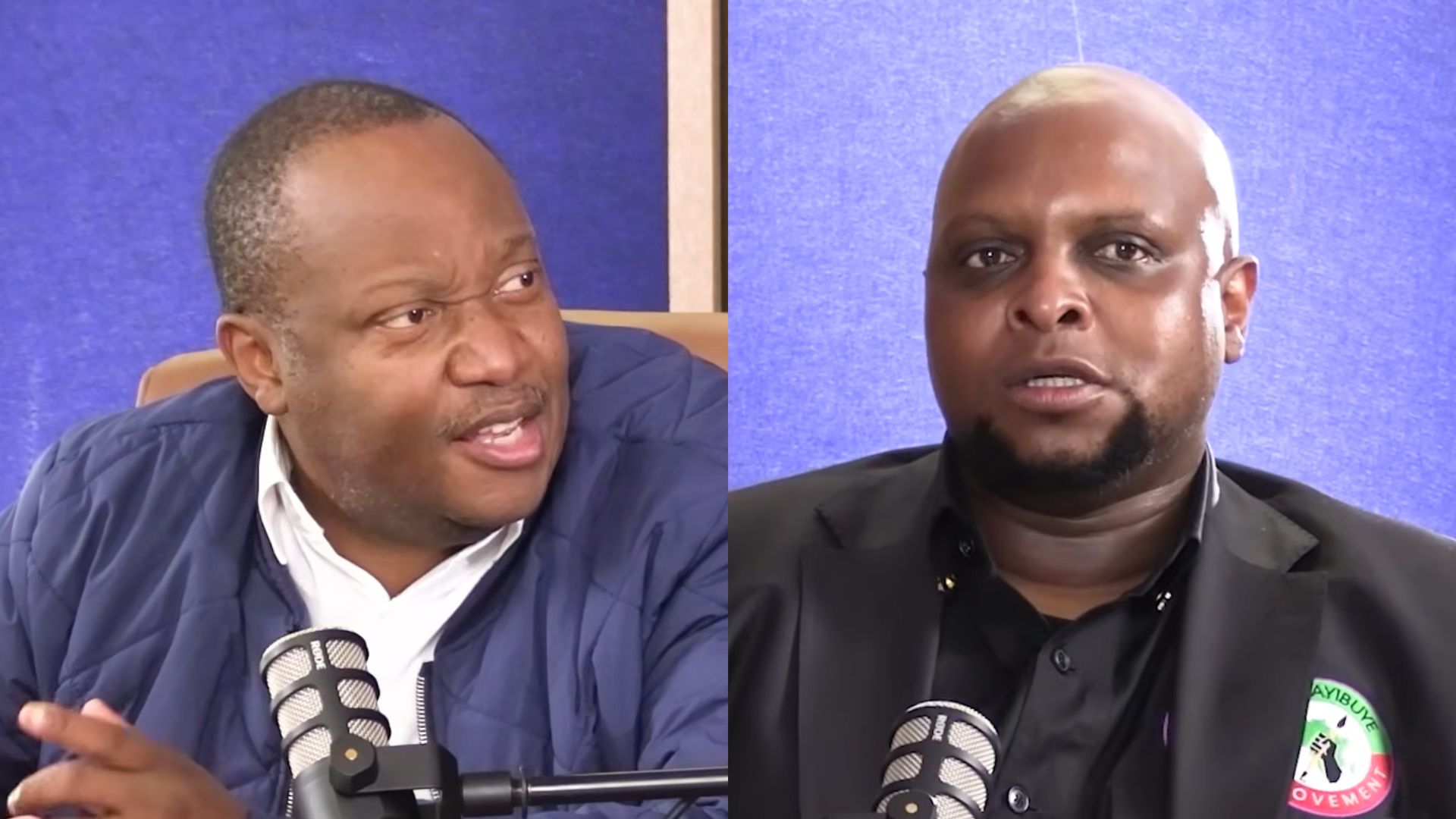
From helping build the Economic Freedom Fighters to serving in Jacob Zuma’s MK Party and launching Afrika Mayibuye, Floyd Shivambu has travelled through three political formations promising to transform South Africa. Now he is making explosive allegations about tender politics, leadership egos and betrayal. But the most uncomfortable question is whether the man who helped build these movements can convince voters that his fourth political chapter will be any different.


There is something unusually revealing about a political insider who has spent years defending an organisation, only to emerge later and explain why he believes it became everything it promised to fight.
Floyd Shivambu is no ordinary defector. He was among the architects of the Economic Freedom Fighters, served as its deputy president, became a senior official of former president Jacob Zuma’s uMkhonto weSizwe Party and now leads the Afrika Mayibuye Movement.
He has stood close to political power without quite securing the executive authority he says is needed to transform South Africa.
And in a lengthy interview on Frank Dialogue with JJ Tabane, in partnership with Sunday World, Shivambu offered a devastating assessment of the institutions and political leaders he once helped promote.
His central accusation was that revolutionary politics had become contaminated by personal ambition and tender interests.
His explanation for leaving the EFF was particularly striking:
“I think the reason is because the people that I was working with refused to grow.”
Then came the remark likely to dominate headlines:
“There’s no amount of political education and conscientisation that can cure narcissism.”
Shivambu went further, alleging that some political figures publicly denounced corruption while privately participating in networks connected to government contracts.
He did not establish those allegations with documentary evidence during the interview, and they should not be treated as findings of criminal wrongdoing. Nevertheless, they raise questions about a political culture in which ideological language and access to public resources can become dangerously intertwined.
The interview was also a test of Shivambu himself.
After all, he was not an outsider observing these developments. He was a senior participant in the systems he now condemns.
That tension is what makes his political reinvention important.
And potentially problematic.
The EFF: Who Really Built the Red Berets?
One of the first disputes to surface was over the origins of the Economic Freedom Fighters.
Shivambu challenged a competing account of the party’s founding, arguing that the intellectual foundations of the movement preceded its formal establishment in 2013.
He pointed to a political document he had presented at the ANC Youth League’s 2011 national congress, a Clarion Call to All Economic Freedom Fighters, which, according to his account, already contained much of the ideological architecture that would later inform the EFF.
He also referenced the 2014 book The Coming Revolution, published by Jacana, as a contemporaneous account of the movement’s emergence.
The distinction matters because the EFF was not simply a political response to the expulsion of Julius Malema and his allies from the ANC.
Shivambu argues that its central doctrine had already begun taking shape inside the ANC Youth League.
That doctrine was straightforward: political liberation without economic transformation was incomplete.
The seven cardinal pillars became a defining feature of the EFF’s programme, including land expropriation without compensation, nationalisation of strategic sectors, stronger state capacity, free education, industrial development and action against corruption.
But Shivambu now suggests those pillars were insufficient.
He says that the EFF focused heavily on changing economic ownership while failing to develop a sufficiently comprehensive understanding of cultural emancipation, identity and decolonisation.
This is the ideological foundation on which he hopes to distinguish his new movement.
Whether it amounts to a genuinely different political philosophy, rather than a broader description of familiar demands, remains open to debate.
From Economic Freedom to Total Freedom
Shivambu’s proposed distinction between the EFF and Afrika Mayibuye is encapsulated in two political formulations.
The EFF promised economic freedom in our lifetime.
Afrika Mayibuye promises total freedom and emancipation now.
According to Shivambu, South Africa’s colonial and apartheid history cannot be understood solely through land ownership and income inequality.
Colonial domination also affected languages, cultural practices, identity, social structures and the relationship between African communities and their traditional institutions.
For that reason, he argues that genuine liberation must encompass political, economic, social and cultural freedom.
The argument is compelling in one important respect: economic empowerment does not automatically resolve the psychological or cultural consequences of generations of domination.
But it also invites a difficult question.
What does total freedom mean in practical government policy?
Can it be measured?
Does it require constitutional amendments, cultural programmes, educational reform, land redistribution or all of these?
And how does a government balance cultural recognition with constitutional rights, particularly the rights of women and people who do not follow traditional institutions?
The challenge for Mayibuye will be to translate its broad ideological language into precise and affordable policy choices.
A slogan may inspire a movement.
It cannot, by itself, deliver clean water.
The Tender System: Shivambu’s Most Serious Allegations
The most consequential section of the interview was not about political theory.
It was about money.
More specifically, money flowing through the government procurement system.
Shivambu argued that one of the EFF’s original commitments was to build state capacity and progressively eliminate reliance on outsourced government services.
He said that, over time, he encountered individuals whose political conduct seemed inconsistent with that objective.
Some, he alleged, were interested in maintaining tender opportunities even while the party publicly opposed the tender system.
He described disagreements over municipal outsourcing, including security services, cleaning contracts and sanitation projects.
One anecdote was particularly disturbing.
Shivambu alleged that someone resisted the removal of bucket toilets because their family’s livelihood depended on the associated contracting opportunities.
He presented the encounter as evidence of what happens when public suffering becomes a source of private financial benefit.
If accurately described, the example illustrates a profound conflict of interest: a commercial incentive to preserve the very conditions politicians are elected to eliminate.
But the interview did not identify the individual or provide the contract records needed to independently establish the allegation.
The wider principle, however, deserves serious consideration.
A municipality does not fulfil its constitutional responsibility merely by awarding a contract.
It fulfils that responsibility when residents receive the service for which public money was allocated.
If a municipality pays millions for infrastructure that breaks down within months, procurement compliance alone is not proof of good governance.
Equally, abolishing tenders is not automatically a solution. Public procurement can provide transparent, competitive access to goods and expertise that the state does not possess internally.
The real question is whether government has the expertise, systems and political will to decide which services should be delivered directly and which should be competitively purchased.
Shivambu’s position is to rebuild the state’s capacity to perform far more of those functions itself.
His critics are entitled to ask how quickly that can happen, what it will cost and how he would prevent corruption from simply moving from private contractors into government departments.
The VBS Question That Refuses to Disappear
The interview also returned to the collapse of VBS Mutual Bank.
For years, allegations surrounding VBS have followed Shivambu, his brother Brian Shivambu and senior EFF figures.
During the conversation, Tabane asked whether Shivambu could have handled the controversy differently.
Shivambu maintained that his brother had received loans from the bank and rejected suggestions that he had personally arranged improper payments.
He also suggested that the intense focus on EFF-linked allegations was politically motivated, connecting it to disputes involving the South African Revenue Service and former public enterprises minister Pravin Gordhan.
Those are Shivambu’s interpretations, not established explanations for the VBS investigations.
The controversy cannot responsibly be reduced to irregular lending practices or dismissed solely as a political campaign.
Former VBS chairman Tshifhiwa Matodzi has made allegations about payments allegedly intended to benefit the EFF, including through a company associated with Brian Shivambu. These allegations have been publicly disputed, and they do not by themselves establish Floyd Shivambu’s criminal guilt.

sundaytimes.timeslive.co.za
There is a distinction between allegations, evidence presented in proceedings and criminal findings against specific people.
That distinction is essential.
Shivambu is entitled to contest accusations made against him.
The public is equally entitled to expect a clear accounting of relevant transactions and relationships, especially from a politician presenting himself as a champion of clean government.
The VBS affair also highlights a larger democratic problem.
When political movements become closely identified with individual leaders, scrutiny of those leaders can be framed as an attack on the entire movement.
That makes accountability more difficult precisely when it is most necessary.
Jacob Zuma’s Leadership: Loyalty Without Security
If Shivambu’s assessment of the EFF was severe, his reflections on the MK Party were equally revealing.
He described former president Jacob Zuma as a leader who frequently changes senior officials.
Shivambu suggested that this was not an occasional reaction to extraordinary circumstances, but a characteristic of Zuma’s leadership style.
He recounted instances in which, according to his account, Zuma wanted certain officials removed and Shivambu opposed the decisions.
He said he eventually became a casualty of the same approach.
His broader argument was that political organisations cannot develop stable institutions when leadership appointments and dismissals depend excessively on the preferences of one individual.
The remarks carry weight because Shivambu had previously occupied a central organisational role inside the MK Party.
But they also raise an obvious question.
Why did he believe he could institutionalise a movement built around Zuma’s personal political authority when other participants had struggled to do so?
Shivambu argues that he entered the MK Party out of respect for its substantial electoral mandate and sought to strengthen the organisation from within.
In an earlier interview, he similarly alleged that Zuma feared his popularity within the party might threaten Zuma’s leadership.
sundaytimes.timeslive.co.za
That account remains Shivambu’s, rather than an independently established explanation for his departure.
His most provocative reflection was directed at family-centred politics.
“I don’t think families can lead a revolution.”
It was a striking observation from someone who had spent time inside a movement closely associated with the Zuma name.
In South Africa, as elsewhere, political families can preserve important historical legacies.
But the legitimacy of public office cannot be inherited.
It must be earned through democratic processes and sustained through accountability.
Why Shivambu Says Parliament Is Failing South Africans
One of the interview’s most sweeping claims concerned Parliament.
After spending approximately a decade as a member of the National Assembly, Shivambu described the institution as ineffective and excessively subordinate to the executive.
He portrayed many parliamentarians as representatives who follow party instructions rather than exercise meaningful independent judgment.
He also argued that Parliament has inadequate power to reshape government budgets.
Here, an important factual correction is necessary.
South Africa’s Parliament does have the constitutional and statutory authority to amend money bills, through procedures established under the Money Bills Amendment Procedure and Related Matters Act.
Parliament itself confirms that this power exists.
Parliament of South Africa
+2
It is also incorrect to suggest that Parliament cannot initiate legislation generally. The National Assembly can initiate or prepare legislation, subject to specific constitutional restrictions, including the introduction of money bills.
South African Government
Shivambu’s underlying criticism nevertheless raises a separate and legitimate question.
How effectively are these powers exercised?
Does party discipline undermine parliamentary independence?
Are oversight committees sufficiently resourced?
And do public representatives have the expertise to scrutinise complex budgets, municipal finances and infrastructure projects?
Shivambu argued that political parties often place inexperienced representatives in councils and legislatures without adequately preparing them for governance.
That criticism deserves attention.
Winning an election does not automatically equip someone to manage a municipal budget, interpret procurement regulations or supervise public infrastructure delivery.
Representative democracy requires political legitimacy.
Effective government also requires administrative competence.
South Africa’s challenge is ensuring both exist in the same institutions.
A New Coalition Formula: Let the Biggest Parties Govern
Shivambu also proposed a different approach to coalition politics.
He criticised arrangements in which very small parties become executive mayors or occupy powerful positions because larger parties cannot agree among themselves.
In his view, such arrangements can create weak leadership, fragmented accountability and unstable municipal government.
Instead, he argued that parties receiving significant electoral support should participate in government in a manner reflecting their mandates.
He even indicated that Afrika Mayibuye would be prepared to work with parties including the ANC, DA, EFF and MK where voters had given those parties substantial representation.
This is politically significant.
It suggests that Mayibuye does not intend to build its identity around permanent hostility towards rival parties.
But coalition inclusion cannot be based solely on vote share.
There are genuine differences among parties on economic policy, constitutional interpretation, immigration, property rights and public administration.
A functioning coalition requires agreement on how government will operate, not simply agreement that everyone should receive a position.
Shivambu’s model would therefore require clear rules for collective decision-making, budget responsibility and dispute resolution.
Otherwise, broad inclusion could produce exactly the instability he hopes to eliminate.
Land, Traditional Leaders and a Different Approach to Rural Development
On land reform, Shivambu reaffirmed his commitment to redistribution and the principle of expropriation without compensation.
But he placed greater emphasis than before on the role of traditional and royal leaders in land administration.
He argued that post-apartheid planning arrangements had sometimes reduced the authority of traditional institutions when rural areas were incorporated into modern municipal planning systems.
In particular, he criticised conflicts between traditional authorities and Communal Property Associations.
His concern was that parallel institutions could claim authority over the same land, creating disputes over ownership, development and revenue.
Importantly, Shivambu acknowledged that traditional administration must not become an excuse for discrimination.
He specifically recognised concerns about women being denied access to land and about the allocation of the same land to multiple beneficiaries.
That qualification matters.
Traditional leadership, communal rights and democratic government do not have to be enemies.
But collaboration between them needs clear rules, legally secure tenure, meaningful community consent, transparent revenue management and equal protection under the law.
The test for Mayibuye will be whether it can design such a framework.
It is one thing to promise to restore the dignity of traditional institutions.
It is another to ensure that ordinary rural residents, particularly women and younger people, retain enforceable rights over the land on which their livelihoods depend.
The Chinese Agricultural Lesson: A Rejection of Compulsory Collectivism
Another distinctive moment came when Shivambu criticised the idea that agricultural development should necessarily be organised through collective cooperatives.
Drawing on China’s agricultural reforms, he argued that productivity improved when households gained clearer responsibility for individual plots and the benefits of their labour.
He contrasted that model with collectivised arrangements in which incentives and accountability could become diluted.
The historical comparison has substance.
China’s household responsibility reforms contributed significantly to agricultural productivity gains after the late 1970s.
But Shivambu’s suggestion that cooperatives have never succeeded is too sweeping.
Agricultural cooperatives operate successfully in many countries, including South Africa, often providing shared storage, marketing, finance, processing and access to markets.
Indeed, Shivambu himself referred to established agricultural organisations in discussing potential partnerships.
The more useful distinction is between compulsory collective production without effective incentives and voluntary cooperation among independently accountable producers.
Small farmers may benefit from managing their own land while jointly purchasing inputs, sharing machinery or selling produce through collective marketing arrangements.
That is not a contradiction.
It can be an effective development model.
Shivambu said Mayibuye had approached agricultural businesses and buyers, including Freshmark, about helping small-scale farmers access sustainable supply chains.
The proposals suggest an interest in shifting political activism beyond speeches towards practical economic participation.
But public announcements about partnerships must ultimately be judged by their results: how many farmers gained contracts, how much produce reached markets and whether household incomes improved.
Afrika Mayibuye: Another Political Party, or a Different Political Model?


The question running through the entire interview was whether South Africa needs another political party.
Shivambu’s answer was that the ANC had failed to deliver comprehensive liberation and that some of the movements created as alternatives had begun reproducing the same weaknesses.
He argued that Mayibuye should become a liberation movement for the 21st century, rather than merely another election machine.
The movement’s stated ambitions include restoring state capacity, transforming land ownership, improving municipal services, expanding agriculture, strengthening cultural identity and fighting corruption.
Its 2026 municipal election manifesto has placed particular emphasis on jobs, water, service delivery and replacing excessive reliance on outsourced municipal functions.
Mzansi Political Safari
+1
The party’s official manifesto is also publicly available through its official website.

Manifesto Launch
In the interview, Shivambu described community programmes he said the movement had already initiated, including agricultural support, healthcare outreach and initiatives addressing gender-based violence.
These are potentially meaningful activities, but the interview did not provide sufficient independent evidence to evaluate their scale, funding or impact.
The distinction between programme announcements and verified outcomes remains important.
Shivambu also argued that new political movements must pay attention to constituencies frequently neglected by mainstream politics, including religious communities and traditional institutions.
He identified major African-initiated churches and rural communities as groups whose social influence is not always reflected in political debate.
That argument challenges parties to look beyond social media visibility and urban political discourse.
But it must not become an assumption that religious communities vote as unified blocs or that their leaders speak for every congregant.
Political engagement with faith communities should broaden democratic participation, not replace individual political choice with institutional endorsements.
The Voters Who Have Stopped Believing
Perhaps the most important warning in the interview concerned declining confidence in political institutions.
Shivambu referred to surveys indicating extremely low public trust in politicians and highlighted the large number of eligible South Africans who did not vote in the 2024 national election.
He presented political disengagement as evidence that established parties were failing to convince citizens that democracy could improve their lives.
The precise trust percentages he quoted should be checked against the survey’s original questions, methodology and population before being treated as definitive.
The underlying concern, however, is difficult to ignore.
Citizens do not disengage from elections only because they lack political education.
Some disengage because they perceive little connection between election promises and everyday improvements.
For a household without reliable water, electricity or employment, political competition may appear distant from the problems that matter most.
Shivambu’s proposed answer is material delivery.
Not more slogans.
Not more political merchandise.
Not more expensive rallies.
He described a campaign operating with limited resources and argued that the movement should prioritise its message and grassroots organisation over lavish events.
That claim will itself be tested as the organisation grows.
Small parties may campaign differently because they have little money.
The challenge is whether their financial discipline survives once they gain access to public funding, municipal influence and government power.
The Question Shivambu Cannot Escape: Why Didn’t You Change Things Earlier?
The interview’s most important challenge came from political commentator Tessa Dooms.
She confronted Shivambu with the contradiction at the heart of his argument.
He now condemns the political system, its organisational failures and its compromised leadership.
Yet he spent years helping to operate that system.
If parties placed inadequate scrutiny on their leaders, he was among their senior leaders.
If Parliament became ineffective, he served in Parliament.
If political organisations became too dependent on dominant personalities, he helped build and defend some of those organisations.
If public trust in politicians deteriorated, his own political career unfolded during that deterioration.
Shivambu responded that his political positions were documented and that he had consistently opposed tender dependency and other practices he considered harmful.
He also denied personally participating in government tender businesses.
Those are relevant responses.
But consistency in public speeches is only one measure of leadership.
Another is what a leader did when those principles were challenged inside an organisation.
Did he demand independent investigations?
Did he use his authority to establish enforceable safeguards?
Did he oppose questionable appointments?
Did he speak publicly when internal remedies failed?
And if he knew that organisational conduct conflicted with stated principles, how long did he continue defending it?
These questions matter because Mayibuye is asking voters to make a distinction between the new movement and the established political figures now leading it.
That distinction has to be demonstrated through transparent governance, not simply asserted.
Can Mayibuye Actually Win?
Shivambu made a bold prediction in the closing minutes of the conversation.
He expected Afrika Mayibuye to secure representation across the municipalities it contests and said the party would win some municipalities outright.
He went further, predicting that Mayibuye would be among a small number of parties capable of winning outright municipal majorities.
These were campaign forecasts, not established electoral outcomes.
For a relatively new political organisation, the ambitions are considerable.
Candidate coverage demonstrates organisational effort, but it does not establish voter support.
Similarly, political visibility does not necessarily translate into electoral strength.
Shivambu’s personal recognition may help a new party attract attention, but local elections are frequently determined by practical issues: credible ward candidates, reliable branch structures, community relationships, campaign logistics and trust in local leadership.
His prediction will ultimately be tested at the ballot box.
One potential advantage is that Mayibuye may attract voters disillusioned with the ANC, EFF and MK Party.
A possible disadvantage is that voters may see the movement as another home for politicians who have repeatedly changed organisations.
The party must therefore answer a simple question.
Why should South Africans expect a different outcome from leaders whose political histories are so closely connected to the organisations they now criticise?
A Wider African Lesson: Revolutions Must Survive Their Leaders
Although the interview centred on South Africa, its themes resonate beyond the country’s borders.
Across the continent, political movements have emerged promising liberation, economic sovereignty, social justice and the removal of corruption.
Many were born in genuine struggle.
Some delivered important gains.
Others eventually developed the same concentration of power, patronage networks and intolerance of criticism that they had originally opposed.
Zimbabweans will recognise aspects of this political cycle, although the histories and institutions of Zimbabwe and South Africa differ substantially.
The deeper question is how liberation movements transform themselves into accountable governing institutions.
A movement can be extraordinarily effective at mobilising people against injustice yet much less effective at administering schools, hospitals, municipalities and public finances.
It can be disciplined in opposition but become vulnerable to factionalism and patronage once it controls resources.
And leaders who are celebrated for their courage in confronting an old political order can become difficult to question when they acquire power themselves.
That is why institutional safeguards matter more than personal declarations of revolutionary commitment.
A political organisation should not need a heroic leader to prevent corruption.
It should have financial controls, independent oversight, transparent appointments, internal democracy and mechanisms for removing leaders who violate its rules.
Those safeguards are essential whether the party calls itself revolutionary, progressive, nationalist, liberal or socialist.
iniAfrica Analysis: The Most Important Story Is Not Shivambu’s Departure. It Is His Admission.
Floyd Shivambu’s interview was rich in political allegations, ideological arguments and personal reflections.
But one idea deserves to outlast the immediate headlines.
A political movement can lose its moral direction long before it loses an election.
It happens when loyalty becomes more important than accountability.
When the defence of a leader becomes more important than the defence of a principle.
When public contracts become instruments of political influence.
When revolutionary language is used to justify conduct that would have been condemned in political opponents.
And when citizens are asked to keep believing in promises despite worsening evidence from their daily lives.
Shivambu says he now recognises these dangers.
His former political colleagues may dispute both his account of events and his interpretation of their motives.
Voters should hear those competing accounts and judge them against independently established evidence.
But Shivambu has also placed himself under a stricter standard.
Having publicly criticised the failures of organisations he helped lead, he cannot reasonably expect Mayibuye to be judged only by its promises.
Its finances must be transparent.
Its leaders must be accountable.
Its local candidates must be credible.
Its agricultural and healthcare programmes must produce measurable outcomes.
Its approach to traditional leadership must protect constitutional rights.
And its opposition to tender-related corruption must survive the moment it controls real municipal budgets.
For all the interview’s attacks on Julius Malema, Jacob Zuma and the political establishment, perhaps its deepest lesson came from Shivambu’s own closing reflection:
“Politics must also involve admission when you make mistakes.”
That is a principle every political leader should be prepared to embrace.
Including Shivambu.
Because the future of South African politics will not be determined solely by who can describe the failures of the past most convincingly.
It will be determined by who can build institutions that do not repeat them.
The real test of Afrika Mayibuye is not whether Floyd Shivambu can explain why the ANC, EFF and MK Party disappointed him. It is whether he can create a political organisation that will one day survive scrutiny of its own conduct.
And for South Africa, that is the difference between another political reinvention and meaningful democratic renewal.













You must be logged in to post a comment Login