








South Africa
Sibiya Is Out. But Who Is Protecting Whom? The Explosive Recording Shaking South Africa’s Police Establishment
Shadrack Sibiya has resigned from SAPS, but an explosive recording played in court has raised fresh questions about Serge Cabonge, Cat Matlala, alleged police intermediaries and possible influence surrounding the Madlanga Commission. iniAfrica examines what is known, what remains unproven and why South Africa needs answers.


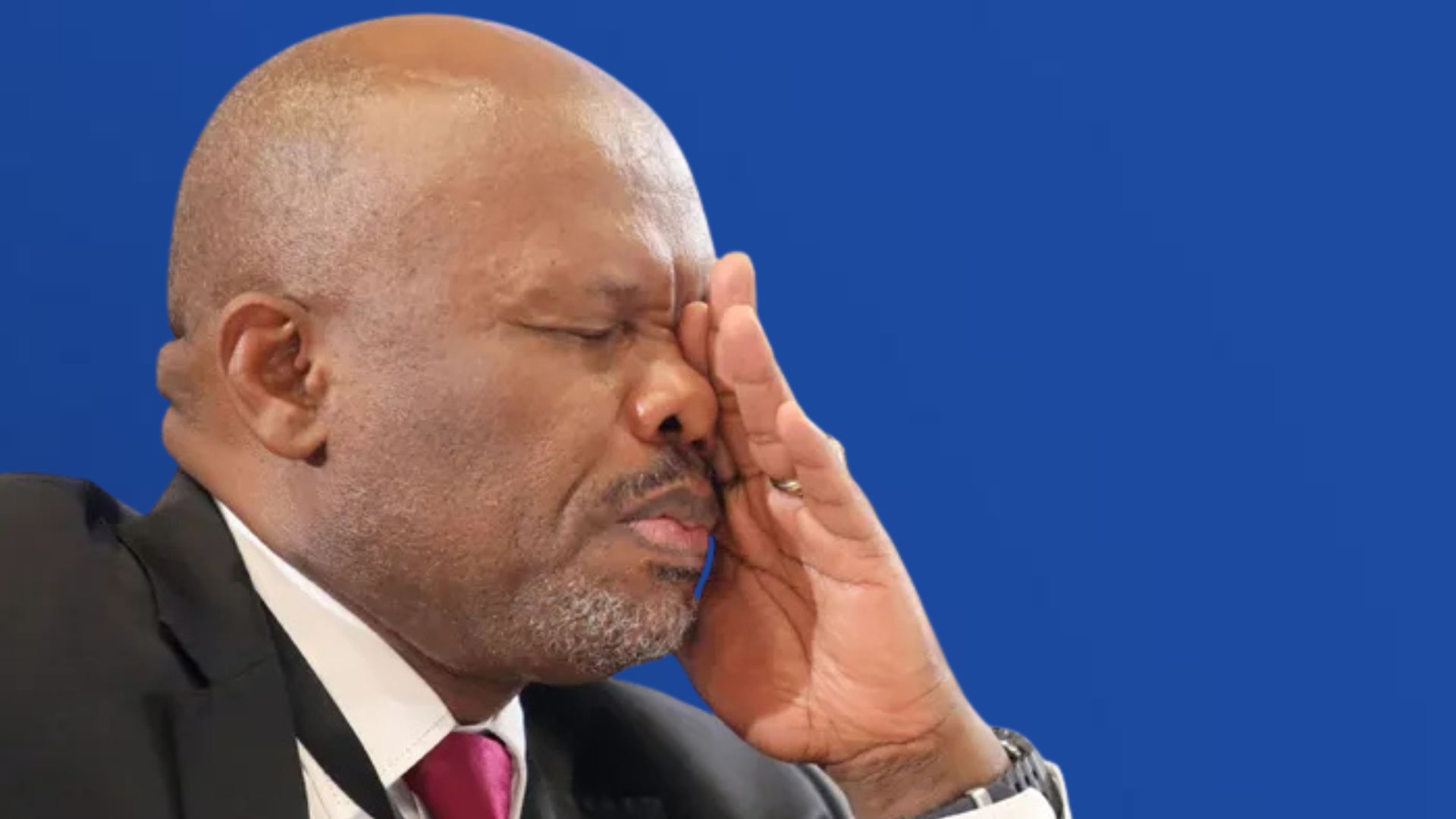
From alleged secret deals and police middlemen to extraordinary claims involving the Madlanga Commission, a courtroom recording raises questions that South Africa cannot afford to ignore.
South Africa has heard many extraordinary stories about corruption, political influence and the criminal underworld. But every so often, a story emerges that forces the country to confront a more disturbing possibility: what happens when the people responsible for investigating wrongdoing become entangled in allegations of influence and protection themselves?
The latest controversy surrounding former deputy national police commissioner Shadrack Sibiya raises precisely that question.
According to reports described in the proceedings, Sibiya’s employment with the South African Police Service ended on 12 October 2026, following his resignation during disciplinary proceedings. The timing was extraordinary. As one chapter of his policing career came to an end, criminal proceedings continued to expose allegations reaching well beyond one former senior officer.
At the centre of the latest controversy is an approximately 25-minute recording reportedly played during his bail hearing at the Randburg Magistrate’s Court.
The recording, presented in a dispute over alleged threats and witness interference, contains claims about relationships between influential figures, alleged financial dealings, intermediaries, intimidation and possible influence connected to the Madlanga Commission.
The allegations are serious. Their implications, if independently substantiated, would be profound.
But there is an essential distinction that must not disappear in the excitement surrounding this case: a recording containing allegations is not proof that those allegations are true.
What it does provide is a series of questions that investigators, prosecutors and oversight institutions may need to answer.
1. The fall of a senior police official
Shadrack Sibiya’s departure from SAPS is more than a personnel matter.
Senior police officials occupy positions of considerable public trust. Their authority gives them access to sensitive investigations, operational intelligence, criminal networks and the machinery of law enforcement.
When someone at that level faces serious criminal allegations, the consequences extend beyond the individual.
According to the supplied account of the court proceedings, Sibiya faces allegations involving sexual offences, trafficking and a firearms-related charge. The allegations include the alleged grooming of a 16-year-old and alleged rape involving an 18-year-old woman.
Sibiya denies the criminal allegations.
The charges remain subject to judicial determination, and the presumption of innocence applies.
The bail proceedings have also examined concerns about possible witness interference, including competing accounts of threats and intimidation.
One particularly important figure is a man identified as Mr M, reportedly the father of the teenage complainant.
His relationship with Sibiya, his communications with Sibiya’s wife and his claims about possessing information concerning alleged wrongdoing have become contested issues.
The defence has questioned his credibility and characterised certain communications as threatening. The prosecution has advanced its own concerns about Sibiya’s conduct.
It was against this backdrop that the disputed recording entered the courtroom.
And that recording introduced another name into the story: Serge Cabonge.
2. Serge Cabonge: the businessman whose words are now under scrutiny


Serge Cabonge has long occupied an unusual position in South Africa’s public imagination.
Known for his flamboyant lifestyle and the nickname international blesser, he became a recognisable personality through media appearances, luxury entertainment and high-profile social connections.
His public associations have attracted attention over several years. However, knowing influential people is not itself evidence of criminal conduct.
The significance of Cabonge’s appearance in the Sibiya proceedings lies not in his celebrity lifestyle but in what he reportedly said during a recorded conversation with Mr M.
SABC News and the Mail & Guardian independently reported that the recording was played in court on 13 October. The conversation addressed alleged dealings involving Sibiya, businessman Vusimuzi “Cat” Matlala and people said to have acted as intermediaries.
The recording also raises a question about Cabonge’s own role.
Was he merely acquainted with powerful figures? Was he involved in facilitating introductions? Did he possess firsthand knowledge of financial transactions? Or was he repeating information obtained from other people?
These possibilities must not be confused.
For investigators, the challenge is to establish which parts of the recording are firsthand observations, which are hearsay and which can be corroborated through independent evidence.
3. Cat Matlala, Sibiya and the alleged network of middlemen
One of the most consequential claims concerns the relationship between Sibiya and Vusimuzi “Cat” Matlala.
Matlala’s name has repeatedly surfaced in allegations examined by the Madlanga Commission, particularly concerning possible relationships between alleged criminal networks and members of law enforcement.
Sibiya has previously denied receiving improper benefits from Matlala.
But according to Eyewitness News, the recording played in court contains Cabonge’s claim that Sibiya regularly received money from Matlala.
The recording also introduces the question of intermediaries.
Fannie Nkosi: the alleged intermediary
IOL reported that Cabonge identified suspended police Sergeant Fannie Nkosi as an alleged middleman between Matlala and Sibiya.
Cabonge reportedly denied acting as the intermediary himself.
This distinction matters because an alleged network of influence does not necessarily operate through direct payments between two principal figures.
An intermediary might introduce people, arrange meetings, deliver messages or facilitate transactions.
None of those activities necessarily proves corruption. However, where improper payments are alleged, the identity and role of intermediaries become critical investigative questions.
A credible investigation would seek independent evidence such as financial records, communications, lawful location data, contemporaneous messages and testimony from people with direct knowledge.
The essential question is not simply who knew whom. It is whether any relationship was used to obtain an unlawful benefit or influence an official decision.
4. Morgan Maumela: why another powerful name matters
Another name reportedly mentioned in the recording is Hangwani Morgan Maumela.
Maumela has been implicated in investigations and public controversy concerning procurement at Tembisa Hospital.
Inside Politics reported that the recording referred to Maumela alongside claims about money and connections involving other businessmen.
That reference is significant enough to investigate, but it does not establish Maumela’s participation in the alleged dealings discussed by Cabonge.
It is especially important to distinguish the allegations concerning Tembisa Hospital procurement from the separate claims involving Sibiya and Matlala.
An individual’s appearance in two public controversies does not automatically establish that the controversies are connected.
The proper investigative question is whether there are identifiable transactions, communications or decisions linking the people and events.
Without such evidence, the association remains a lead rather than a conclusion.
5. The Madlanga Commission allegation that demands scrutiny

Proceedings of the Madlanga Commission, established to examine allegations of criminality, corruption and political interference in South Africa’s criminal justice system.
Perhaps the most alarming section of the recording concerns a person allegedly connected to the Madlanga Commission.
According to reporting by the Sowetan on 13 October, Cabonge described having helped a family connected to someone he characterised as sitting at the front of the commission.
His account concerned an earlier road incident allegedly involving a young woman and a vehicle collision.
Cabonge claimed that he contacted someone he knew in policing, and that charges were subsequently withdrawn. He also reportedly described an expectation of gratitude arising from his intervention.
These claims introduce two separate issues.
The first concerns the alleged handling of the earlier criminal matter. If a prosecution was improperly influenced, that would warrant examination of the original case records and the reasons for its outcome.
The second concerns the suggestion that Cabonge’s previous assistance somehow affected his exposure to the Madlanga Commission.
That is a much more serious allegation, but it is also one requiring considerably stronger evidence.
There is presently no established finding in the reporting reviewed that a commissioner, judge or other official deliberately suppressed evidence, prevented Cabonge from testifying or traded protection for a favour.
The public must not confuse Cabonge’s account of an alleged favour with proof of interference in the commission.
Nevertheless, the account presents legitimate questions:
- Did the earlier road incident occur as described, and what happened to the case?
- Was any police officer improperly approached or influenced?
- Who was the person Cabonge claimed to have assisted?
- Was Cabonge ever formally identified as a potential witness before the commission?
- Is there evidence that anyone sought to influence whether he would testify?
The answers should come from independently verifiable records, not speculation or social-media identification campaigns.
A judicial commission investigating corruption must itself be capable of addressing credible concerns about its independence.
That principle applies regardless of the standing of the person making an allegation.
6. A recording that was supposed to help the defence
There is a remarkable procedural irony in this story.
According to the supplied account, Sibiya’s defence introduced the recording while challenging the conduct of Mr M and the interpretation of communications sent to Sibiya’s wife.
The defence’s argument concerned whether Mr M’s messages were threatening.
The prosecution, however, considered the contents relevant to the wider bail dispute, including concerns about witness interference and Sibiya’s associations.
The magistrate heard the recording as part of the proceedings.
This does not mean the court accepted Cabonge’s allegations as true.
It means that material introduced for one purpose also raised questions relevant to other arguments.
Bail hearings are not criminal trials. Their immediate purpose is to determine whether an accused person should be released pending trial, subject to the applicable legal requirements.
The court may consider matters such as the seriousness of the charges, risks to witnesses, the possibility of interference with evidence and whether release would undermine the administration of justice.
Those considerations do not amount to a finding of guilt.
7. The witness-interference question cannot be overlooked
Behind the allegations about police corruption is another deeply serious issue: the safety of complainants and witnesses.
Mr M, the father of the teenage complainant, has reportedly alleged intimidation.
The Citizen reported on 13 October that he described alleged threats against his family in a statement considered during the bail proceedings.
The defence disputes aspects of the allegations and has advanced its own account of communications involving Mr M.
These competing versions require careful judicial assessment.
A witness’s credibility cannot be determined simply by the number of recordings they possess, the powerful people they know or the accusations made against them.
Equally, accusations of witness intimidation cannot be dismissed merely because the witness has a complicated relationship with the accused.
Where minors and sexual-offence complainants are involved, protecting their identities and preventing further harm are essential.
The wider public-interest controversy must never become an excuse to expose or intimidate complainants.
8. Why this controversy reaches beyond South Africa
For readers in Zimbabwe and across the continent, the significance of this case extends beyond the personalities involved.
Southern Africa’s economies, borders, financial systems and law-enforcement institutions are deeply interconnected.
Organised criminal activity can exploit gaps between jurisdictions, while corruption within one institution can weaken cooperation across the region.
This does not mean that the Sibiya case has established a cross-border criminal conspiracy. It has not.
Rather, the allegations illustrate why institutional independence, transparent procurement, witness protection and credible anti-corruption investigations matter throughout the region.
Zimbabweans, South Africans and other African citizens share a legitimate interest in law-enforcement systems that operate according to evidence rather than wealth, personal access or political influence.
A police officer’s badge must not become a commercial asset.
A prosecutor’s decision must not be available to the highest bidder.
And a judicial inquiry must be able to investigate powerful individuals without fear or favour.
These are democratic principles, not conclusions about any particular accused person.
9. The unanswered questions: what investigators must establish
INIAFRICA INVESTIGATIVE FRAMEWORK
From allegations to evidence
Five lines of inquiry arising from the reported recording
01 The money trail
Can alleged payments be corroborated by financial records, witnesses or other lawful evidence?
02 The intermediaries
What role, if any, did Fannie Nkosi or other named individuals play in communications or transactions?
03 The commission allegation
Is there any documentary evidence that a witness was discouraged, excluded or protected through improper influence?
04 The earlier criminal case
Can the alleged road incident and withdrawal of charges be independently verified?
05 Witness protection
Were threats made, by whom, and what safeguards are needed for complainants and witnesses?
These questions are not accusations of guilt. They represent reasonable avenues of inquiry arising from information placed in the public domain.
The people named in the recording must be afforded an opportunity to respond, and investigators must assess their explanations alongside independent evidence.
10. Resignation is not accountability
Sibiya’s resignation on 12 October marks the end of his SAPS employment.
SAPS characterised his departure as dishonourable because he resigned while disciplinary proceedings were pending. However, the resignation does not itself establish the truth of the disciplinary allegations, nor does it resolve the separate criminal proceedings.
That distinction matters.
An institution may remove or lose a senior official without resolving the underlying allegations that prompted scrutiny.
If the allegations are false, the individuals concerned deserve a fair process capable of establishing that.
If evidence establishes criminal conduct, accountability should follow the law, irrespective of rank or influence.
And if investigators uncover wrongdoing by additional individuals, their positions or connections should not shield them from lawful investigation.
The integrity of the criminal justice system depends on all three principles.
11. The iniAfrica perspective: who investigates the investigators?
The most unsettling aspect of the Sibiya controversy is not the celebrity connection, the luxury lifestyle or even the extraordinary claims circulating around the recording.
It is the possibility that the public may lose confidence in the independence of the very institutions established to investigate powerful people.
The Madlanga Commission exists in a climate of serious concern about alleged corruption and interference in policing.
Its credibility depends on rigorous evidence, procedural fairness and the willingness to investigate credible allegations without selectively protecting or targeting individuals.
Cabonge’s reported statements deserve examination, but not automatic acceptance.
Sibiya’s resignation deserves scrutiny, but not a presumption of criminal guilt.
The complainants deserve protection, and their allegations deserve a fair hearing.
The same standard must apply to every person named in the controversy.
A country does not defeat corruption by replacing evidence with rumour. It defeats corruption by ensuring that even the most powerful people are subject to an independent and functioning justice system.
Conclusion: the uniform is gone, but the questions remain
Shadrack Sibiya is no longer a member of the South African Police Service.
That much is established.
The recording played in court has also placed additional allegations into public view.
But the existence of a recording does not answer whether money changed hands, whether intermediaries facilitated wrongdoing, whether any criminal investigation was improperly influenced or whether anyone connected to the Madlanga Commission acted improperly.
Those questions remain to be investigated and, where appropriate, tested in court.
For South Africans, Zimbabweans and everyone concerned about the future of accountable government in Africa, the lesson is straightforward.
Institutions must be stronger than the individuals who occupy them.
Justice must not depend on personal connections.
And the truth must be established through evidence, not intimidation, influence or public spectacle.
Sibiya may be out of SAPS. But South Africa still needs answers.
This article is based on the supplied recording transcript and contemporaneous reporting available on 13 October 2026. Allegations remain unproven unless established through appropriate legal proceedings. The transcript contains apparent transcription errors; disputed passages have been paraphrased rather than presented as verified verbatim quotations.

















You must be logged in to post a comment Login