









Business & Economy
From Investment Pledges to Real Impact: Gauteng’s Ambition for Africa’s Economic Future


On 9 April 2026, I had the privilege of attending the Gauteng Investment Conference, an important platform for discussions around investment, industrialisation and economic growth. The conversations highlighted a central challenge facing South Africa: moving beyond investment commitments to deliver tangible economic outcomes.

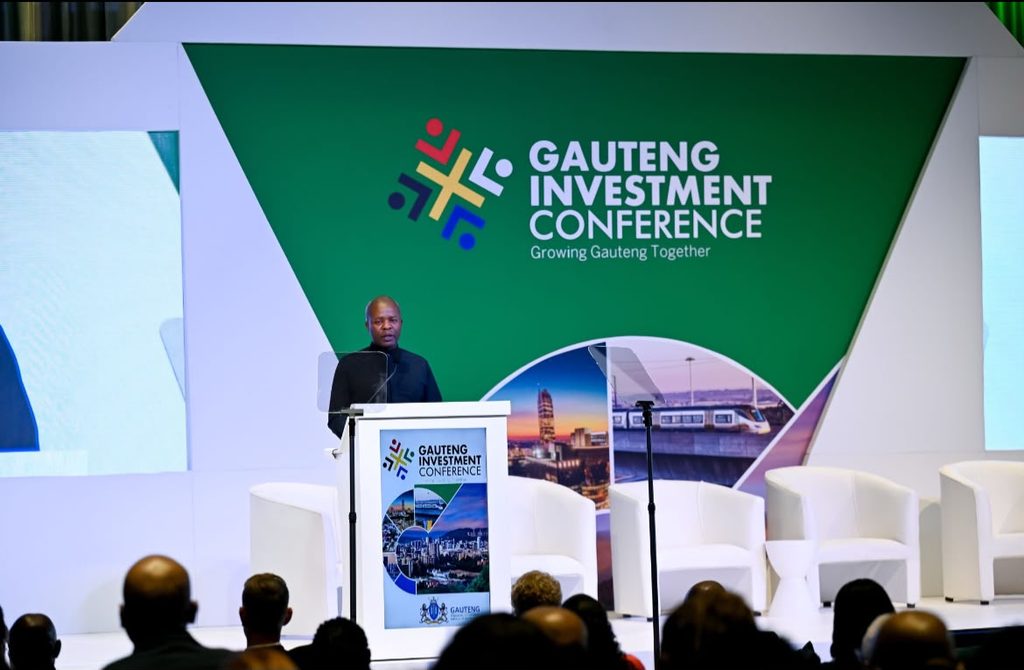
Gauteng MEC: Lebogang Maile
Addressing the conference, Gauteng MEC Lebogang Maile emphasised a shift from mobilising investment to institutionalising it. Following R312.5 billion in investment pledges at the inaugural 2025 conference, Gauteng’s focus is increasingly on implementation, with a target of mobilising at least R200 billion in new commitments in 2026.
For me, attending engagements like this is an opportunity to understand how investment decisions, government priorities and international partnerships shape the environment in which entrepreneurs build their businesses.
From Commitments to Implementation
One of the strongest messages from the conference was that investment success cannot be measured by announcements alone.
Commitments must translate into infrastructure, manufacturing capacity, energy security and employment opportunities. This requires more than attracting investors; it requires an effective system to move projects from preparation and financing through to implementation.
The conference highlighted the importance of coordinating government institutions, preparing investment-ready projects and supporting investors throughout the investment lifecycle.
As global competition for capital intensifies, credibility, governance and execution are essential. Investors need confidence that projects can progress beyond the announcement stage and deliver sustainable returns.
This is particularly relevant for South Africa, where infrastructure constraints and energy challenges continue to influence the cost and competitiveness of doing business.
Re-Industrialising Africa’s Gateway
Under the theme Re-Industrialising Africa’s Gateway: Investment, Innovation and Integrated Growth, the conference placed industrial development at the centre of Gauteng’s economic ambitions.
Priority sectors included advanced manufacturing, logistics and transport infrastructure, digital infrastructure, renewable energy, green hydrogen, agro-processing and the creative economy.
These sectors demonstrate that investment is not limited to traditional industries. It also involves preparing economies for technological change, emerging markets and evolving global supply chains.

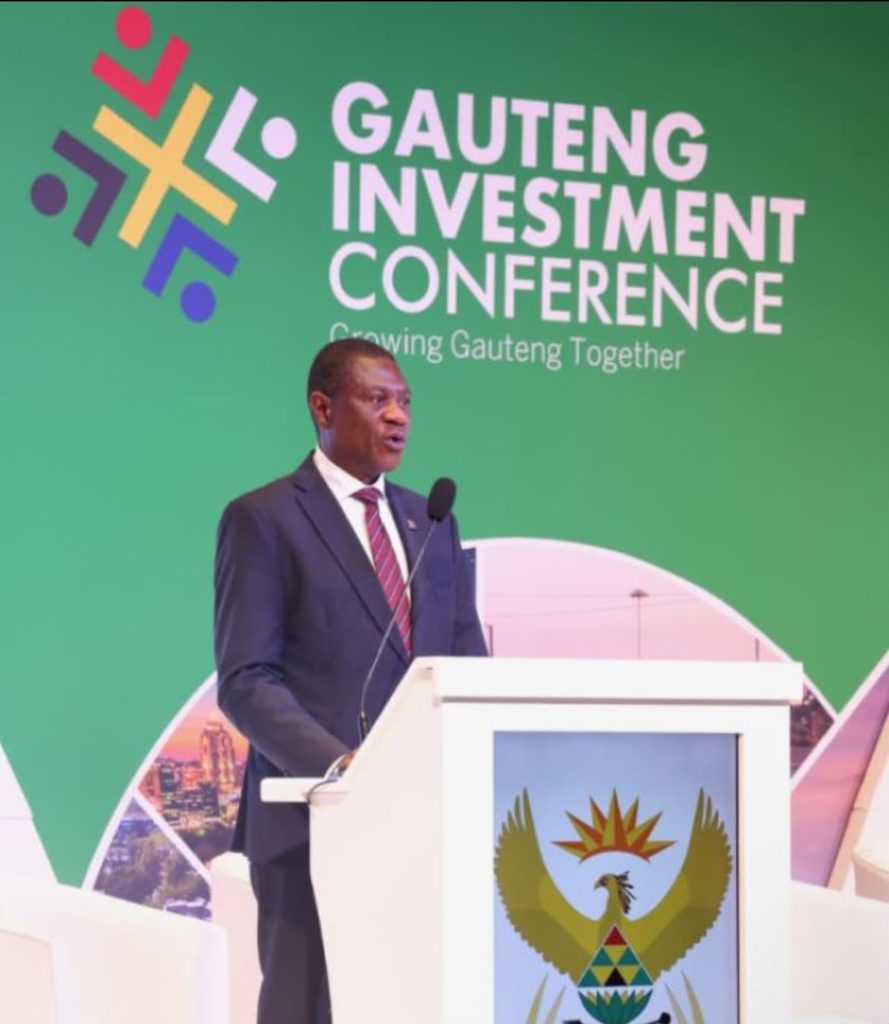
Deputy President Paul Mashatile
The Deputy President, Paul Mashatile, reinforced this message in his address, emphasising that investment commitments must ultimately translate into factories, infrastructure, expanded energy capacity and jobs.
His remarks highlighted the relationship between national investment ambitions and provincial implementation, with Gauteng positioned as a key platform for translating commitments into economic activity.
It is also important to distinguish this provincial engagement from the South Africa Investment Conference, which took place on 31 March 2026. Together, the two conferences reflected the relationship between national investment mobilisation and Gauteng’s role in implementing projects and connecting South Africa to wider markets.
Connecting Gauteng to the African Market
Another important dimension is regional integration.
Through the African Continental Free Trade Area (AfCFTA), African countries have an opportunity to strengthen regional value chains, expand trade and create new markets for businesses.
Gauteng’s established financial, industrial and logistics networks position the province to play an important role in connecting businesses with opportunities across the continent.
As someone interested in international business and building connections between markets such as China and South Africa, I recognise the importance of understanding these developments.
For entrepreneurs, access to markets is only one part of the equation. Businesses also need reliable logistics, competitive production costs, suitable financing and partnerships that support expansion.
Investment in infrastructure and industrial capacity can help create the conditions that allow businesses to participate more meaningfully in regional and international trade.

Why Young Entrepreneurs Should Pay Attention
It can be easy for young entrepreneurs to view investment conferences as spaces reserved for government officials, large corporations and established investors. However, the decisions discussed in these rooms can influence the opportunities available to small and medium-sized enterprises.
Industrial growth can create demand for local suppliers, service providers, technology businesses and emerging manufacturers. Stronger infrastructure and regional trade connections can also help smaller businesses explore markets beyond their immediate communities.
The challenge is ensuring that these opportunities become accessible to entrepreneurs rather than remaining concentrated among established players.
This is why collaboration between government and the private sector matters. Integrating small businesses into supply chains, supporting skills development and improving access to markets must form part of a broader approach to inclusive growth.
As the Founder and CEO of SHE FITS, I am continuing to learn how wider economic developments can inform the long-term growth of a South African business.
Measuring Progress by What We Build
My key reflection from the conference was that economic ambition must be matched by implementation.
Investment pledges establish possibilities, but their real significance lies in what follows: businesses established, infrastructure delivered, industries strengthened and employment opportunities created.
Gauteng’s ambition to position itself as a gateway to African markets will depend on the effectiveness of its institutions, the strength of its partnerships and its ability to convert investment opportunities into measurable results.
For young entrepreneurs, understanding these conversations is part of preparing to participate in the economy we want to build.
As I continue my journey, I remain interested in the intersection of entrepreneurship, investment and international trade, particularly in how these areas can create opportunities for young people and businesses across Africa.
Because the future of economic growth will not be defined by the promises we make but by the opportunities we create and the results we deliver.
About the Author
Isabela Pereira is a South African entrepreneur, speaker and Founder & CEO of SHE FITS, a women’s activewear and wellness business. She was recognised among the Mail & Guardian 200 Young South Africans 2026 in the Entrepreneurship category.
Her interests span entrepreneurship, women’s economic empowerment, youth development, regional trade, international business and community building. Through her entrepreneurial journey, she is passionate about creating connections that open pathways to opportunity for young people and women across Africa and beyond.

















You must be logged in to post a comment Login