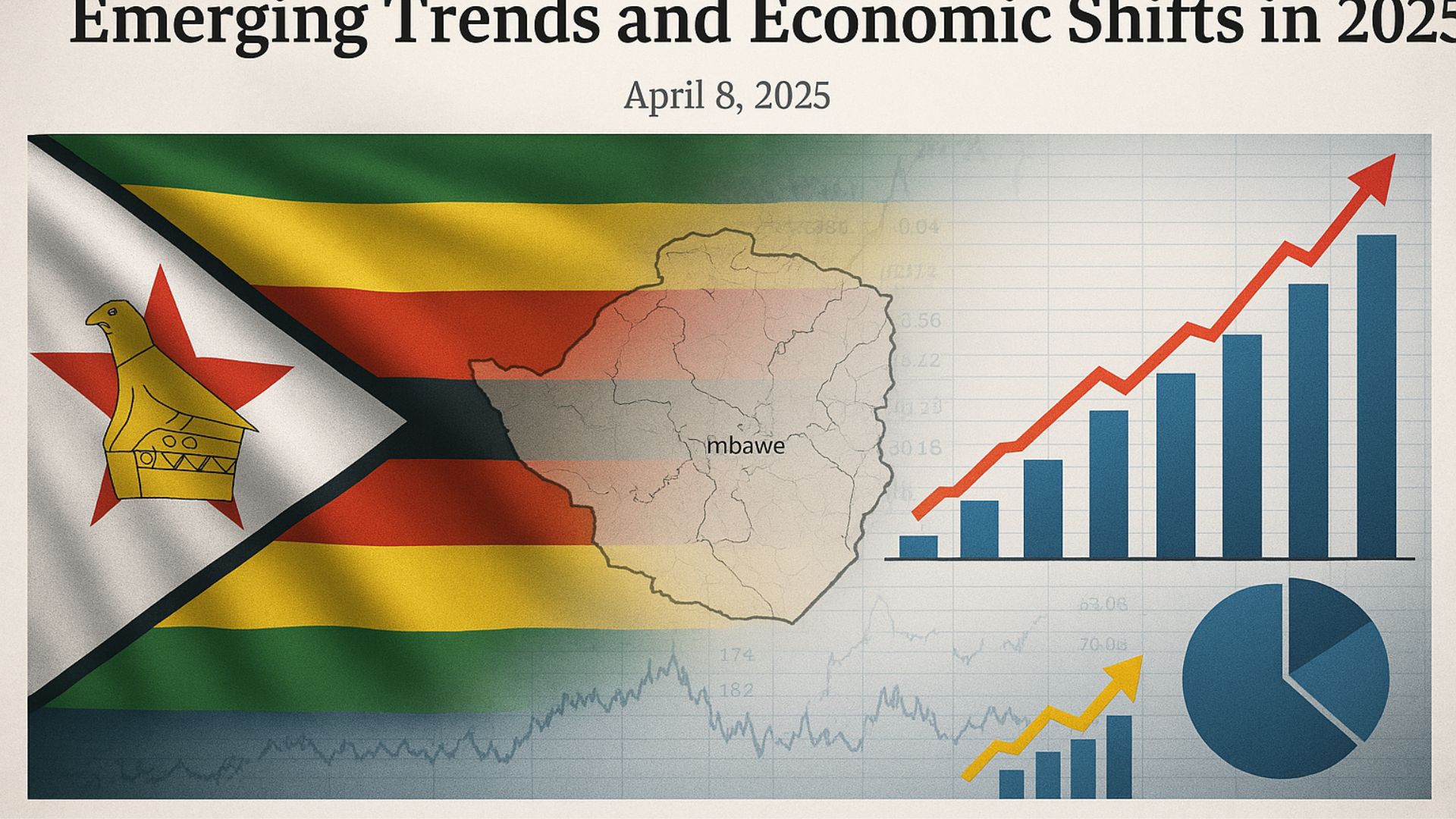
April 8, 2025 – Zimbabwe’s business and economy sector is undergoing a dynamic transformation, as revealed by an analysis of the 30 latest stories in the Business & Economy section. From investment recalibrations to corporate exits and startup resilience, these developments signal both challenges and opportunities in a market grappling with macroeconomic instability, policy shifts, and regional disruptions. This article explores the key trends, economic indicators, and high-impact moves shaping Zimbabwe’s economic narrative today.
Investment Patterns: A Shift Toward Caution and Selective Growth
Zimbabwe’s investment climate is marked by a cautious retreat of multinational corporations juxtaposed against selective growth in resilient sectors. Over the past 24 months, major players like Standard Chartered, Lafarge (Holcim), Deloitte, and Nampak have exited or scaled back operations, citing macroeconomic volatility, currency instability, and a challenging regulatory environment. This exodus reflects a broader trend of foreign direct investment (FDI) hesitancy, with the country’s persistent foreign exchange shortages and a 98% depreciation of the Zimbabwe dollar (ZWL) against the U.S. dollar since 2020 deterring profit repatriation. Posts on X echo this sentiment, highlighting Truworths’ collapse as a casualty of these conditions.
Yet, pockets of optimism persist. The mining sector, buoyed by Zimbabwe’s vast lithium reserves, has attracted over $1 billion, predominantly from Chinese conglomerates, signaling a shift toward resource-driven investment. The government’s ambitious $12 billion mining target by 2023 may have fallen short, but renewed calls for renewable energy investment—supported by tax holidays on solar equipment—suggest a pivot toward sustainable sectors. The European Investment Bank’s €40 million injection into Zimbabwean banks in the past year further underscores selective confidence in financial infrastructure, aimed at bailing out struggling firms.
Corporate Shifts: Consolidation and Strategic Retreats
Corporate maneuvers in Zimbabwe reveal a landscape of consolidation and strategic exits. Proplastics Limited’s CEO Kudakwashe Leo Chigiya resigned effective March 19, 2025, amid plans to bolster manufacturing capacity, while Ariston Holdings reported high production costs squeezing its agro-operations. These moves reflect a broader trend of companies streamlining leadership and operations to weather economic headwinds like inflation—projected at 24.9% for 2024 by the African Development Bank—and power shortages disrupting industrial output.
Conversely, high-impact moves signal resilience. AfDIS completed a $1 million cider plant expansion, and Nestlé Zimbabwe is fostering agribusiness innovation, tapping into export markets despite domestic challenges. Varun Beverages’ expansion drive and Lafarge’s planned capacity doubling post-commissioning of a new plant highlight a trend of strategic investment in consumer goods and construction, sectors buoyed by urban demand and infrastructure needs. However, Delta Corporation’s 4% decline in lager volumes underscores how inflation and currency volatility dampen consumer spending, forcing firms to adapt or retreat.
Startup Innovation: Resilience Amid Adversity
Zimbabwe’s startup ecosystem is a bright spot, driven by digitalization and necessity-born innovation. With a 42% internet penetration rate and 96% of formal transactions via digital payments (2022 data), startups are leveraging technology to bypass traditional barriers. The informal economy’s growth—fueled by macroeconomic instability—has birthed agile enterprises, particularly in fintech and agriculture. The Zimbabwe Women’s Microfinance Bank, launched in 2018, continues to empower marginalized women with affordable credit, while the Construction Industry and Pension Fund’s stalled $14 million Norton project hints at untapped potential in real estate innovation if funding stabilizes.
The anticipated entry of global satellite internet providers like Starlink, as reported by Business Times, could revolutionize connectivity, lowering mobile data costs—among Southern Africa’s highest—and unlocking e-commerce and tech startup growth. This aligns with a regional trend of digital disruption, though Zimbabwe’s regulatory hurdles and forex constraints remain bottlenecks.
Key Economic Indicators: A Fragile Recovery
Economic indicators paint a mixed picture. Real GDP growth slowed from 6.1% in 2022 to 5.0% in 2023, with a projected drop to 2% in 2024 due to El Niño-induced droughts and declining mining prices. Unemployment hovers at 21%, and poverty affects 38.7% of the population (2023 estimates), reflecting structural stagnation. The financial sector remains robust—capital adequacy at 33% and liquidity at 60%—but the ZWL’s 89.8% depreciation in 2023 and a parallel market premium erode confidence. The Reserve Bank of Zimbabwe (RBZ)’s retention of 50% USD export earnings continues to frustrate exporters, acting as a de facto tax amid a yawning trade deficit, though October’s deficit narrowed by 37%.
High-Impact Business Moves and Regional Disruptions
High-impact moves are reshaping Zimbabwe’s market. The government’s bailout of Hwange Colliery and the National Railways of Zimbabwe (NRZ)’s $1 million property revenue target signal state-led efforts to revive key industries. Meanwhile, the Zimbabwe Stock Exchange (ZSE) oscillates—market capitalization hit $10.1 billion recently, buoyed by blue-chip trades in Delta and Innscor—yet policy inconsistency undermines long-term gains.
Regionally, Trump’s 2025 tariffs—18% on Zimbabwean exports, with Lesotho facing 50%—threaten SADC cohesion. Zimbabwe’s unilateral suspension of U.S. import tariffs, a bid to curry favor with the incoming U.S. administration, risks alienating peers like South Africa, which absorbs $111.6 million in Zimbabwean trade annually. This could disrupt regional markets, exacerbate Zimbabwe’s isolation, and amplify economic pressures if retaliatory measures emerge.
Zimbabwe’s business and economy landscape in 2025 is a tale of resilience amid adversity. Investment trends favor resource and renewable sectors, but corporate exits highlight systemic risks. Startups thrive on innovation, yet economic indicators flag fragility. High-impact moves and regional tariff wars add complexity, demanding adaptive strategies from businesses and policymakers alike. As Zimbabwe eyes an IMF Staff Monitored Program in mid-2025, its ability to balance reform with stability will determine whether these emerging trends herald growth or further disruption.