







South Africa
He Resigned Before He Could Be Questioned: Shadrack Sibiya’s Exit Raises a Bigger Question About Accountability in South Africa’s Police
Shadrack Sibiya resigned just as his disciplinary hearing began. SAPS calls it a dishonourable discharge, but his criminal case continues and questions about police accountability remain.


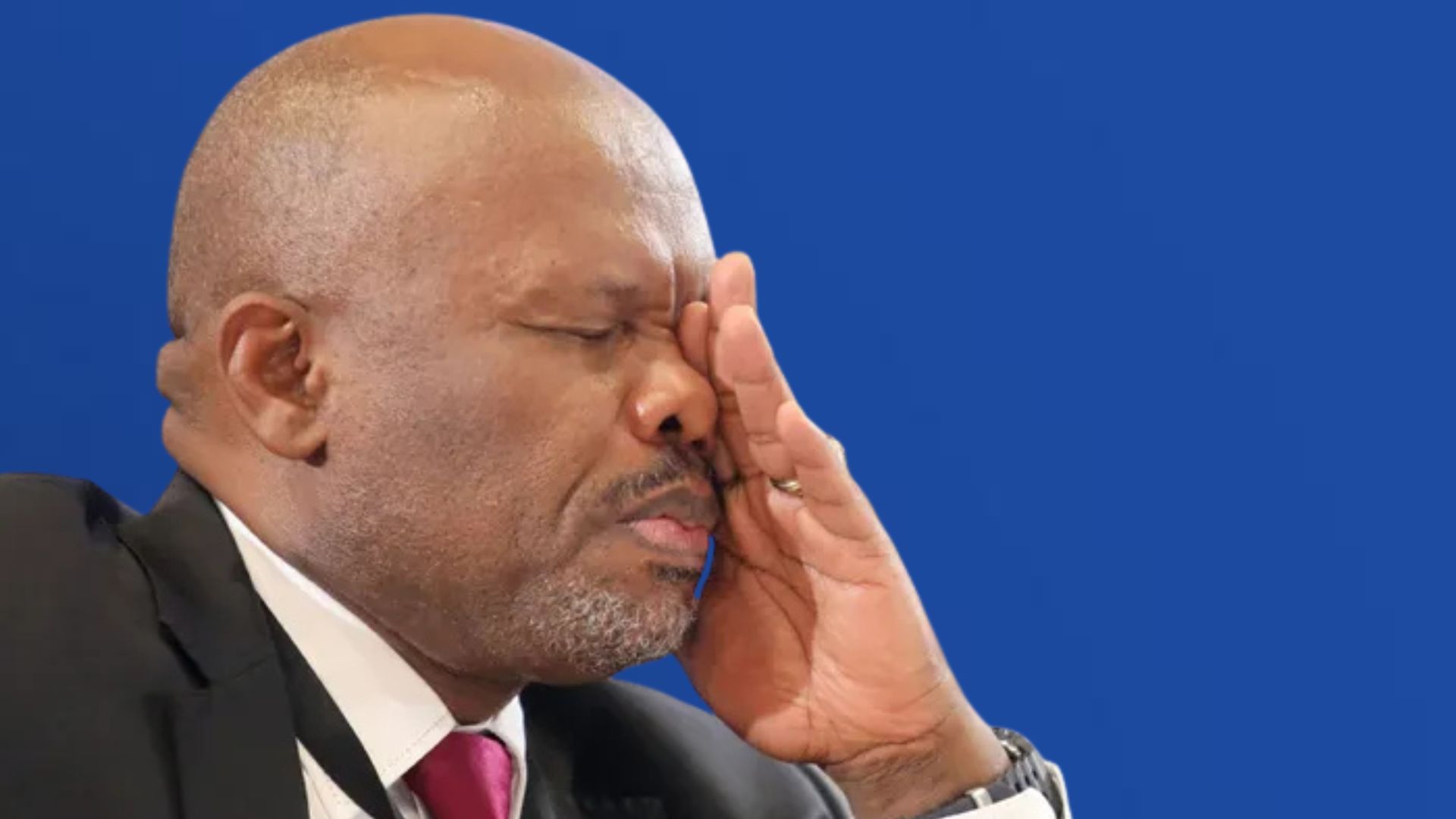
Suspended Deputy National Police Commissioner Shadrack Sibiya has resigned just as his disciplinary hearing began. The South African Police Service calls his departure a dishonourable discharge. But with serious criminal charges still before the courts and allegations of police corruption under scrutiny, the central question is whether leaving office should also mean escaping an internal reckoning.


By iniAfrica Investigations Desk
JOHANNESBURG, SOUTH AFRICA — On Monday morning, 12 October 2026, one of South Africa’s most senior police officers was expected to answer allegations of misconduct within the institution he had spent decades serving.
Instead, his lawyer submitted his resignation.
And just like that, Lieutenant-General Shadrack Sibiya was no longer a member of the South African Police Service.
The resignation came immediately after disciplinary proceedings commenced, before the hearing could run its course.
The SAPS confirmed that Sibiya’s employment had ended with immediate effect and classified his departure as a dishonourable discharge, rather than an ordinary resignation.

sabcnews.com
+1
But this is not merely the story of a senior police officer leaving his job.
It is a story about the limits of internal discipline, the integrity of South Africa’s law-enforcement institutions and the uncomfortable possibility that an official may leave public service before an employer formally determines whether serious misconduct occurred.
More importantly, Sibiya’s resignation takes place while he is separately fighting criminal allegations involving rape, sexual grooming of a child and human trafficking.
He denies the criminal allegations.
No criminal conviction has been established by the developments reported on 12 October.
Yet his sudden departure raises a question that reaches beyond his personal circumstances:
If a senior official resigns before a disciplinary investigation reaches its conclusion, who ensures that the public receives the answers it deserves?
The Resignation That Brought the Disciplinary Hearing to an End
Sibiya was serving as Deputy National Commissioner for Crime Detection, one of the most influential positions within South Africa’s policing establishment.
His internal disciplinary proceedings followed allegations of corruption, improper associations and interference in police investigations that had featured before the Madlanga Commission of Inquiry.
The disciplinary process was supposed to examine his conduct and determine whether it violated the standards required of a senior police officer.
Instead, the hearing took an unexpected turn.
According to the official SAPS statement, Sibiya’s legal representative tendered his resignation immediately after proceedings began.
Police subsequently confirmed that he was no longer an employee.
Acting National Police Commissioner Puleng Dimpane explained that the disciplinary process could not continue in its ordinary employment form because Sibiya was no longer a police member.
sabcnews.com
+1
That distinction is important.
Sibiya was not reported to have been found guilty at the disciplinary hearing.
Nor did the hearing reach a completed decision on the allegations against him.
His departure was classified as dishonourable because of the circumstances in which he resigned, not because the reported hearing had established every allegation.
The difference matters for both due process and public accountability.
What Does a Dishonourable Discharge Actually Mean?
The phrase dishonourable discharge sounds like a punishment.
It suggests that an institution is formally distancing itself from a departing officer whose conduct is under serious scrutiny.
In this case, SAPS has made clear that Sibiya’s exit is not being treated as a routine resignation.
The classification reflects the fact that disciplinary proceedings were already underway.
But the public should not confuse that administrative classification with a criminal conviction or a completed disciplinary finding.
Reporting on the decision indicates that the circumstances of his departure may have implications for employment-related entitlements, although any specific financial consequences would depend on the applicable legal and pension rules.

ewn.co.za
+1
The larger issue is whether the classification is sufficient.
A dishonourable exit may communicate institutional disapproval.
It does not, by itself, establish what happened in relation to the allegations being investigated.
It does not replace a criminal investigation.
And it does not provide the public with a detailed account of whether police systems, confidential information or investigations were improperly compromised.
Those questions remain.
The Madlanga Commission: Allegations That Go Beyond One Officer
To understand why Sibiya’s departure matters, one must examine the wider allegations under investigation by the Madlanga Commission of Inquiry.
The commission was established amid serious concerns about alleged corruption, political interference and the influence of suspected criminal networks within law-enforcement institutions.
Sibiya became one of the senior officers whose conduct attracted scrutiny.
Among the matters raised were allegations concerning the KwaZulu-Natal Political Killings Task Team, the handling of sensitive investigation files and suspected relationships between senior police officials and controversial business figures.
Particular attention focused on 121 investigation dockets connected to the Political Killings Task Team.
Questions were raised about the circumstances in which those dockets were removed from the task team’s control and about the possible consequences for ongoing investigations.
Sibiya has disputed allegations of improper conduct. His explanation has included that he was exercising oversight over the files rather than deliberately obstructing investigations.
timeslive.co.za
+1
These distinctions must be preserved.
Allegations aired before a commission are not automatically proven facts.
Nor does appearing before a commission establish criminal guilt.
Nevertheless, allegations of interference with politically sensitive investigations deserve rigorous examination because their implications can extend far beyond an individual officer’s career.
If investigations into political killings are improperly disrupted, the potential consequences include delayed prosecutions, weakened evidence and reduced public confidence in the police.
The question is therefore not only whether Sibiya acted improperly.
It is also whether the systems intended to protect sensitive investigations were sufficiently independent and resilient.
The Alleged Criminal Connections
Another controversy concerns businessman Vusimuzi “Cat” Matlala.
Evidence and allegations before the Madlanga Commission have raised questions about possible financial relationships, gifts and inappropriate associations involving police officials and individuals suspected of criminal activity.
Sibiya has been accused of receiving benefits, including money and impalas, from Matlala.
He has denied receiving improper benefits and disputed claims that he maintained an inappropriate relationship with the businessman.
ewn.co.za
+2
Whether particular transactions occurred, and what they might signify legally, requires evidence and findings rather than speculation.
But the institutional concern is straightforward.
A senior police officer must be capable of making independent decisions involving people who may be suspected of crimes.
That independence can be threatened not only by proven bribery but also by undisclosed financial dependencies, conflicts of interest or improper personal relationships.
The public is therefore entitled to expect clear safeguards governing gifts, associations, sensitive information and the handling of criminal investigations.
For South Africa, the Madlanga Commission is about more than individual misconduct.
It is about whether law-enforcement institutions can investigate powerful people without fear, favour or interference.
The Criminal Case Continues: Resignation Does Not End Prosecution
While Sibiya’s employment relationship with SAPS has ended, his criminal proceedings have not.
He remains accused in a separate case involving serious sexual-offence allegations.
According to reporting on the proceedings, the charges include the alleged rape of an 18-year-old woman, sexual grooming involving a 16-year-old girl and trafficking in persons.
An additional firearm-related charge has also been reported.
Sibiya has denied the allegations of rape and grooming. In his bail proceedings, he reportedly acknowledged sexual intercourse with the adult complainant but maintained that it was consensual.
eNCA
+2
The identities of the complainants are not disclosed here.
That is particularly important where a minor and alleged sexual offences are involved.
Sibiya’s bail application is scheduled to continue at the Randburg Magistrate’s Court on Tuesday, 13 October 2026.
The case has already involved extended proceedings, including evidence from the investigating officer and arguments over whether he should be released pending trial.
The State has opposed bail, while the defence has sought his release.
The SABC report indicates that the case involves a Schedule 6 bail framework, under which the accused must satisfy the applicable exceptional-circumstances threshold. The precise charges to which that threshold applies are matters for the court.
It is important to distinguish three different legal questions.
Whether Sibiya should be released on bail is not the same as whether he is guilty.
Whether SAPS considers his departure dishonourable is not the same as a criminal conviction.
And whether allegations before the Madlanga Commission warrant further investigation is not the same as a judicial finding of wrongdoing.
The criminal courts must decide the criminal case on admissible evidence and the applicable standard of proof.
His resignation from SAPS cannot, by itself, terminate that criminal process.
Can a Senior Police Officer Resign His Way Out of Accountability?
This is where the case raises its most uncomfortable institutional question.
Imagine a senior government official facing disciplinary allegations involving serious misuse of public authority.
The department prepares its case.
A hearing is scheduled.
Witnesses may be called.
Evidence may be examined.
But before the process reaches a conclusion, the official resigns.
The employment-based disciplinary machinery may then lose its practical purpose or jurisdiction.
That does not necessarily mean all investigations must stop. Criminal investigators, public oversight bodies and commissions may retain their respective powers.
Yet a potentially important institutional record may remain incomplete.
In Sibiya’s case, Acting National Commissioner Dimpane confirmed that SAPS could not continue its internal disciplinary process once he was no longer an employee.
sabcnews.com
+1
The public-interest question is whether the underlying allegations should still be examined through other lawful mechanisms.
For example, if a disciplinary inquiry had obtained evidence of possible criminal conduct, that material should be considered for referral to the appropriate authorities where legally permissible.
If sensitive police operations were affected, the relevant institutions should establish what corrective measures are necessary.
And where public officials are alleged to have compromised investigations, the focus should extend beyond employment consequences to the integrity of the cases concerned.
Resignation can end a job. It should not automatically end the search for answers.
When the People Entrusted With Protection Become the Subject of Investigation
The allegations involving Sibiya have a particularly troubling dimension because of the office he held.
A Deputy National Commissioner for Crime Detection is not an ordinary public servant.
The position sits near the centre of a system responsible for coordinating criminal investigations and combating serious crime.
The public expects such an official to protect investigative independence, safeguard confidential information and uphold the law.
When someone occupying that office becomes the subject of serious allegations, the credibility of the institution itself can be affected.
That does not mean colleagues are implicated simply because they worked with the accused official.
Nor does it mean that every allegation has merit.
But it does mean the institution must demonstrate that no individual is beyond scrutiny.
Accountability cannot depend on seniority.
The higher the public office, the greater the responsibility to demonstrate that decisions were made lawfully and transparently.
The question facing SAPS is whether it can provide those assurances while respecting the rights of the former officer and the complainants.
What About the Alleged Victims?
Political and institutional discussions can easily overshadow the people at the centre of criminal cases.
That danger is especially acute when a high-profile accused person attracts extensive media coverage.
In Sibiya’s criminal matter, the allegations concern an adult complainant and a child.
Both are entitled to the protections provided by law.
Their privacy, safety and ability to participate in proceedings without intimidation are essential.
At the same time, the accused retains the presumption of innocence and the right to challenge the prosecution’s evidence.
These principles are not contradictory.
A justice system can protect complainants while upholding the procedural rights of an accused person.
Indeed, its credibility depends on doing both.
Reports of alleged interference with witnesses, raised in the coverage of the bail proceedings, require careful judicial examination. They should not be repeated as established findings unless supported by a court determination.
Public commentary must also avoid identifying complainants indirectly or circulating unverified details about them.
The seriousness of the charges calls for accurate reporting, not sensationalism.
A Governance Problem Bigger Than SAPS
South Africans have repeatedly confronted questions about the effectiveness of state accountability mechanisms.
Disciplinary hearings, commissions of inquiry, parliamentary oversight and criminal prosecutions serve different functions.
Problems arise when the public expects one mechanism to deliver results that belong to another.
A commission of inquiry may gather evidence and make recommendations, but it does not automatically convict individuals.
An employer can discipline employees for misconduct, but its powers over former employees may be limited.
A criminal court can determine guilt and impose a sentence, but it cannot by itself repair every institutional weakness exposed during a prosecution.
For this reason, an effective response to serious allegations within the police service requires coordination without compromising institutional independence.
Information obtained by commissions should reach competent investigators where appropriate.
Potential criminal conduct should be investigated by authorised agencies.
Employment and pension consequences should follow the applicable law.
And systemic weaknesses should be addressed through concrete reforms.
The public should not be left with the impression that investigations disappear whenever an influential official leaves office.
Five Questions That SAPS Must Still Answer
The resignation may have ended Sibiya’s employment, but it leaves important public-interest questions unresolved.
1. What becomes of the disciplinary evidence? Will documents and testimony gathered for the internal proceedings be preserved and assessed for any appropriate further action?
2. Will the allegations surrounding the 121 dockets be fully accounted for? What independent process will establish whether any investigations were compromised and whether remedial measures are required?
3. What are the practical consequences of the dishonourable-discharge classification? SAPS should explain the applicable administrative consequences without implying that unproven allegations have been adjudicated.
4. How will the criminal proceedings be protected from interference? The courts and competent authorities must ensure that all parties can participate safely and fairly.
5. What institutional reforms will follow? The police service needs to show how its systems will prevent improper influence over sensitive investigations, regardless of who holds senior office.
These are questions of accountability, not conclusions of guilt.
iniAfrica Analysis: South Africa Cannot Discipline Its Way Out of an Institutional Crisis
There is a temptation to see Shadrack Sibiya’s resignation as the conclusion of a dramatic chapter.
A senior officer leaves.
The police service announces a dishonourable discharge.
The disciplinary hearing ends.
And the country moves on to the next controversy.
But such a reading would miss the deeper issue.
South Africa’s policing challenges cannot be resolved solely through the removal or resignation of individual officials.
They also require strong systems that function independently of the personalities occupying senior positions.
Those systems must protect investigations from interference.
They must make conflicts of interest visible.
They must preserve evidence.
They must allow misconduct allegations to be properly examined.
And they must ensure that the departure of one official does not prevent the state from determining whether its institutions were compromised.
Sibiya’s case also demonstrates why public suspicion must never substitute for judicial findings.
He faces serious allegations.
He has denied wrongdoing.
His criminal case remains before the courts.
His resignation does not establish his guilt, just as it does not resolve the concerns that prompted scrutiny of his conduct.
For the South African public, the immediate development is clear: a senior police official has left the service while facing multiple serious legal and disciplinary challenges.
The longer-term test is whether the institutions responsible for justice and accountability can complete their work.
Because a police service does not regain public confidence simply by announcing that a controversial officer is gone.
It regains confidence by demonstrating that the law applies consistently, that evidence is protected and that every allegation is handled through a fair and independent process.
Shadrack Sibiya has resigned from the police. The questions surrounding his conduct, and the strength of the institutions that must investigate it, have not resigned with him.
















You must be logged in to post a comment Login