The future is not something into which women must eventually be included. Women are not beneficiaries of development or participants to be accommodated within an economic architecture designed elsewhere. They are entrepreneurs, professionals, investors, employees, consumers, innovators, directors, farmers, traders, educators and community actors whose daily decisions already influence how economies and institutions function.
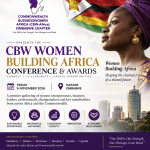
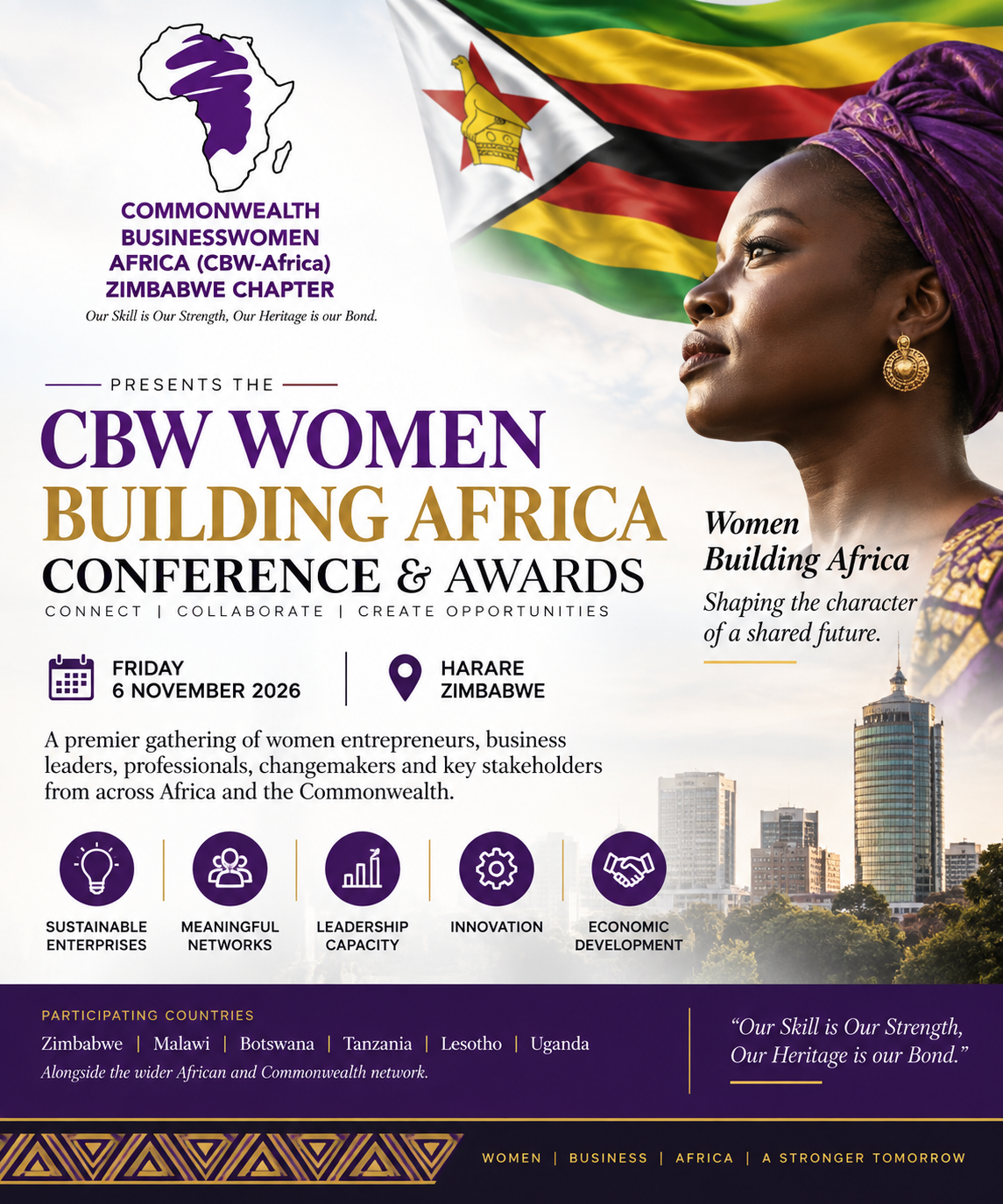
On 6 November 2026, that argument gets a stage. Women entrepreneurs, business leaders, professionals and changemakers will gather in Harare for the CBW Women Building Africa Conference & Awards, convened by Commonwealth Businesswomen Africa (CBW Africa) – Zimbabwe Chapter, with participation expected from Zimbabwe, Malawi, Botswana, Tanzania, Lesotho and Uganda alongside the wider Commonwealth network.
A shared future is produced through human agency
A future does not arrive with a predetermined character. Its character emerges from choices. Every enterprise established, person employed, contract honoured, product developed, investment made, skill transferred and problem solved contributes something to the economic and institutional environment inherited by those who follow.
Women participate in these processes every day. When a woman converts an idea into an enterprise, she changes more than her own economic circumstances: customers acquire another choice, suppliers another market, employees another source of income, and capital can find another productive application. Knowledge and experience accumulate.
This is agency in practical form, which is why conversations about women’s economic participation should move past counting how many women occupy particular spaces, toward whether a person has the opportunity and capability to act, create, transact, decide and contribute.
What character should the future possess?
“Shared” should not be confused with anonymous agency. Human beings acting individually and in association give institutions, markets and communities their character. If the desired future is entrepreneurial, people must undertake enterprise. If it is innovative, people must experiment and create. If it is prosperous, people must produce and exchange value. If it is governed by integrity, people in positions of responsibility must act with integrity.
And if that future is genuinely shared, women cannot merely appear in the final photograph. Their ideas, decisions, capital, enterprises, labour, knowledge and experiences must form part of the processes through which it is produced.
Beyond celebration
This is what makes the CBW Women Building Africa Conference & Awards particularly relevant. The stated ambition extends beyond recognising achievement, CBW Africa Zimbabwe describes a platform intended to support women in building sustainable enterprises, accessing meaningful networks, developing leadership capacity and contributing to economic development.
That distinction matters.
Recognition records achievement. Networks connect capability. Enterprise creates value. Collaboration combines resources and knowledge that previously existed separately.
The conference presents an opportunity not simply to celebrate women who have acted, but to strengthen the relationships through which further action becomes possible. With participants drawn from several African countries and the wider Commonwealth network, those relationships can cross borders, a conversation in Harare may introduce an entrepreneur to a market elsewhere, or a professional relationship may become a commercial one.
The enduring value of the gathering will be found in what participants do with the relationships and knowledge created there.
Women are helping define Africa’s corporate heritage
The enterprises, institutions, commercial relationships and innovations being created today will eventually become part of Africa’s corporate heritage. Future generations will encounter companies, brands, professions and institutions whose origins lie in decisions being made now, and women are among the people making those decisions.
Their stories should not be treated as a specialist chapter of African economic history called women’s contribution. They belong within the history itself.
The woman who establishes an enterprise, allocates capital, develops a product, opens a market, governs an institution, employs people or transfers knowledge is part of it. History becomes distorted when outcomes are remembered but the human beings whose actions produced them disappear from the record.
The CBW Women Building Africa Conference & Awards on 6 November offers more than an occasion for recognition. It offers a platform for women already exercising agency across business, leadership, entrepreneurship, innovation and community development to meet one another, exchange knowledge, form relationships and enlarge the sphere within which each can act.
Perhaps that is ultimately what the event’s title captures, building is a verb.
The shared future will possess the character given to it by the people whose actions help create it.
Women are not waiting at its entrance. They are among its authors.