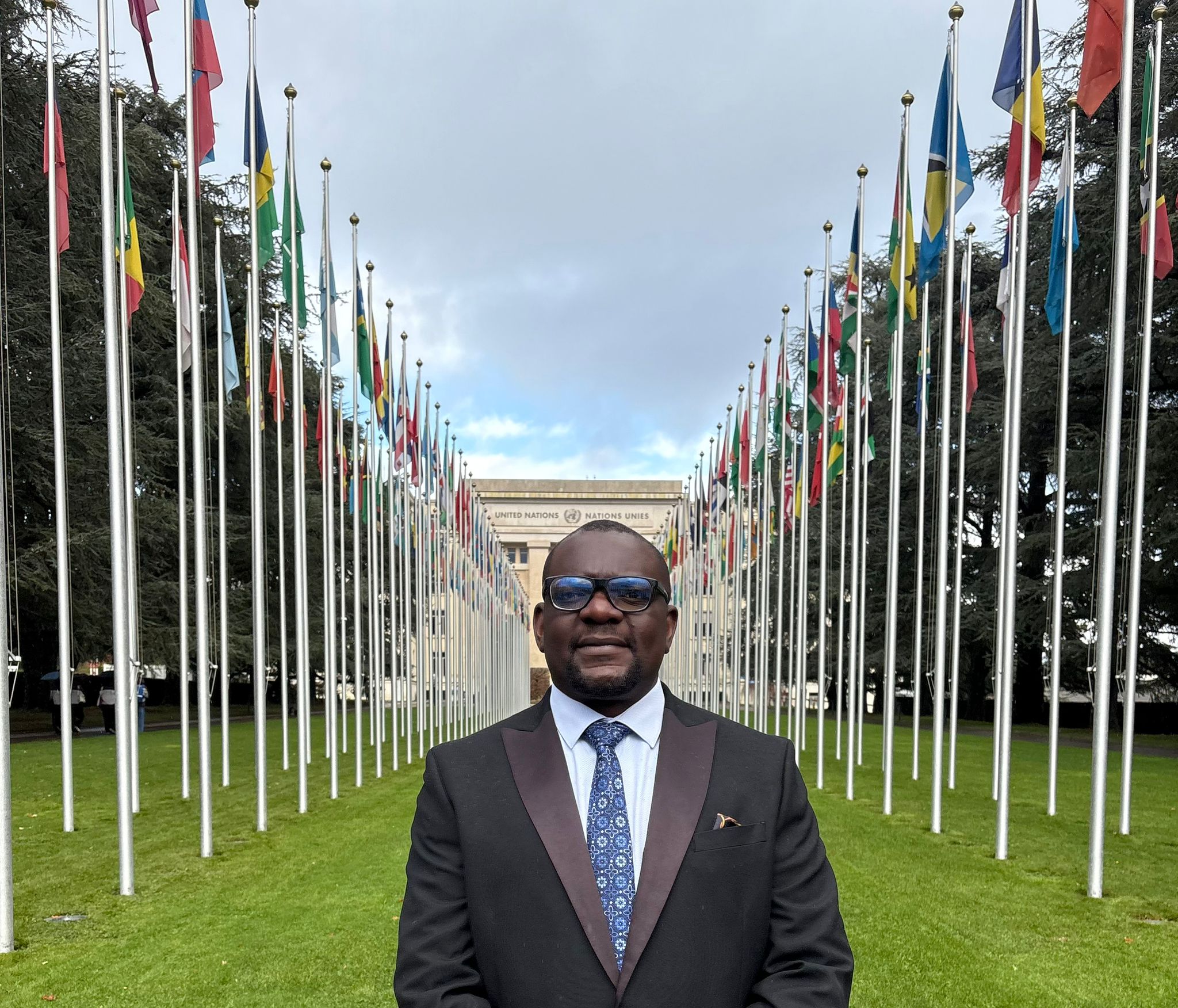
Geneva, Switzerland — December 2025 – At the recently concluded 9th Working Party on Public-Private Partnerships (PPPs) hosted by the United Nations Economic Commission for Europe (UNECE) at the Palais des Nations in Geneva, Advocate Jack Matiza, representing the Africa Public Private Partnerships Network (AP3N), delivered a forceful critique of Africa’s PPP landscape, arguing that the continent must confront the entrenched political and economic incentives that undermine long-term infrastructure transformation.
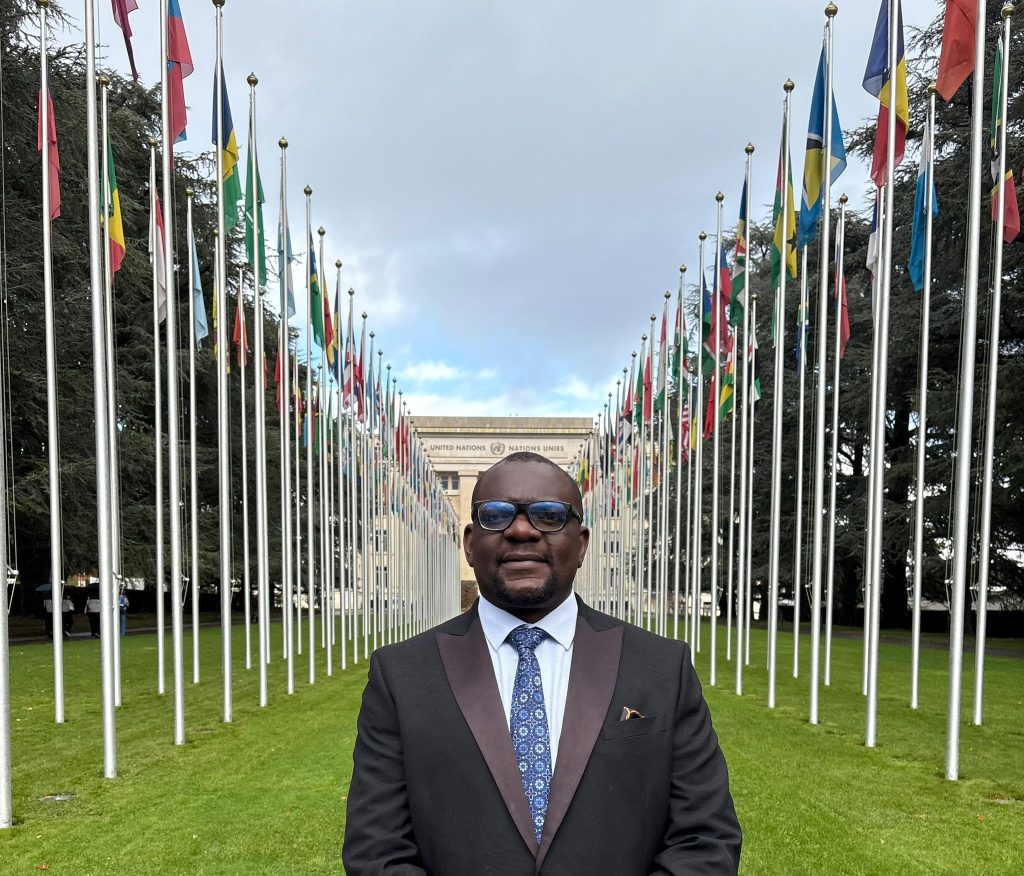
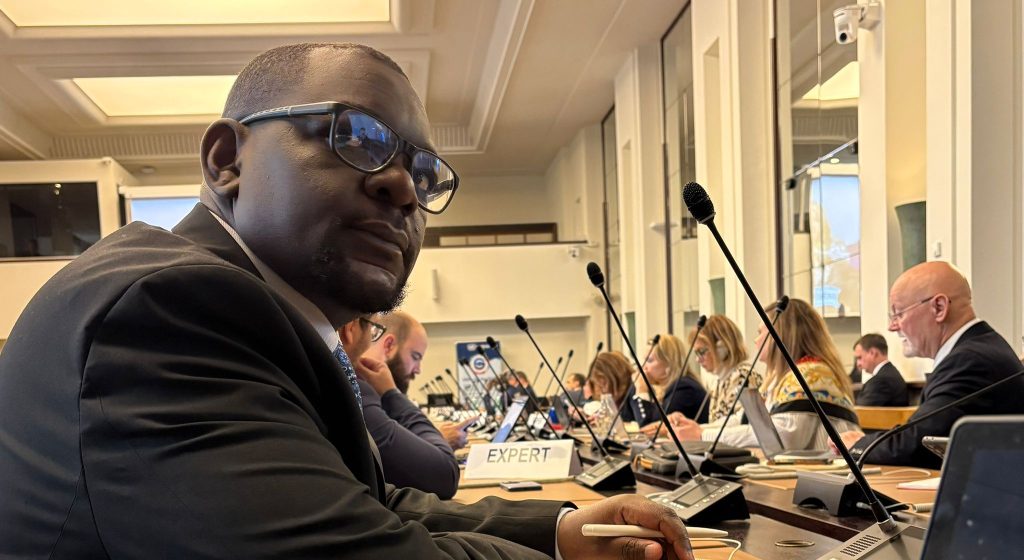
Advocate Jack Matiza at the United Nations’ Palais des Nations in Geneva during the UNECE 9th Working Party on Public-Private Partnerships.
The high-level session, which brought together government policymakers, private sector leaders, and multilateral institutions, focused on structuring PPPs to align with global priorities such as resilience, innovative and sustainable finance, and the role of artificial intelligence in infrastructure development. The discussions formed part of UNECE’s 71st Session theme: “Climate action and resilient infrastructure for a sustainable future.”
But for Matiza, the heart of Africa’s PPP challenge lies deeper than the technical models.
In his intervention, Advocate Matiza introduced the concept of “liquidity politics,” a pattern in which governments, faced with acute fiscal pressures and political volatility, prioritize immediate cash mobilisation over the structural, long-term planning essential for successful PPPs.
“Successful PPPs require long-term strategy, careful sequencing, and institutional patience,” Matiza noted. “Yet in many African contexts, the political architecture is shaped by short-term needs, stabilising coalitions, closing fiscal gaps, and converting opportunities into quick political capital.”
This dynamic, he argued, skews infrastructure decision-making toward revenue-generating projects rather than those that unlock long-term industrial growth.
Short-Term Projects Advancing Faster Than Transformative Ones
Matiza warned that Africa’s current incentive structures produce PPP outcomes that favour consumption-linked projects over production-enabling infrastructure.
These include:
Toll roads, priced primarily to guarantee investor returns
Power distribution extensions serving existing demand
Fiscal relief projects designed to boost short-term revenue streams
Meanwhile, he said, long-term catalytic assets, such as industrial corridor logistics, specialised transport nodes, and research and innovation infrastructure, struggle to advance.
“Infrastructure is too often selected for short-term fiscal engineering rather than for its role in building the continent’s future productive capacity,” he said.
Historical Incentives Still Shaping Present-Day Outcomes
Matiza linked today’s PPP challenges to deep historical currents. Extractive colonial systems, followed by structural adjustment programs that weakened state institutions, created a governance environment marked by:
Fragmented oversight
Weak long-horizon planning capacity
Limited ability to shepherd complex, multi-cycle PPPs
This, he argued, makes the prioritisation of short-term liquidity a “rational but suboptimal” response.
Call for Redesigning Africa’s PPP Incentive Framework
Despite the obstacles, Matiza expressed optimism that African institutions are evolving.
“Africa does not lack ambition for transformative PPPs,” he said. “It requires institutional ecosystems that reward durability over immediacy, integrated coordination over fragmented deals, and value-chain development over isolated monetization.”
He called for:
Stronger, more empowered PPP units
Modernised legal frameworks prioritising long-term national economic vision
Better project preparation pipelines
Policies that align investor incentives with public value
Africa’s Voice in a Global Infrastructure Moment
This year’s UNECE gathering, shaped by global climate pressures, rising demand for resilient infrastructure, and rapid technological change, positioned Africa at a crossroads.
Advocate Matiza’s message resonated with a core sentiment emerging from global forums in 2025, including the G20 under South Africa’s leadership, infrastructure is not merely about financing, but about governance, institutions, and incentive alignment.
As Africa deepens continental integration under the African Continental Free Trade Area (AfCFTA) and positions itself within global value chains, the redesign of its PPP frameworks will be central to its development trajectory.
A New Era for African PPPs
Advocate Matiza’s intervention in Geneva underscored a crucial shift: Africa is not simply seeking investment, it is redefining the terms on which partnerships must be built.
His call for long-term strategic vision, institutional strengthening, and the recalibration of incentive systems adds an important African perspective to global conversations about sustainable, resilient, people-centred infrastructure.
Over the years, I have found it challenging to define myself solely by an academic qualification, trade, or occupation. My eagerness to learn, especially about how to build and deploy capital, has allowed me to accumulate diverse experiences in a short span of time. Through this journey, I have discovered that at my core, I am a storyteller.
I tell the stories of corporations, their heritage, and the individuals who act in their name. I explore the role of these institutions in fulfilling the promise of a better Africa, and, most importantly, the causal link between the rule of law and economic development.
As a fellow believer in Africa’s potential, can I count on you to be a point of light in securing our continent’s future?