








Business & Economy
G20 Economic Cooperation Crucial Amid Global Uncertainty, Debt, and Low Growth


Cape Town, South Africa – February 27, 2025 – Economic cooperation within the G20 has never been more critical as the world grapples with low growth, soaring debt, weak trade, and diminished trust. Representing 85% of global GDP, 75% of international trade, and two-thirds of the world’s population, the G20 remains a pivotal force in stabilizing and advancing the global economy.

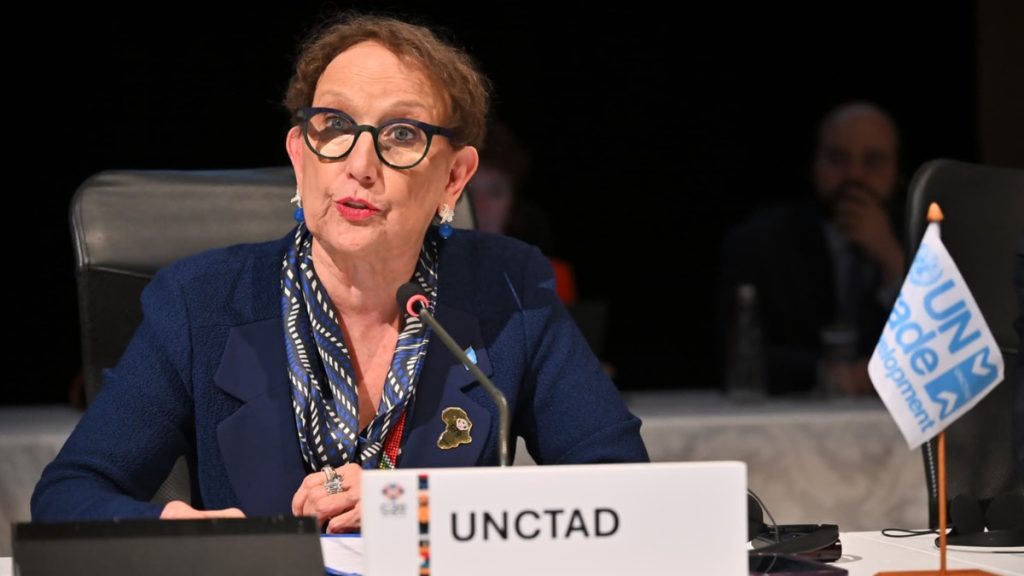
During the G20 Finance Ministers and Central Bank Governors meeting in Cape Town on February 26–27, UN Trade and Development (UNCTAD) Secretary-General Rebeca Grynspan emphasized the pressing need for a shared vision for economic recovery. “The greatest risk to growth is our failure to imagine a common future,” she stated, underlining the urgency of unified action in addressing economic uncertainties.
Financing Development for Sustainable Growth
A central topic of discussion was the upcoming 4th International Conference on Financing for Development, set to take place in July 2025 under UN auspices. The conference will focus on aligning financing and development in a mutually beneficial manner to build productive capacities, create jobs, and spur economic expansion.
However, according to UNCTAD analysis, this virtuous cycle is currently disrupted by economic uncertainties. Global foreign direct investment (FDI) fell by 8% in 2024, with investment in sectors crucial to sustainable development dropping by 11%.
Urgent Reforms in Global Financial Systems
In response to these challenges, Secretary-General Grynspan called for a comprehensive reform of the international financial system. She advocated for strengthening multilateral development banks, increasing their lending capacity, and leveraging special drawing rights (SDRs) to attract private investment.
A key component of the reform agenda includes a structured, multilateral approach to debt restructuring. This entails revising the G20’s common framework to allow middle-income countries to implement debt standstills and ensuring private sector participation in debt relief initiatives.
“Our international financial architecture needs to adapt to rising challenges,” Ms. Grynspan asserted. “But in doing so, we must avoid fragmentation, embrace renovation, and act with a sense of urgency.”
Boosting Sustainable Finance and Combating Greenwashing
Sustainable finance, which incorporates environmental, social, and governance (ESG) considerations into investment decisions, also featured prominently on the agenda. Ms. Grynspan emphasized the need to update international investment agreements to support national policies aimed at climate action.
Additionally, she highlighted the growing challenge of greenwashing—misleading sustainability claims that undermine investor confidence and disrupt sustainable fund markets. Tackling greenwashing is essential to ensuring that sustainable finance contributes meaningfully to global economic and environmental goals.
“The question now isn’t whether we can afford sustainable investment,” Ms. Grynspan concluded, “but whether we can afford its absence.”
Looking Ahead
As global leaders prepare for the Financing for Development conference in July, the G20’s commitment to economic cooperation, financial system reform, and sustainable investment will be pivotal in addressing the world’s economic challenges. The success of these initiatives will determine the resilience and inclusivity of global growth in the years ahead.





