







Opinion
Ripples of Hope: Revisiting Robert Kennedy’s Day of Affirmation in Today’s South Africa


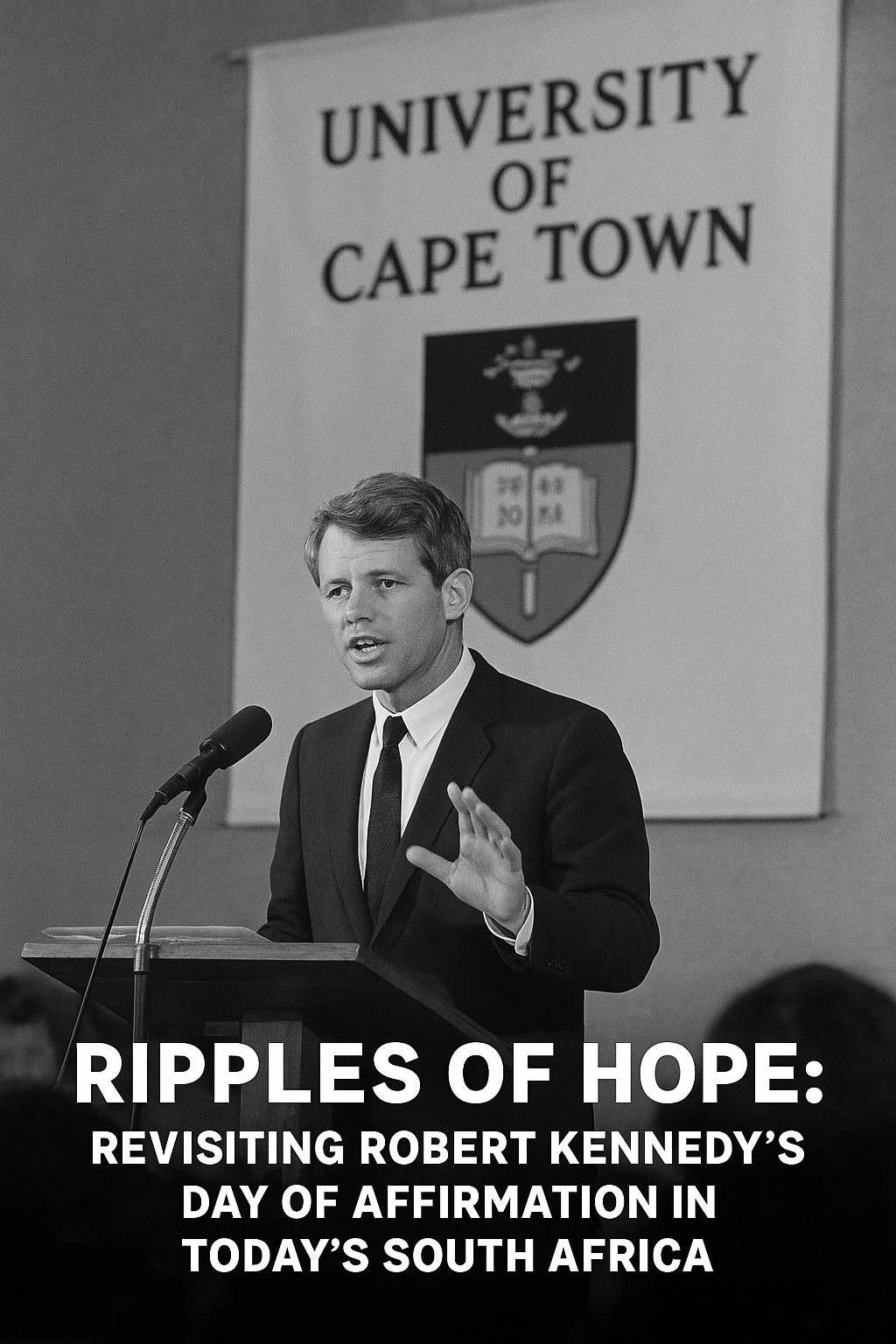
When Robert F. Kennedy stood before students at the University of Cape Town on 6 June 1966, apartheid’s machinery was in full motion. Yet his “Day of Affirmation” address, delivered in defiance of South Africa’s racial order, did not thunder with condemnation. Instead, it whispered a moral truth so clear that it still unsettles us nearly six decades later: that the dignity of one human being is the measure of all human progress.

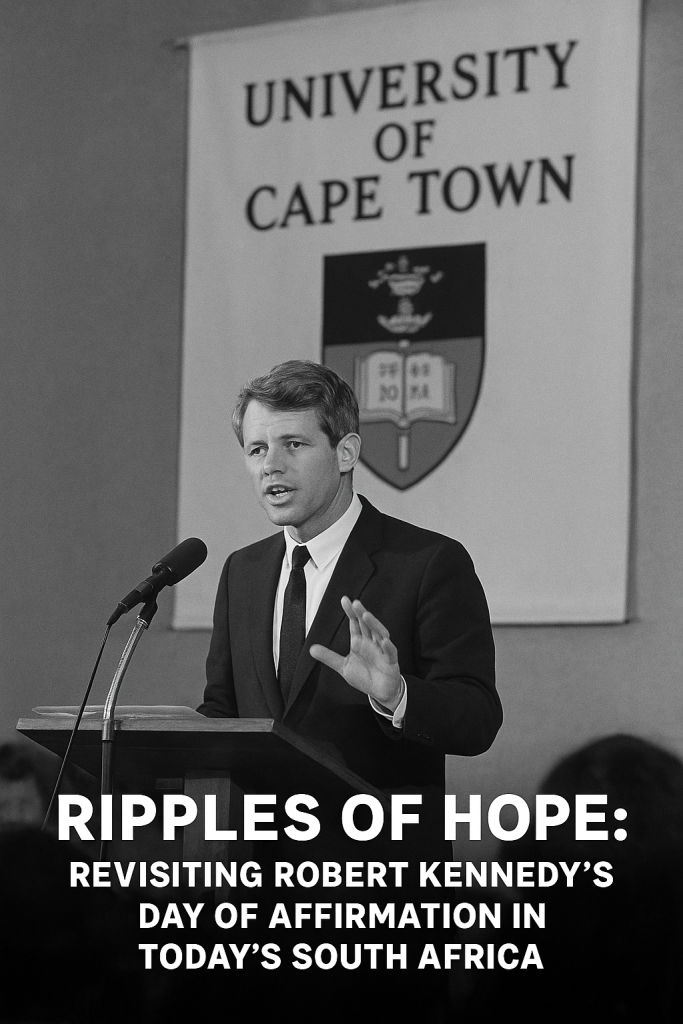
Kennedy came as an outsider, but he spoke to the heart of what it means to be free. He declared that “the enlargement of liberty for individual human beings must be the supreme goal and the abiding practice of any western society.” In that line, he placed responsibility for freedom not in governments, but in individuals, in conscience, courage, and participation.
In 2025, South Africa stands at a crossroads eerily similar in spirit, though not in form. Apartheid is gone, but the shadows it cast remain. We are politically free, yet socially unequal; constitutionally democratic, yet morally uncertain. As Kennedy might have warned, our democracy risks being procedural rather than transformative.
The Promise and the Paradox of Democracy
The promise of 1994 was simple: a South Africa where every person would count, and every voice would matter. In law, we achieved that. The Constitution enshrined equality, dignity, and freedom of speech, the very ideals Kennedy celebrated. But he also reminded his audience that “the power to be heard” is as essential as the right to speak.
Three decades into democracy, the power to be heard has become a site of struggle. Citizens speak, protest, and mobilize, yet governance often seems deaf. Corruption scandals, state capture, and public disillusionment have eroded trust in institutions meant to safeguard freedom. The distance between citizens and their government has widened, and so has inequality.
South Africa remains one of the most unequal societies on earth. A small minority enjoys global luxury while millions face poverty, joblessness, and hopelessness. In Kennedy’s terms, our government “heeds not all of its people.” Freedom without justice has become a quiet betrayal of the democratic promise.
Freedom Requires Moral Courage
Kennedy warned of four dangers that still stalk our public life today: futility, expediency, timidity, and comfort.
Futility whispers that nothing will change, that corruption is inevitable, that the poor will stay poor, that the system is too broken to fix. Expediency argues that morality must yield to politics, that power comes first, and principles later. Timidity silences those who fear social or political disapproval. And comfort, perhaps the most seductive danger, tempts the privileged to withdraw into private success while public life decays.
Each of these vices has found a home in our democracy. Yet Kennedy’s answer was not despair. “Few will have the greatness to bend history,” he said, “but each of us can work to change a small portion of events.” It was his way of saying that history does not change in parliaments alone, it changes in classrooms, in communities, in the courage of ordinary citizens who refuse to accept injustice as inevitable.
The Measure of Freedom Is Justice
In his speech, Kennedy spoke not only to South Africa but also to his own country’s moral struggle. The civil rights movement was forcing America to confront its own apartheid. “We have passed laws prohibiting discrimination,” he said, “but these laws alone cannot overcome the heritage of centuries.”
South Africa knows that truth too well. Legislation cannot heal inequality born of land dispossession, economic exclusion, and generational trauma. True democracy demands more than votes; it requires repair. It demands a social contract where government is accountable, business is ethical, and citizens are active participants in building a just society.
The great test of our democracy is not whether we can hold elections, but whether we can hold ourselves accountable to the ideals that elections represent.
Youth and the Unfinished Work of Freedom
Kennedy placed his faith in youth, not as a matter of age, but of spirit. “This world demands the qualities of youth,” he said, “a predominance of courage over timidity, of the appetite for adventure over the life of ease.”
Nearly 60 years later, that challenge belongs to South Africa’s young generation. They inherit both the freedom won by struggle and the frustration born of stagnation. Many are unemployed, disillusioned, or alienated from politics. Yet within them lies the very energy Kennedy described, restless, inventive, impatient with hypocrisy, and yearning for change.
The call to action is not to wait for better leaders, but to be them, in classrooms, startups, community projects, and creative expression. Active citizenry is not an abstract concept; it is the daily decision to participate, to question, to build, and to care.
Ripples of Hope in a Restless Democracy
Kennedy’s most enduring image remains that of “ripples of hope”:
“Each time a man stands up for an ideal, or acts to improve the lot of others, or strikes out against injustice, he sends forth a tiny ripple of hope, and crossing each other from a million different centers of energy and daring those ripples build a current which can sweep down the mightiest walls of oppression and resistance.”
South Africa’s democracy is not dead, it is waiting. Waiting for those ripples. For citizens who choose courage over cynicism. For leaders who value conscience over comfort. For a generation that refuses to inherit apathy.
The promise of democracy is not realized in constitutions or elections alone. It is realized when freedom is lived, when citizens act with the moral conviction that justice is not a gift from power, but a duty to one another.
Kennedy’s words still light the path: the glow of that fire, if we keep it burning, can still “truly light the world.”





