






Business & Economy
South Africa Hosts Landmark G20 Foreign Ministers’ Meeting in Johannesburg


Johannesburg, South Africa – 20 February 2025
South Africa officially kicked off its G20 Presidency today by hosting the first Foreign Ministers’ Meeting at the Nasrec Expo Centre in Johannesburg. President Cyril Ramaphosa, in his opening address, emphasized the significance of the G20 Leaders’ Summit being held on African soil for the first time later this year, marking a turning point in global economic and political discourse.

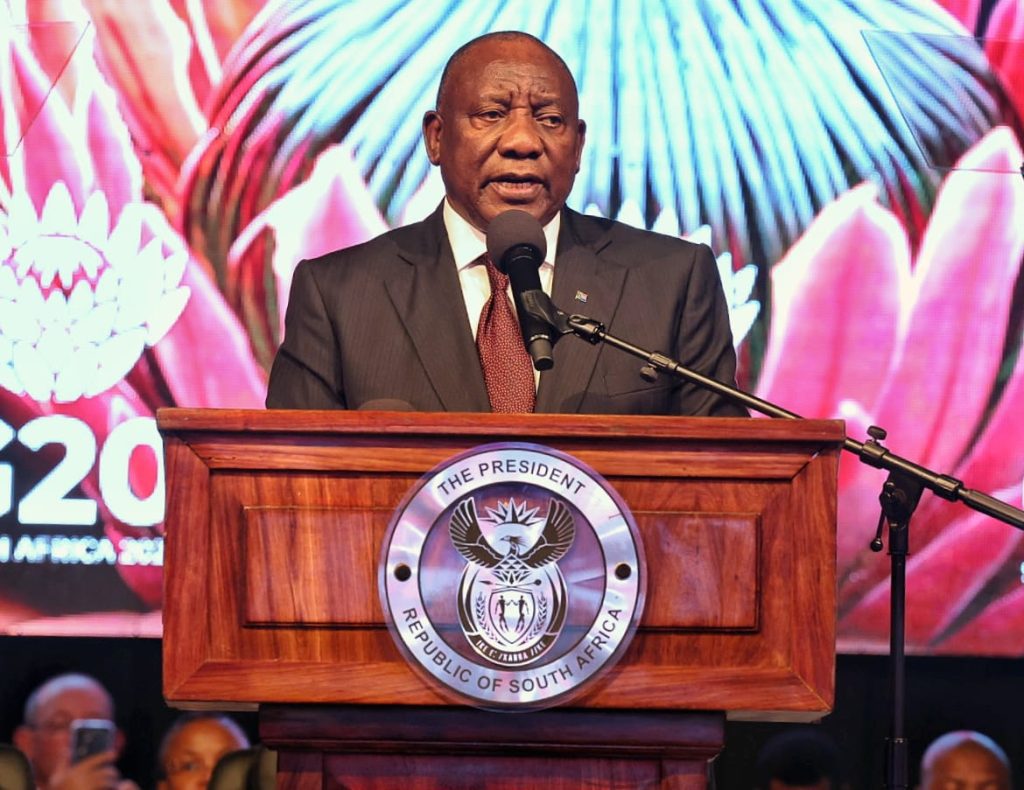
“This highlights the growing importance of the continent in global economic, political, and environmental discussions,” President Ramaphosa stated. He underscored Africa’s position as home to some of the world’s fastest-growing economies while facing challenges such as climate change, development needs, and the shifting global trade landscape.
Global Challenges Demand Coordinated Responses
Acknowledging the multiple crises facing the world—including geopolitical tensions, conflicts, climate change, pandemics, and energy and food insecurity—Ramaphosa called for greater international consensus. “These challenges are interconnected. They require responses that are inclusive and coordinated,” he stressed, urging the G20 to prioritize sustainable development and economic inclusion.
With the 2030 deadline for achieving the UN Sustainable Development Goals (SDGs) approaching, Ramaphosa reaffirmed South Africa’s commitment to the ambitious agenda of eradicating poverty and hunger, promoting gender equality, and ensuring universal education and healthcare.
A Call for Global Reform and Peaceful Diplomacy
Asserting that the world has changed significantly since the establishment of the United Nations 80 years ago, Ramaphosa reiterated South Africa’s call for reforms to the UN Security Council, international financial systems, and multilateral trade structures. “The UN must change accordingly,” he said, advocating for a more representative and responsive international order.
On conflicts across the world, he commended the ceasefire agreement between Israel and Hamas as a “crucial first step” towards resolving the humanitarian crisis in Gaza. He also called for peaceful resolutions to conflicts in Ukraine, the eastern Democratic Republic of the Congo, Sudan, and the Sahel. “Our own experience as South Africa is that the peaceful resolution of conflict through inclusive dialogue is the foremost guarantor of sustainable, lasting peace,” he said.
Priorities for South Africa’s G20 Presidency
Under South Africa’s leadership, four key priorities have been set for the G20:
- Strengthening Disaster Resilience and Response – Climate-induced disasters disproportionately affect developing nations, and South Africa will push for increased global financial support for post-disaster reconstruction.
- Ensuring Debt Sustainability for Low-Income Countries – With many developing economies facing high borrowing costs, South Africa will call on the G20 to advance measures ensuring debt sustainability.
- Mobilizing Finance for a Just Energy Transition – Developed nations must increase climate finance flows to support sustainable energy transitions in developing countries.
- Harnessing Critical Minerals for Inclusive Growth – South Africa will promote policies ensuring value addition and beneficiation of critical minerals as part of a green industrialization strategy.
A G20 Presidency Centered on Solidarity, Equality, and Sustainability
Ramaphosa closed his speech by invoking Nelson Mandela’s vision of a world built on harmony and equal opportunities, urging G20 members to embrace cooperation as their greatest strength.
“As we strive towards a common purpose, let us remember that cooperation is our greatest strength,” he said. “Through the G20, let us set the coordinates of a new course for human progress, one that is founded on solidarity, equality, and sustainability.”
With South Africa at the helm, the 2025 G20 Summit is poised to reshape global governance by amplifying Africa’s voice and prioritizing inclusive economic development.





