





Opinion
Between Idealism and Realism: Why President Ramaphosa’s Call for Equitable Global Partnerships Still Matters


Background: South Africa’s Voice in a Divided World
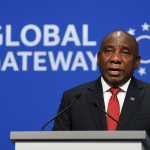
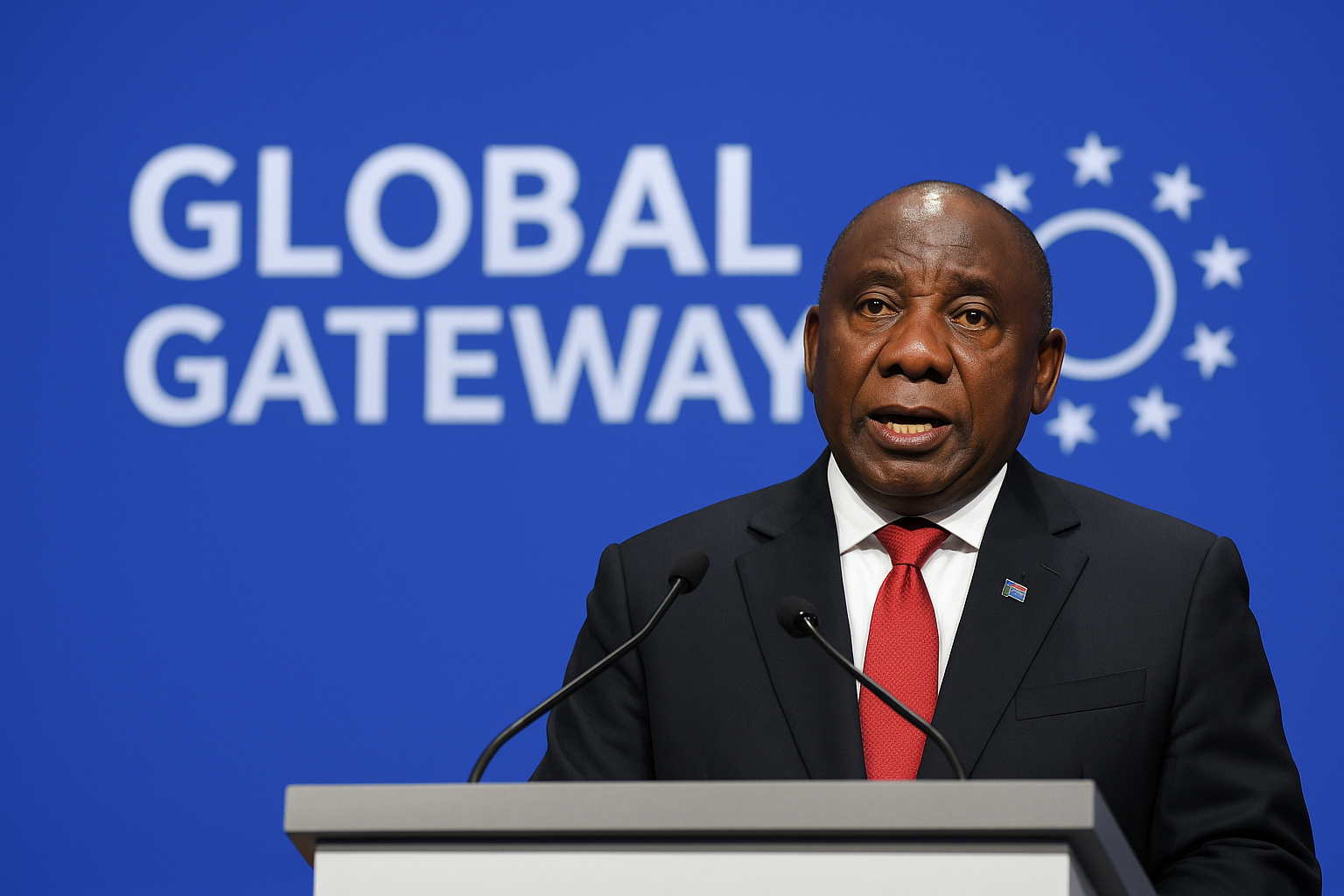
President Cyril Ramaphosa’s remarks at the Global Gateway Forum in Brussels on 9 October 2025 have reignited long-standing debates about Africa’s place in the global economic order.

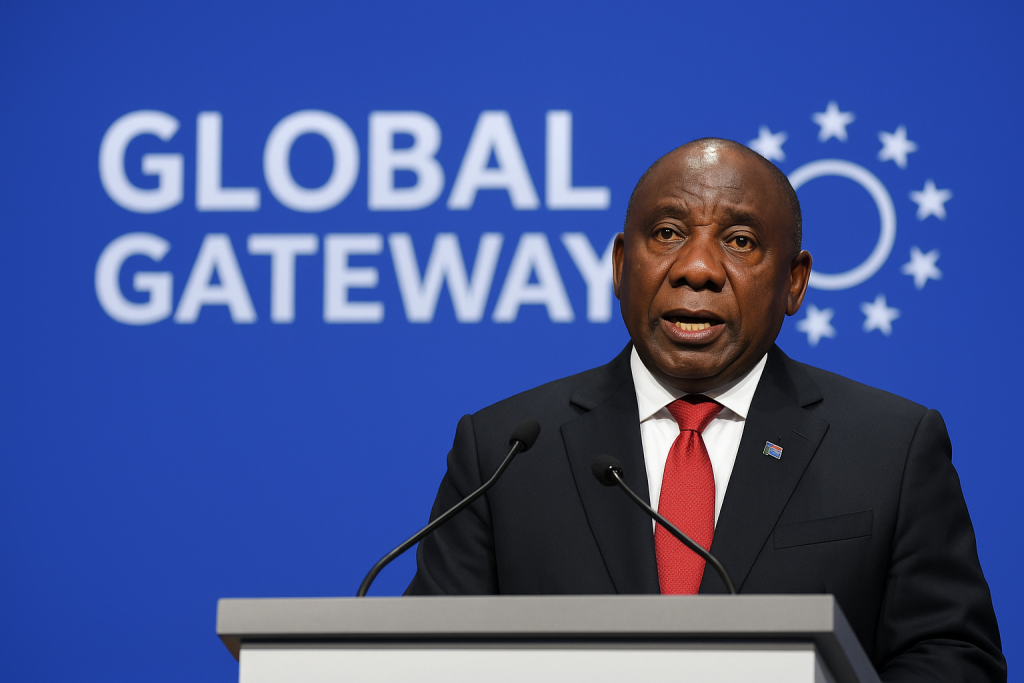
The Forum — hosted by the European Commission under the leadership of President Ursula von der Leyen — brings together leaders from Africa, Latin America, the Caribbean, and Europe to strengthen cooperation on digital transformation, green infrastructure, transport networks, and energy transition. It is the European Union’s flagship mechanism for mobilising over €300 billion in sustainable investments by 2027.
South Africa’s participation came amid growing global uncertainty — wars in Eastern Europe and the Middle East, disruptions in global supply chains, and escalating climate crises. Against this backdrop, Ramaphosa called for “equitable global partnerships and financial reform” — a plea to reimagine global trade, debt, and investment structures in a way that empowers developing economies rather than trapping them in cycles of dependency.
In his speech, the President emphasized the need for the Global Gateway to “support priorities that countries have identified and are pursuing themselves.” He warned that investments must not “replace one dependency with another,” and stressed that Africa must be allowed to develop “in a manner suited to its circumstances and the needs of its people.”
The address also comes at a critical time: South Africa is preparing to host the G20 Leaders’ Summit next month — the first on African soil — under the theme “Solidarity, Equality, and Sustainability.” The Summit is expected to focus on debt relief, financial inclusion, climate financing, and reforming international financial institutions.
However, the President’s remarks — calling for global equity and the reform of multilateral systems — have drawn mixed reactions back home. While some see his advocacy as consistent with South Africa’s diplomatic tradition, others regard it as an empty ritual in a world unwilling to change.
Two public responses encapsulate this divide:
“His call will never see the light of day… The masters of the universe will never let go of their leverage. The only way forward is to delink from the global economic system.”
— Citizen comment referencing Samir Amin’s theory of dependency and delinking“The hypocrisy of politicians knows no bounds. While the President calls for equitable partnerships, when did he implement those on his path to becoming a billionaire?”
— Citizen response on moral credibility
These perspectives invite a deeper question: Is Ramaphosa’s call mere rhetoric — or is it part of a strategic repositioning of Africa’s global engagement?
Editorial: Between Idealism and Realism
The scepticism is understandable. For decades, African leaders — from Nkrumah to Mbeki — have demanded reform of global financial systems that perpetuate inequality. Yet, the structures remain largely intact.
But to dismiss Ramaphosa’s speech as another “formulaic platitude” is to overlook the shifting dynamics of our time. The world is at a geopolitical inflection point. Globalisation is being redefined by climate transitions, digital revolutions, and a rising South that is no longer content to be a supplier of raw materials or a passive recipient of aid.
Ramaphosa’s intervention must be read not as naivety but as strategic diplomacy — an attempt to secure Africa’s agency in shaping the emerging multipolar world. His insistence that investments must “empower African countries” is, in essence, a demand for partnership over patronage.
Yes, the “masters of the universe” may resist change. But the act of naming the imbalance on a global stage is itself a form of resistance — one that keeps Africa’s grievances on record and its aspirations visible.
Addressing the Moral Question
The second critique — that leaders who amassed wealth within unequal systems cannot credibly call for reform — touches a raw nerve. It speaks to the moral legitimacy crisis facing modern leadership.
Yet leadership must also be judged by the systems it seeks to build, not only by the privileges it inherited. Ramaphosa’s administration has launched ambitious reforms in energy, logistics, telecommunications, and infrastructure — all aimed at making South Africa more competitive and less reliant on external actors. These reforms are slow and imperfect, but they represent movement, not stagnation.
Ultimately, progress requires both moral clarity and institutional reform. The two are not mutually exclusive; they are sequential.
The Way Forward
The future of Africa’s global engagement lies not in withdrawal, but in redefinition — building African-controlled value chains, negotiating equitable finance, and asserting the continent’s interests through collective platforms like the African Continental Free Trade Area (AfCFTA) and the G20.
Ramaphosa’s establishment of the G20 Extraordinary Committee of Independent Experts on Global Wealth Inequality, led by Nobel Laureate Professor Joseph Stiglitz, signals that the issue of inequality will not merely be moralised but quantified and addressed within global financial architecture.
If South Africa can use its G20 presidency to convert moral arguments into measurable commitments — on debt reform, climate finance, and trade equity — then Ramaphosa’s Brussels speech will stand not as rhetoric, but as prelude.
Conclusion
The critics are right about one thing: power concedes nothing easily. But history’s turning points are rarely made by cynics. They are shaped by those who, even while knowing the odds, continue to insist that another order is possible.
President Ramaphosa’s call for equitable partnerships may not dismantle centuries of economic hierarchy overnight. But it keeps alive a necessary conversation — one that affirms Africa’s demand not for charity, but for justice.
And in a world increasingly defined by fragmentation and fatigue, that insistence on justice remains a radical act of hope.





