







Corporate Heritage
The Rule of Law: Africa’s Most Valuable Economic Asset


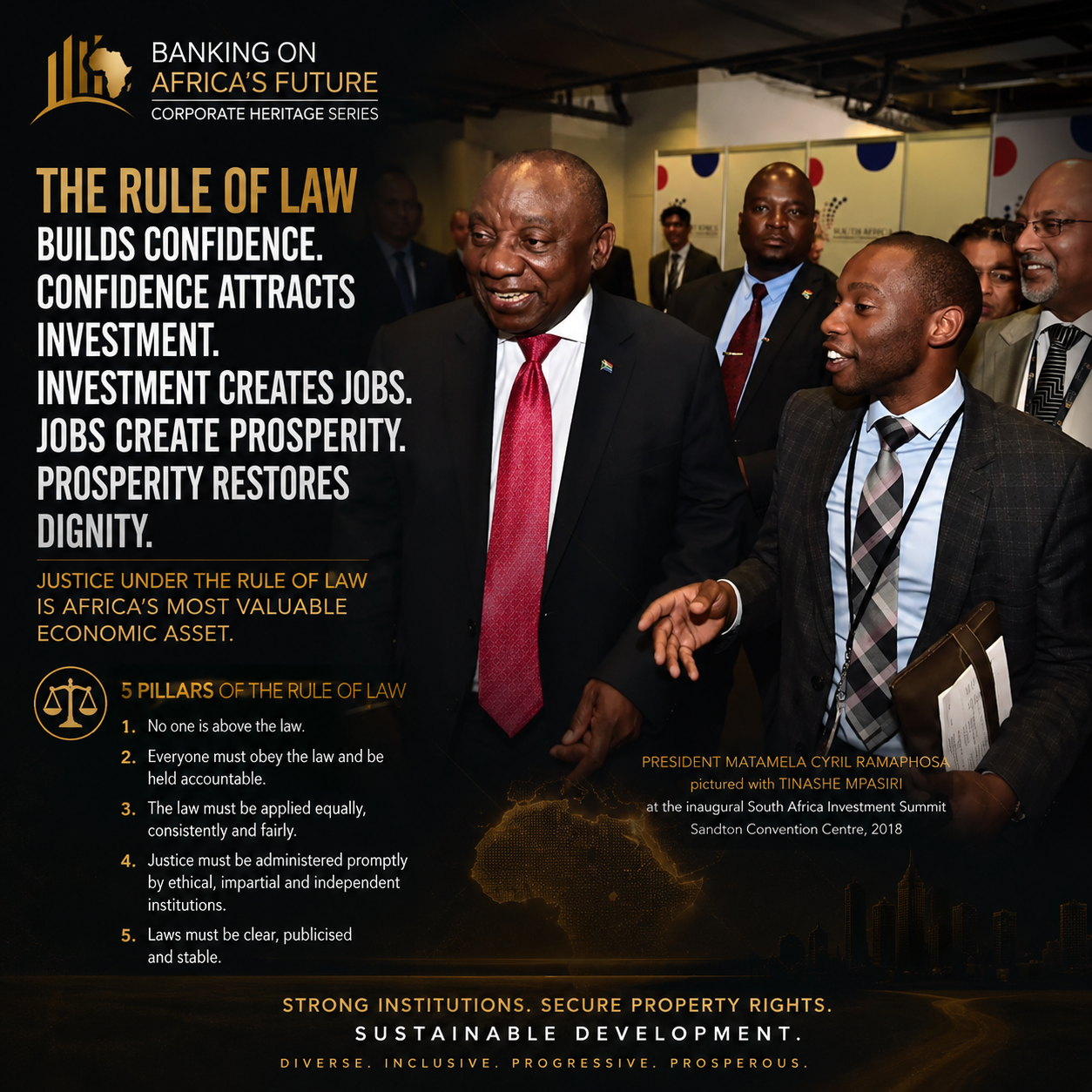
By Tinashe T. T. Mpasiri | 13 July 2026
“Justice under the rule of law is not merely a constitutional ideal, it is the foundation upon which prosperous nations are built.”

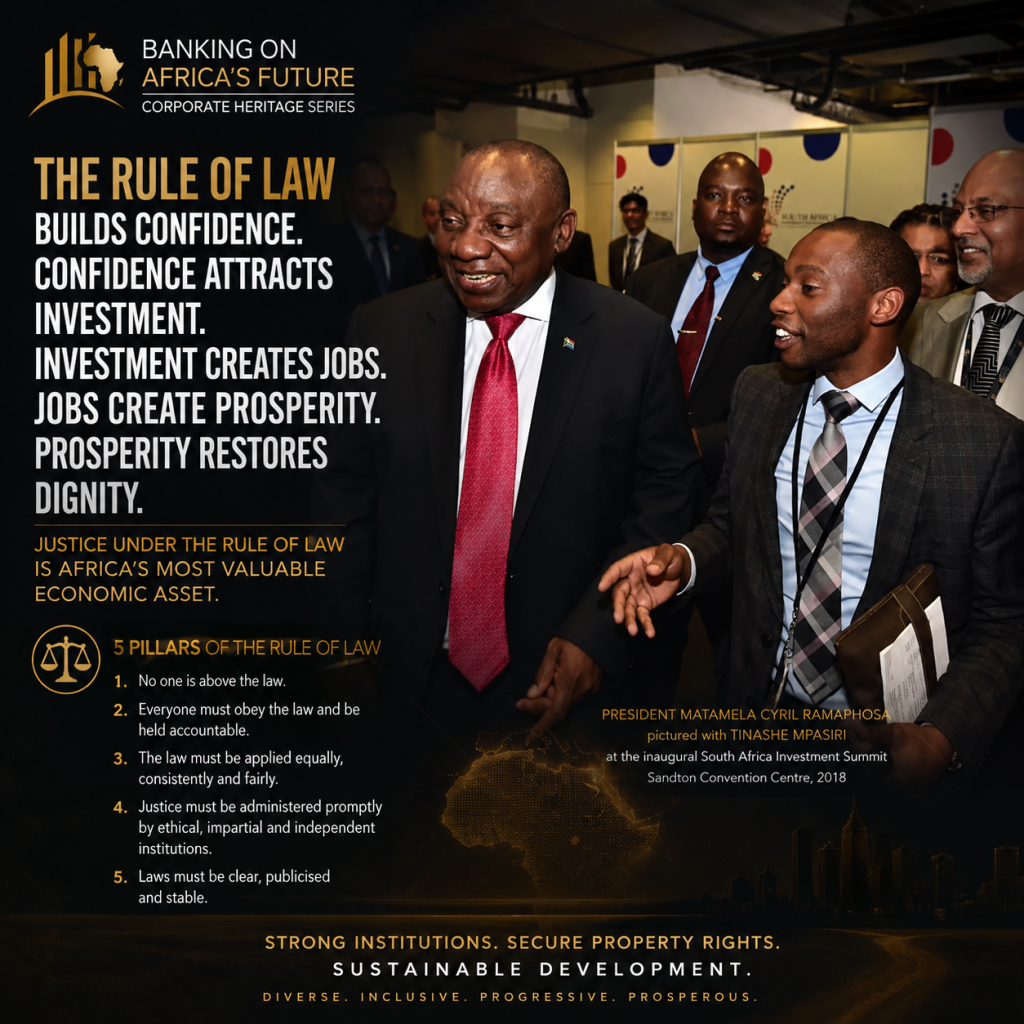
Today, Facebook reminded me of a post I wrote on 13 July 2018. In that post, I distilled the rule of law into five simple principles:
- •No one is above the law, regardless of position or status.
- •Everyone must obey the law and be held accountable when they violate it.
- •The law must be applied equally, consistently and fairly.
- •Justice must be administered promptly by ethical, impartial and independent institutions.
- •The laws of the country must be clear, publicised and stable.
Eight years later, I remain convinced that these five principles are not merely legal doctrines. They represent the invisible infrastructure of every successful economy.
This conviction did not emerge overnight. It was born from a journey of inquiry that began in 2016.
That year, I deliberately set out to understand the root causes of unemployment, inequality and poverty in Zimbabwe. Rather than accepting conventional explanations, I chose to unlearn, relearn and learn. I wanted to understand why nations rich in natural resources could still struggle with unemployment, why businesses collapsed, why investment disappeared and why poverty persisted.
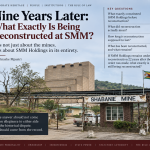
My search repeatedly led me to the story of (SMM).
For decades, SMM was more than a mining company. It was an economic ecosystem. It directly employed thousands of Zimbabweans while sustaining the livelihoods of well over one hundred thousand people through employees, contractors, transporters, suppliers, retailers and surrounding communities.
Its story forced me to ask uncomfortable but necessary questions.
How does a company of such national significance cease to be an engine of prosperity?
What happens to an economy when confidence in legal certainty is weakened?
What becomes of communities when productive assets no longer generate employment and wealth?
As I studied the history of SMM and the legal issues surrounding its reconstruction under the Reconstruction of State-Indebted Insolvent Companies Act, commonly known as the Recon Act, I realised that the consequences of legal uncertainty extend far beyond courtrooms.
When respect for property rights is questioned, investors hesitate.
When investors hesitate, capital leaves.
When capital leaves, businesses shrink.
When businesses shrink, jobs disappear.
When jobs disappear, poverty expands.
That chain of events transformed my understanding of economic development.
I came to appreciate that the rule of law is not simply a legal concept. It is economic infrastructure.
Just as roads move goods, ports facilitate trade and electricity powers factories, the rule of law powers investment. It provides certainty. It protects contracts. It safeguards property rights. It assures entrepreneurs that the rewards of enterprise will not be arbitrarily taken away. It gives financial institutions the confidence to lend and businesses the confidence to expand.
Without it, sustainable economic development becomes extraordinarily difficult.
This understanding has shaped my engagements over the years.
In 2017, during the South Africa–Zimbabwe Business Forum in Sandton, Johannesburg, I had the opportunity to engage President Emmerson Mnangagwa, who was then Vice President. I argued that Zimbabwe’s economic recovery would ultimately depend on restoring confidence through the rule of law. He acknowledged the importance of that assertion.
On another occasion, during the South Africa Investment Conference, President Cyril Ramaphosa responded to my intervention by observing that it “was not a question, but a speech.” While brief, that exchange reinforced my belief that conversations about investment cannot be separated from conversations about governance, institutions and legal certainty.
History consistently supports this conclusion.
The world’s most prosperous economies are not necessarily those with the greatest abundance of natural resources. They are those that built strong institutions, protected property rights, enforced contracts, maintained independent courts and ensured that governments themselves remained subject to the law.
Natural resources may create opportunity.
The rule of law transforms opportunity into prosperity.
This is why I have consistently argued that the greatest competitive advantage any African nation can possess is not found beneath its soil, but within its institutions.
Africa possesses extraordinary mineral wealth, agricultural potential and one of the youngest populations in the world. Yet these advantages alone cannot guarantee prosperity. Investment follows confidence, and confidence flourishes where the rule of law prevails.
Corporate literacy therefore extends beyond understanding financial statements, governance frameworks or balance sheets. It requires an appreciation that every successful business operates within a legal environment that protects enterprise, rewards innovation and guarantees fairness.
When institutions are trusted, entrepreneurs invest.
When entrepreneurs invest, businesses grow.
When businesses grow, employment expands.
When employment expands, poverty declines.
When prosperity is created within a framework of justice, it becomes sustainable.
The lesson I drew from SMM continues to shape my thinking today.
The future of Africa will not be determined solely by the value of its minerals, the size of its markets or the sophistication of its technology. It will be determined by whether our institutions inspire confidence, whether our laws are applied equally, whether property rights are respected and whether justice remains impartial and accessible to all.
For me, the rule of law is not an academic discussion.
It is the missing link between Africa’s immense potential and Africa’s shared prosperity.
It is the foundation upon which banking systems are strengthened, businesses are built, industries flourish and nations become competitive.
It is, without question, Africa’s most valuable economic asset.





