



South Africa
“I Choose Peace”: Duduzile Zuma Breaks Her Silence on MK Party Turmoil, Betrayal, Political Power and the Zuma Legacy
Duduzile Zuma-Sambudla opens up about her MK Party expulsion, Jacob Zuma, political betrayal, her exile childhood and her decision to choose peace.

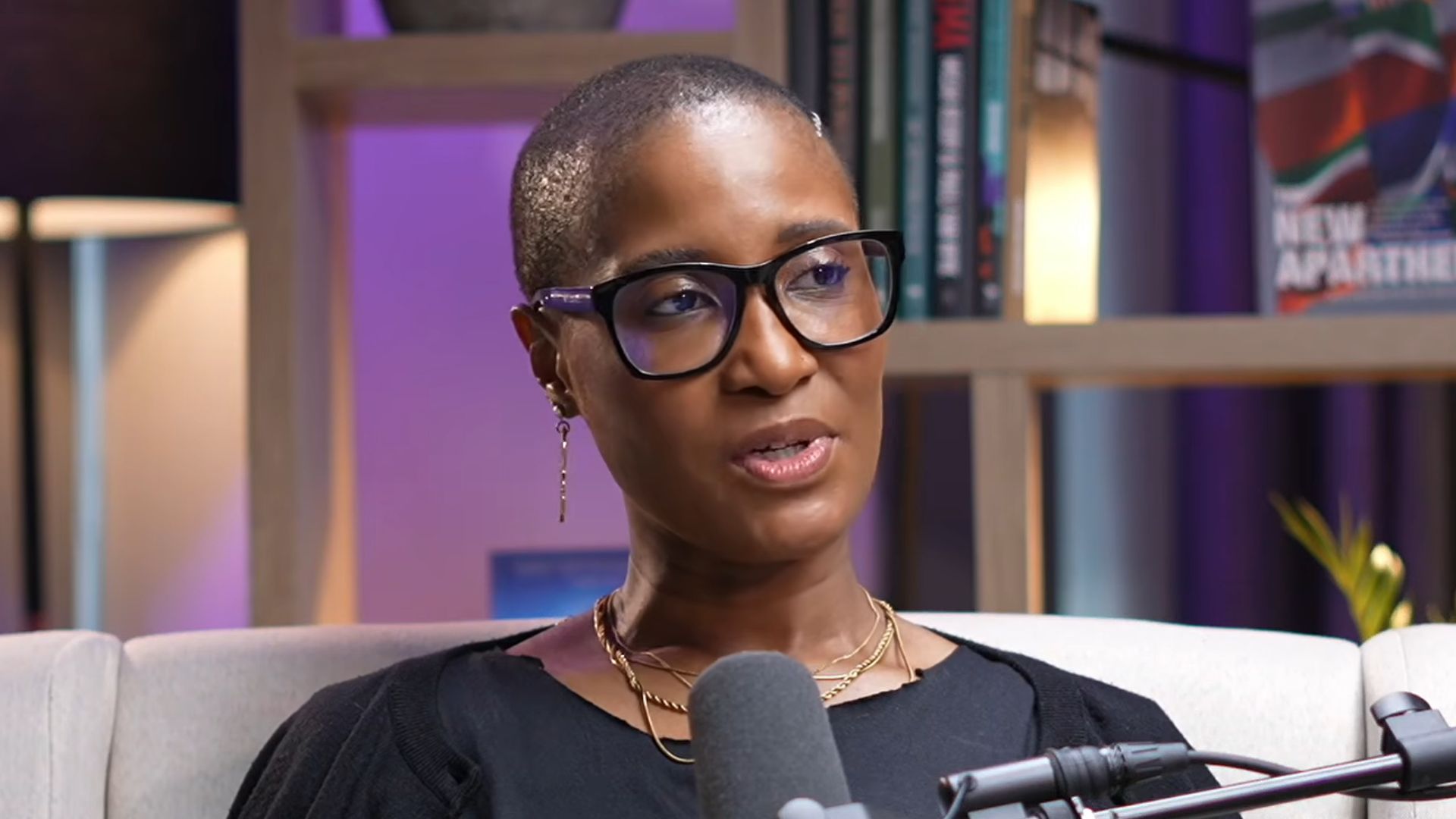
In a revealing 47-minute conversation on SMWX, Duduzile Zuma-Sambudla speaks about her controversial departure from the inner circle of the MK Party, the political battles surrounding her father, Jacob Zuma, her childhood in exile, and why she now believes that protecting her peace matters more than fighting for political relevance.
There is something extraordinary about a politician’s daughter declaring that she never wanted to become a politician.
Something even more extraordinary about a woman who helped launch one of South Africa’s most disruptive political movements now suggesting that the very political environment she helped build has become too destructive for her to remain inside.
And perhaps something most revealing about Duduzile Zuma-Sambudla insisting that she was never the powerful political operator that her critics believed her to be.
In a wide-ranging interview on SMWX, Duduzile offered an unusually personal account of the family relationships, political rivalries and internal tensions surrounding former president Jacob Zuma and his uMkhonto weSizwe Party (MK).
Her central message was strikingly simple:
“I think I just choose peace.”
But beneath those words lies a much bigger story about power, loyalty, political inheritance, factionalism and the increasingly complicated future of South Africa’s opposition politics.
It is also a story that demands scrutiny. Duduzile’s account contains serious allegations about political manipulation, electoral irregularities and selective justice. These remain her claims, not established findings, and the interview offers only one side of several contested disputes.
The woman who says she was never in charge
For months, public discussion surrounding the MK Party has frequently portrayed Duduzile as an influential figure operating close to its leadership.
Her proximity to Jacob Zuma, participation in the party’s formative activities and public political interventions contributed to the perception that she exercised substantial influence.
But Duduzile challenges that narrative.
She says she never occupied the senior organisational positions that many people attributed to her.
Her only formal political office, she explains, was as a member of Parliament, a position she subsequently resigned from.
What others interpreted as political authority, she describes as service to her father.
That distinction matters.
In political organisations built around charismatic founders, the boundary between personal access and institutional authority can become dangerously blurred. Family members, advisers and trusted associates may exercise influence without occupying formal positions.
Conversely, proximity to leadership does not automatically establish that someone controls decisions.
Duduzile argues that the perception of her as a hidden power broker undermines her father’s political independence.
She insists that the MK Party was his creation and that its achievements belong primarily to him.
Yet an important question remains unanswered: if she held no formal leadership position, why did the party consider it necessary to publicly remove her from positions of influence?
The answer may reveal as much about the MK Party’s internal governance as it does about Duduzile herself.
“There’s always been a witch hunt for me”
One of the interview’s most consequential moments arrives when Duduzile discusses the circumstances surrounding her political fallout.
She describes what she believes was a sustained campaign to marginalise her.
According to her account, the immediate dispute involved her relationship with a deceased political associate whose personal circumstances had become controversial.
She maintains that the party acted without adequately establishing the facts or allowing her to explain her involvement.
Duduzile says she had already begun distancing herself from party activities before the public rupture.
Her decision, she explains, was motivated by a desire to escape the growing conflict around the leadership.
The significance extends beyond her personal grievances.
The MK Party entered South African politics promising a dramatic break from the established political order. Its supporters saw it as a vehicle for political renewal, economic transformation and resistance to the governing establishment.
Yet the movement has also faced public leadership disputes and questions about its internal decision-making.
Duduzile’s account raises a fundamental challenge for the party: can an organisation founded around the authority of one political figure develop stable institutions capable of managing disagreement?
Her allegation that people surrounding Jacob Zuma are misleading him adds another dimension.
She says she does not feel betrayed by her father.
Instead, she places responsibility on individuals within his political environment.
That is an important distinction in her telling, but it also leaves unresolved the question of where accountability ultimately rests.
If Jacob Zuma is the party’s principal political authority, to what extent can decisions taken in his name be separated from his leadership responsibility?
From political breakthrough to courtroom confrontation
The dispute is not merely rhetorical.
On 18 June 2026, MK Party secretary-general Sibonelo Nomvalo publicly announced the termination of Duduzile Zuma-Sambudla’s and former spokesperson Nhlamulo Ndhlela’s party memberships.
The party accused them of conduct undermining organisational discipline, cohesion and recognised leadership structures. It also raised concerns about activities surrounding the late MK parliamentarian Muzi Njingila.
Duduzile and Ndhlela dispute those allegations and the fairness of the disciplinary process.
Mail & Guardian
+1
On 6 October 2026, their legal challenge was reported before the Johannesburg High Court. Both sought to overturn their expulsions, while Ndhlela also pursued reinstatement to Parliament.
eNCA
+1
The court proceedings place a crucial question before South Africa’s judiciary: does a political party’s internal authority permit it to expel members without following its own disciplinary procedures?
That question extends far beyond the MK Party.
A political organisation cannot credibly demand constitutional accountability from the state while treating due process within its own structures as optional.
At the same time, membership carries obligations. Political parties have legitimate interests in maintaining discipline, protecting their reputations and responding to conduct they believe threatens organisational unity.
The legal question is whether those interests were pursued through fair and lawful procedures.
The remarkable rise of the MK Party
2024 NATIONAL ASSEMBLY ELECTION
14.58%
MK national vote
58
Parliamentary seats
3rd
Largest party
Source: 2024 election results and the European Union Election Expert Mission.
My Vote Counts
+1
Whatever one’s opinion of Jacob Zuma, the MK Party’s electoral breakthrough in May 2024 was historically significant.
The movement secured 14.58% of the national vote and 58 seats in Parliament, becoming South Africa’s third-largest party in its first national election.
Its emergence contributed to a fundamental reshaping of the country’s political landscape, alongside the ANC’s loss of its parliamentary majority.
Duduzile recalls the months preceding the party’s public launch as a period of intense behind-the-scenes preparation.
She describes her father as an exceptional political strategist, someone capable of planning several moves ahead without revealing his intentions.
In her telling, the launch was not a spontaneous political rebellion. It was the culmination of months of consultations, recruitment and organisational groundwork.
She also recalls the personal significance of reading her father’s launch statement when he was unable to deliver it himself.
For her, that moment represented a rare opportunity to participate directly in a defining chapter of his political career.
But the party’s extraordinary electoral performance creates a paradox.
How can a movement capable of mobilising millions of voters struggle to maintain unity among its own senior figures?
The answer may lie in the difference between electoral mobilisation and institutional development.
Winning votes requires political messaging, organisation and popular appeal. Sustaining a party requires transparent structures, predictable rules, internal accountability and mechanisms for resolving disputes.
These are not necessarily the same skills.
And the MK Party’s future may depend on whether it can master both.
The election controversy: a claim that still requires evidence
Duduzile also repeats the belief that the MK Party was denied additional votes during the 2024 election.
She refers to an alleged interruption involving the Electoral Commission’s systems and suggests that MK should have received a larger share of the vote.
This allegation must be distinguished from the officially established result.
The party challenged the election outcome, but the existence of a technical interruption does not itself demonstrate that votes were altered, deleted or misallocated.
Parliament acknowledged MK’s challenge in June 2024 while maintaining that the constitutional process for convening the National Assembly should continue.
Parliament of South Africa
+1
For an allegation of electoral manipulation to be established, it would require credible technical evidence, independently verifiable records or a competent legal finding.
Political suspicion is not proof.
That distinction is essential, particularly in societies where public confidence in electoral institutions is central to democratic stability.
The childhood behind the political persona
One of the interview’s most compelling sections has little to do with the contemporary MK Party.
Duduzile recounts growing up in exile, moving between Mozambique, Zambia and Zimbabwe before returning to South Africa during the country’s democratic transition.
She remembers the insecurity surrounding anti-apartheid activists and their families.
Among her childhood memories is hearing the explosion associated with the car bombing that severely injured anti-apartheid lawyer Albie Sachs in Mozambique.
She recalls being moved to a safe house after warnings of a possible threat against her family.
These experiences offer a different perspective on a woman frequently understood through her political statements and public confrontations.
For children growing up within liberation movements, politics was not simply an ideological debate.
It shaped where they lived, where they attended school, whom they trusted and whether their families felt safe.
Zimbabwe occupies a particularly interesting place in her recollections.
She describes feeling safer there than in Mozambique.
She also remembers participating in youth political activities, learning liberation songs and marching during a period when South Africa’s negotiated transition remained uncertain.
For Zimbabwean readers, these memories illuminate an often-overlooked dimension of Southern Africa’s shared liberation history.
Zimbabwe, Zambia and Mozambique were not merely neighbouring countries watching South Africa’s struggle from a distance.
They were part of the regional environment in which South African liberation activists organised, lived and raised families.
The relationship between these countries was shaped by solidarity, sacrifice, political calculation and the security risks associated with confronting apartheid.
Yet that shared history also invites a contemporary question.
What became of the liberation ideals that connected Southern Africa’s political movements, and how successfully have today’s governments translated those ideals into accountable governance?
It is a question relevant in Johannesburg, Harare, Lusaka and Maputo alike.
The Zuma family and the inheritance of political power
Duduzile’s relationship with her father runs throughout the interview.
She describes him as a disciplined strategist, a demanding leader and a compassionate parent.
She also recalls moments when their family relationship had to give way to political hierarchy.
While working together, she says, Jacob Zuma would insist that she recognise his authority as party leader rather than simply addressing him as her father.
The anecdote reveals the difficulty of separating personal loyalty from political responsibility.
In families deeply embedded in national politics, these boundaries can become particularly complicated.
Duduzile says her own political involvement was driven less by ambition than by a desire to protect her father and his political project.
Her brother Duduzane Zuma, however, is presented as someone with more explicit political ambitions.
She welcomes his elevation within the MK Party and describes his pursuit of political leadership as longstanding.
The contrasting ambitions of the siblings highlight a broader question about political dynasties.
Should political influence flow from family relationships, demonstrated organisational competence, democratic election or some combination of these?
Being related to a political leader does not disqualify someone from public office.
Neither does it automatically qualify them.
Ultimately, political legitimacy must be earned through accountability, performance and the confidence of those being represented.
The ANC, the GNU and South Africa’s unfinished political argument
The conversation moves from MK’s internal troubles to a broader critique of the African National Congress and South Africa’s Government of National Unity.
Duduzile expresses deep dissatisfaction with the GNU, questioning why a former liberation movement would celebrate a governing arrangement involving parties with sharply different ideological histories.
She also supports allegations that financial influence affected the ANC’s 2017 leadership contest, which Cyril Ramaphosa won against Nkosazana Dlamini-Zuma.
Those allegations are politically significant, but the interview does not independently establish that the election result was purchased.
Her criticism reflects a wider debate within South African politics.
For some, the GNU represents a pragmatic response to an electorate that denied any single party a majority.
For others, it represents ideological compromise and the weakening of transformative economic policies.
Both interpretations require evaluation against measurable outcomes.
Has the governing arrangement improved service delivery, strengthened public institutions, encouraged investment, reduced unemployment or improved accountability?
Equally, would a different coalition have delivered better results?
These questions cannot be settled simply by invoking liberation history or ideological identity.
They require evidence.
The ANC’s decline from its earlier electoral dominance to 40.18% in the 2024 national election illustrates the extent of the political transformation already underway.
chr.up.ac.za
South Africa’s voters have demonstrated a willingness to reconsider long-established political loyalties.
That creates opportunities for opposition parties, but it also places greater responsibility on them to demonstrate that they can govern effectively.
July 2021: the criminal case that cannot be dismissed as political theatre
Perhaps the interview’s most sensitive section concerns Duduzile’s criminal prosecution arising from statements associated with South Africa’s July 2021 unrest.
She dismisses the proceedings as a waste of time and maintains that the state has no legitimate case against her.
She also suggests that opposition politicians are subjected to selective prosecution.
These are her positions.
They do not establish the absence of a criminal case.
The July 2021 unrest was a grave episode in South Africa’s democratic history, involving widespread violence, destruction and loss of life.
The prosecution has accused Duduzile of incitement-related conduct, including charges reported under terrorism legislation. She is entitled to the presumption of innocence, and the allegations must be proved through the courts.
13 April 2026 – YouTube
Claims of selective justice deserve examination. Political prosecutions must be based on evidence and applied without discrimination.
But equally, holding political office or opposing the government cannot provide immunity from lawful investigation.
The standard must remain consistent: independent courts, fair procedures, credible evidence and equal treatment before the law.
That principle should apply to Duduzile, Jacob Zuma, Cyril Ramaphosa and every other political figure.
Jacob Zuma’s imprisonment and the family’s experience
Duduzile also reflects on her father’s imprisonment in 2021.
She describes the emotional difficulty of seeing someone who had previously been imprisoned under apartheid return to incarceration in democratic South Africa.
For her family, she explains, imprisonment carried memories of the suffering endured by liberation activists.
That emotional response is understandable as a family experience.
However, the legal circumstances of Jacob Zuma’s imprisonment must not be confused with his earlier detention under apartheid.
In 2021, the Constitutional Court sentenced him to imprisonment for contempt of court arising from his refusal to comply with its order to appear before the Commission of Inquiry into State Capture.
The distinction is fundamental.
One imprisonment occurred within an oppressive political system. The other followed a ruling by a constitutional court operating within South Africa’s democratic legal framework.
People may debate the proportionality, consequences and political implications of the latter.
But understanding the legal basis remains essential.
General Mkhwanazi, the Madlanga Commission and the demand for accountability
In an additional exchange near the end of the interview, Duduzile praises KwaZulu-Natal police commissioner Nhlanhla Mkhwanazi for publicly raising serious concerns about alleged interference and wrongdoing within law-enforcement structures.
She also welcomes the scrutiny associated with the Madlanga Commission.
Her remarks reveal an interesting tension.
While she criticises commissions and judicial processes that have affected her father and herself, she welcomes investigations she believes are producing accountability elsewhere.
The underlying principle should be the same in every case.
A commission should not be judged solely by whether it embarrasses one’s political opponents.
Its credibility should depend on the independence of its proceedings, the quality of the evidence and whether its findings lead to appropriate lawful consequences.
That is the standard by which both the Zondo Commission and the Madlanga Commission should be assessed.
The deeper question: can MK survive its own internal contradictions?
Duduzile’s interview ultimately raises a question larger than her individual political future.
The MK Party’s electoral breakthrough demonstrated that Jacob Zuma retained considerable political appeal.
But electoral popularity alone cannot guarantee organisational stability.
The party faces the challenge of reconciling a highly personalised leadership model with the institutional demands of democratic politics.
Duduzile’s account suggests that informal influence, competing centres of authority and unresolved grievances have contributed to its internal tensions.
The party’s leadership, meanwhile, has publicly argued that disciplinary action was necessary to protect organisational unity.
These competing explanations cannot simply be collapsed into a narrative of heroes and villains.
Both deserve scrutiny.
If Duduzile and Ndhlela were denied fair disciplinary processes, that would raise serious concerns about internal democracy.
If their conduct genuinely undermined the party’s legitimate structures, those allegations also warrant examination.
And if the party’s leadership cannot resolve disputes without repeated public confrontation and litigation, voters are entitled to question its readiness to exercise governmental authority.
Choosing peace, or preparing for another political chapter?
Towards the end of the conversation, Duduzile returns to a theme that appears to define her current outlook.
She says she has found peace outside the centre of political conflict.
She no longer wishes to remain trapped in what she describes as a destructive environment.
Yet she does not renounce the MK Party’s founding ideals.
She does not reject her father’s political legacy.
And she continues to challenge her expulsion.
This creates a revealing contradiction.
She is withdrawing from the political battlefield while simultaneously seeking legal recognition of her place within the movement.
Perhaps that is not as contradictory as it first appears.
For Duduzile, the court challenge may be about preserving her historical contribution and membership rights rather than reclaiming day-to-day political power.
Or it may leave open the possibility of a future return.
Only her subsequent actions will establish which interpretation is correct.
What is clear is that she wants to distinguish herself from the public image of an aggressive political operator.
She describes herself as a gentle person whose public reputation does not reflect her private character.
That self-description may surprise critics who associate her with confrontational political communication.
But political reputations are shaped not only by intentions and personal relationships. They are also shaped by public actions, statements and their consequences.
The challenge for Duduzile is whether she can reconcile the identity she now presents with the political persona through which much of South Africa came to know her.
iniAfrica analysis: the liberation generation’s unresolved inheritance
For Southern Africa, Duduzile’s story is more than another chapter in the Zuma family’s political history.
It illustrates the difficult relationship between liberation-era legitimacy and contemporary democratic accountability.
Across the region, political movements born in struggles against colonialism and apartheid have faced a recurring challenge: transforming revolutionary authority into institutions that can withstand disagreement, leadership transitions and public scrutiny.
The history of sacrifice remains important.
But history cannot substitute for transparent governance.
Family loyalty may explain political behaviour.
It cannot replace institutional accountability.
And electoral success may demonstrate public support.
It cannot, by itself, establish that a party is capable of governing.
The MK Party’s emergence has undeniably changed South Africa’s political landscape.
Its long-term significance, however, will depend on what it builds beyond the personality of Jacob Zuma.
For Duduzile Zuma-Sambudla, the immediate challenge is more personal.
Can she step away from political conflict without abandoning the legacy she believes she helped create?
Can she preserve her relationship with her father while publicly questioning decisions taken within his party?
And can she persuade South Africans to see her as more than a controversial extension of the Zuma political dynasty?
Her interview does not answer all these questions.
But it reveals how deeply personal the struggle for political power can become.
Perhaps the most important lesson is that the ability to win political battles does not necessarily bring the ability to build political peace.
And sometimes the people who help create powerful movements discover that those movements are not necessarily places where they can remain.
Duduzile says she has chosen peace. The unanswered question is whether the political movement she helped build can find peace within itself.



You must be logged in to post a comment Login