


International Relations
Ramaphosa Urges SADC to Turn Regional Integration into Industries, Infrastructure and Jobs

Published
2 months agoon
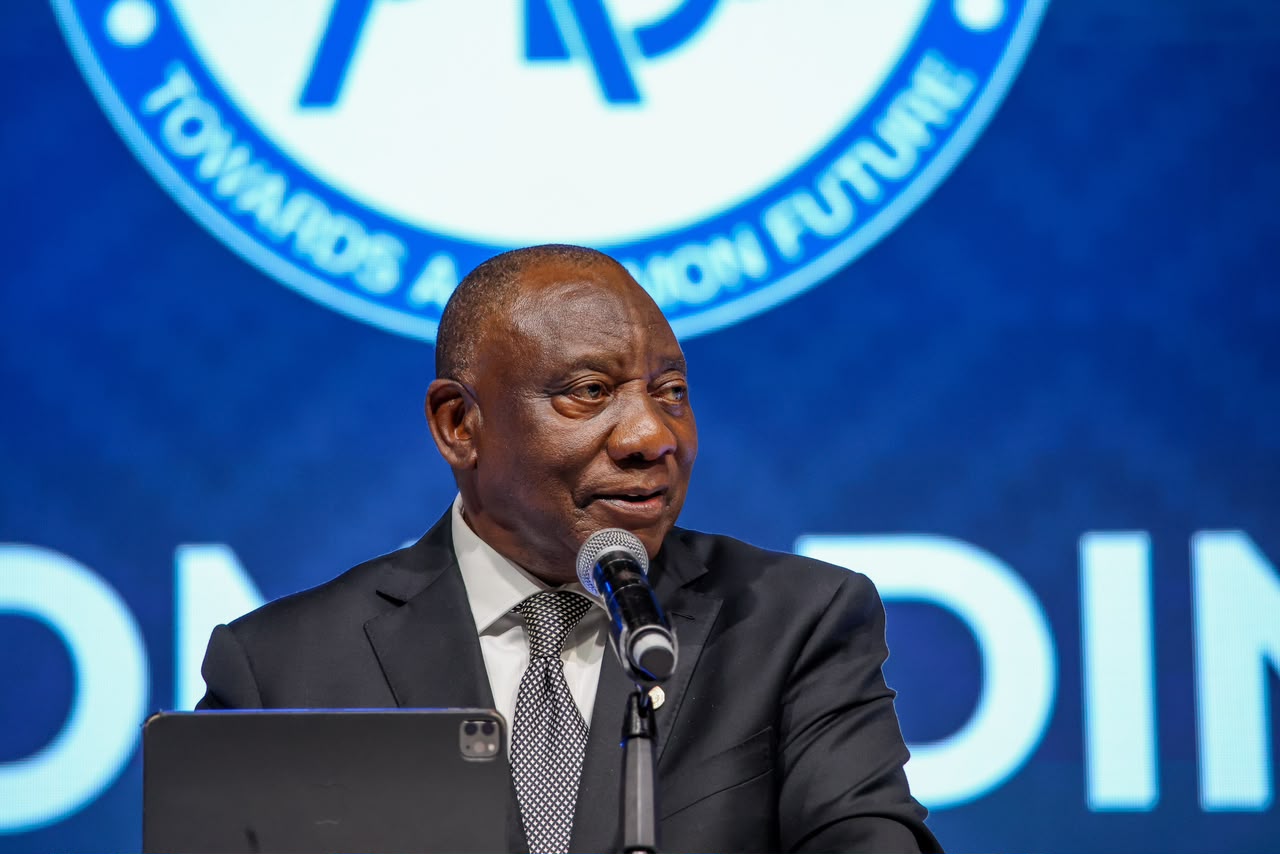
eThekwini, South Africa – 17 August 2026 — President Cyril Ramaphosa has called on Southern African leaders to accelerate regional integration, industrialisation and infrastructure development, warning that decades of cooperation have yet to unlock the full economic potential of the Southern African Development Community (SADC).
Opening the 46th Ordinary Summit of SADC Heads of State and Government in eThekwini on Monday, Ramaphosa said regional integration must move beyond declarations and become visible through factories, transport networks, energy infrastructure, businesses and employment.
“Our communiqués must become construction sites, factories, power lines, water systems, laboratories, businesses and jobs,” Ramaphosa said.
The Summit coincides with the 34th anniversary of the signing of the SADC Declaration and Treaty in Windhoek, Namibia, on 17 August 1992. Ramaphosa also noted eThekwini’s significance as the city where the African Union was officially launched in 2002.
He said the anniversaries provided an opportunity for leaders to assess whether the region was moving fast enough to realise the ambitions of greater African cooperation, integration and prosperity.
More than 400 million people, but trade remains limited
Ramaphosa said SADC, comprising 16 Member States and more than 400 million people, possessed substantial mineral resources, agricultural potential, a youthful population and growing industrial and technological capabilities.
Despite these advantages, he said the pace of economic transformation remained too slow.
According to figures cited in his address, the SADC region recorded economic growth of approximately 3.4% in 2025, while intra-SADC trade accounted for only around one-fifth of the region’s total trade.
Ramaphosa said Southern African economies continued to import goods that could be produced within the region while exporting minerals and other commodities without sufficient processing and beneficiation.
“Every raw mineral exported without beneficiation represents value that has left our shores,” he said.
“Every product imported that could competitively be manufactured here represents jobs that could have been created in our communities.”
He argued that the next phase of regional integration should focus on converting Southern Africa’s minerals and agricultural commodities into regional value chains and manufacturing capacity.
The region, he said, needed to process more of what it mined, add value to what it grew and manufacture more of what it consumed.
Infrastructure central to regional integration
Ramaphosa identified infrastructure as another priority, calling for investment in roads, efficient railway systems and modern ports capable of linking Southern African economies to continental and international markets.
He said infrastructure development should extend beyond capitals and major commercial centres to rural communities, border towns and other areas historically excluded from economic development.
Energy, water and digital infrastructure were equally important.
Ramaphosa called for expanded electricity generation and transmission capacity, greater cooperation through the Southern African Power Pool, investment in cross-border water infrastructure and wider access to affordable digital connectivity.
On agriculture, he said Southern Africa had sufficient land, climatic diversity and agricultural expertise to feed itself while developing into a significant global food producer.
He called for improved agricultural productivity, stronger regional food reserves and value chains, and greater support for smallholder and emerging farmers.
AfCFTA offers access to continental market
The President urged SADC countries to position the region to take greater advantage of the African Continental Free Trade Area (AfCFTA), which provides access to a continental market of more than 1.4 billion people.
Achieving this would require Member States to remove non-tariff barriers, improve border management, harmonise standards and facilitate the movement of goods, services, capital and skills across the region.
Ramaphosa said regional integration should ultimately be measured by its impact on individuals.
People across Southern Africa, he said, expected economic liberation to translate into decent employment, growing industries, reliable electricity, affordable food, quality healthcare, education and opportunities for young people.
“They expect regional integration to improve their daily lives in visible, practical and meaningful ways,” he said.
Ebola outbreak in DRC demands regional response
The Summit is also taking place against a serious regional public-health challenge, with Ramaphosa highlighting the Ebola outbreak caused by the Bundibugyo virus in the Democratic Republic of the Congo.
Citing the latest figures, he said nearly 5,000 confirmed cases had been recorded and more than 2,300 people had died.
Ramaphosa expressed condolences to the government and people of the DRC and praised Congolese health workers and communities responding to the outbreak.
He called for an immediate humanitarian ceasefire in conflict-affected areas to allow health workers safe access to communities, while urging parties to protect healthcare facilities, health workers and humanitarian operations.
He also cautioned governments against indiscriminate travel and trade restrictions on affected countries, saying such measures could damage livelihoods and potentially undermine containment efforts by encouraging movement through unmonitored border crossings.
SADC Member States, he said, needed to strengthen disease surveillance, laboratory capacity, emergency coordination and clinical preparedness.
The crisis also demonstrated the need for sustained African investment in health systems, research and the domestic production of vaccines, diagnostics and medicines as part of building greater health sovereignty.
Peace remains foundation for development
Ramaphosa stressed that deeper economic integration would depend on political stability and security.
“Peace without development is fragile. Development without peace is impossible,” he said.
He called for continued investment in preventive diplomacy, mediation and political dialogue, alongside stronger regional mechanisms including the SADC Panel of Elders and Organ Troika.
Ramaphosa also paid tribute to Zimbabwean President Emmerson Mnangagwa, the outgoing SADC Chairperson, thanking Zimbabwe for its leadership and cooperation, including its role in co-hosting Sectoral Ministerial Meetings during the period of interim leadership.
He further acknowledged Zambia, members of the Troika, the SADC Secretariat and Member States for their cooperation.
Drawing on the region’s history of solidarity against colonialism, minority rule and apartheid, Ramaphosa said the contemporary challenge was to give economic and social meaning to the political liberation achieved by earlier generations.
He compared SADC to a river system in which individual Member States retained their identities while becoming stronger through integration.
“A tributary does not lose its identity when it joins a great river. It gains reach, depth and power,” he said.
Ramaphosa said the eThekwini Summit should mark a transition from declarations towards measurable implementation.
“Let us turn our borders into bridges. Let us turn our resources into industries. Let us turn our youthful population into a powerful demographic dividend. Let us turn our solidarity into shared prosperity,” he said.
He subsequently declared the 46th Ordinary Summit of SADC Heads of State and Government officially open.
Over the years, I have found it challenging to define myself solely by an academic qualification, trade, or occupation. My eagerness to learn, especially about how to build and deploy capital, has allowed me to accumulate diverse experiences in a short span of time. Through this journey, I have discovered that at my core, I am a storyteller. I tell the stories of corporations, their heritage, and the individuals who act in their name. I explore the role of these institutions in fulfilling the promise of a better Africa, and, most importantly, the causal link between the rule of law and economic development. As a fellow believer in Africa’s potential, can I count on you to be a point of light in securing our continent’s future?



