



Community Empowerment
From Empowerment to Action: Reflections from the IWD2026 South Africa Convening

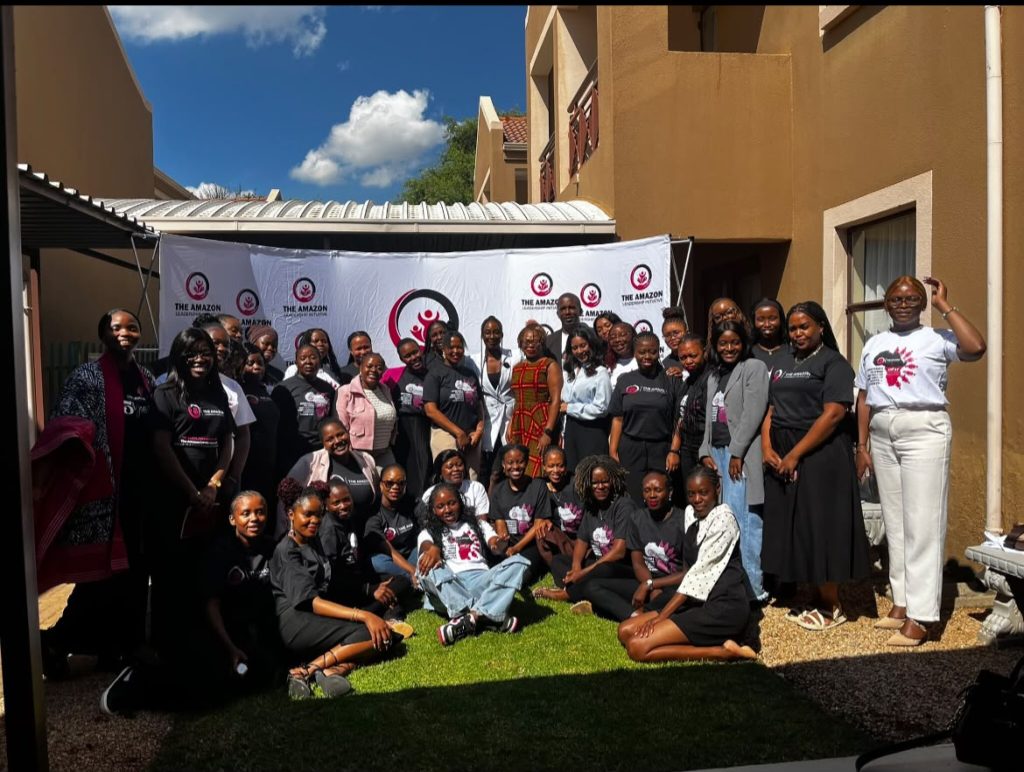
On 7 March 2026, I had the opportunity to attend the International Women’s Day 2026 South Africa Convening, a gathering that brought together young women, advocates, professionals and leaders for conversations around gender equality, leadership, rights, justice and participation.
As I reflected on the discussions throughout the day, one message stood out to me: empowerment cannot simply be something we speak about. It must become something we practise, build and extend to others.
The convening created a space for women to engage with questions that go beyond individual success. What does it mean to lead? How do we create systems where women have greater agency? How do we ensure that girls are equipped to participate in shaping their communities and countries? And perhaps most importantly, how do we move from inspiration to action?
These questions resonated deeply with me as an entrepreneur and someone interested in the intersection of women’s empowerment, youth development, business and community building.
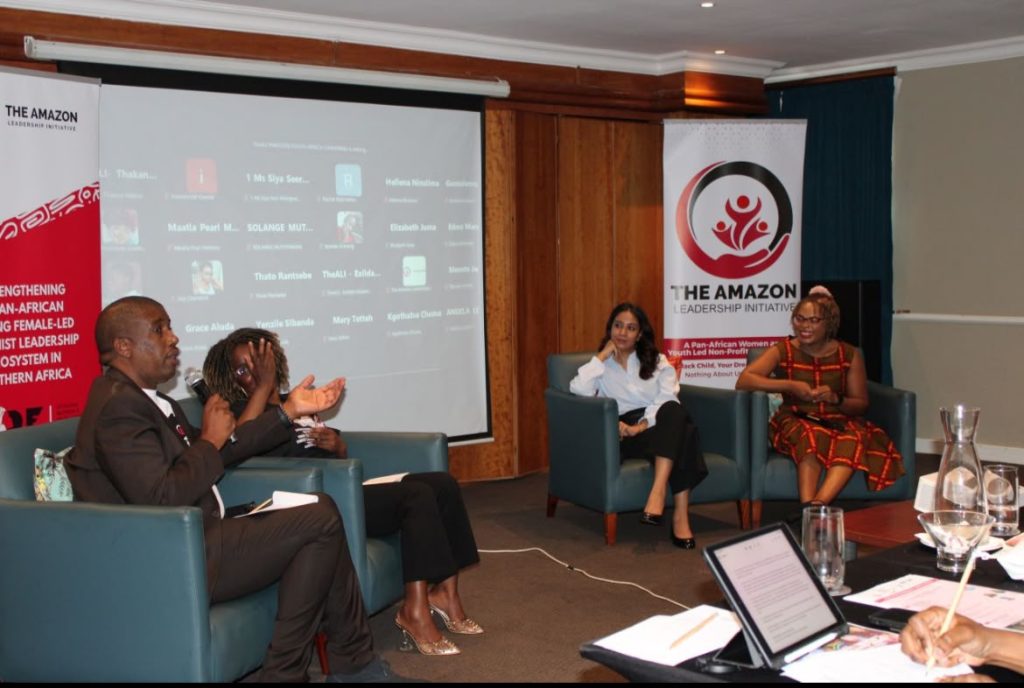
Empowered Women Empower Women
One of the central discussions was the panel titled “Empowerment Mindset: Empowered Women Empower Women.”
The panel brought together women whose work spans strategic litigation, governance, climate change, maritime affairs and Pan-African development.
Tambudzai Manjonjo, who has more than 15 years of experience across Southern Africa, shared a perspective shaped by strategic litigation and the fight for women’s rights, including reproductive rights and ending child marriage. Her work reflects the importance of ensuring that women do not simply have rights on paper, but have the agency and platforms necessary to exercise them.
Nonkululeko Neo Masoek offered another dimension of leadership through her work across maritime affairs, disaster foresight, governance and policy. Her experience demonstrates how leadership can connect communities with institutions and policy processes that directly affect people’s lives.
Dr Hesphina Rukato, a Pan-African visionary and former Deputy Chief of Staff at the African Union Commission, brought the conversation into an even broader African context through her work in climate change and governance.
Together, these perspectives reminded me that women’s empowerment is not one-dimensional.
It exists in the courtroom.
It exists in government.
It exists in communities.
It exists in business.
It exists in education.
And it exists wherever women are given the opportunity to participate meaningfully in decisions that shape their lives and societies.
For me, this is particularly important because entrepreneurship is also a form of participation. When women build businesses, create employment, develop products, enter new markets and create communities around their ideas, they are contributing to the economic and social fabric of their communities.
Giving, Gaining, Rising
Another meaningful conversation came through the fireside chat “Giving, Gaining, Rising.”
The session brought together perspectives from peace and security, gender justice, financial inclusion, human rights and economic empowerment.
Mpiwa Mangwiro-Tsanga, whose career spans work with United Nations delegations and grassroots organisations, highlighted the importance of inclusive leadership and the interconnected nature of peace, security and gender justice.
Tendai Angeline Mugabe brought attention to financial inclusion and the relationship between women’s economic empowerment and climate resilience.
Khuraisha Patel-Rahemtulla, a human rights lawyer working at the intersection of ethics, human rights and the financial sector, added another important perspective on what responsible leadership can look like within institutions.
The title of the conversation itself stayed with me: Giving, Gaining, Rising.
There is something powerful about viewing leadership as a cycle rather than a destination.
We give through what we know.
We gain through the people and experiences we encounter.
And we rise not only individually, but by creating room for others to rise with us.
That is particularly relevant for young women entering spaces where they may not always see people who look like them.
Sometimes empowerment begins with simply seeing someone else do it.
From Learners to Leaders
Another initiative presented during the convening was TheALI and Rise Up Together Advocacy Project: “From Learners to Leaders – Integrating Gender and Civic Participation in Education” in Gauteng.
The initiative seeks to strengthen gender-sensitive and participatory civic education within the Life Orientation curriculum by engaging stakeholders including the Gauteng Department of Education, learners, teachers, parents, communities and the South African Council for Educators.
What stood out to me was the emphasis on preparing girls not merely to be participants in society, but to become leaders and advocates who understand that their voices matter.
Leadership development should not begin only when someone enters the workplace.
It should begin much earlier.
Young people should have opportunities to understand civic participation, develop confidence, ask questions, engage with institutions and recognise their ability to influence the world around them.
When we invest in girls today, we are not simply preparing individual young women for their futures. We are contributing to the kind of societies they will eventually help build.
As Ms Mary Izobo, Founder and Director of TheALI, expressed during the convening:
“You are not only your ancestors’ wildest dreams; you are the authors of Africa’s next chapter.”
That idea captures something important about the generation coming through.
We inherit systems, stories and challenges from those who came before us. But we also have a responsibility to decide what happens next.
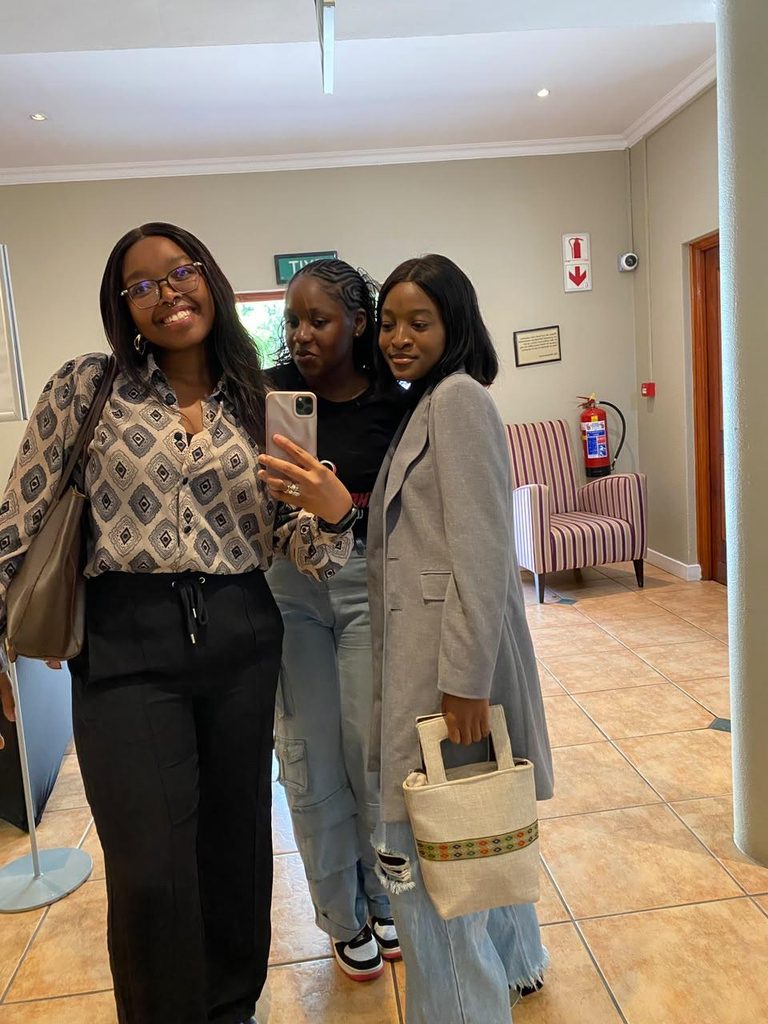
Left side: Olwethu Dikiso a law student at Wits university
Middle : Aaliyah Dube a tech student at Wethinkcode
Right: Isabela Pereira Entrepreneur and Founder of SHE FITS
What Does Empowerment Look Like in Practice?
One of my biggest reflections from the convening was that empowerment has to move beyond language.
It is easy to speak about empowering women.
It is harder to create the conditions that allow women to actually exercise their power.
That means access to education.
Access to capital.
Access to networks.
Access to information.
Access to leadership opportunities.
Access to markets.
Access to safe spaces.
And, importantly, access to people willing to open doors for those coming behind them.
As an entrepreneur, I have increasingly realised how valuable exposure can be.
Being in a room can change the way you think.
Meeting someone can introduce you to an opportunity you did not know existed.
Hearing another person’s story can challenge the limitations you have placed on your own.
And sometimes one conversation can become a partnership, a mentorship, an introduction or the beginning of an entirely new direction.
That is why spaces like the IWD2026 South Africa Convening matter.
They create opportunities for people to connect ideas with people and people with possibilities.
From Inspiration to Action
International Women’s Day is often a moment when the world celebrates women’s achievements.
But celebration should not be the end point.
It should be a checkpoint.
A moment to ask ourselves what we are actually doing to make progress possible.
For me, that means continuing to build through entrepreneurship, creating opportunities for women and young people, learning from leaders across different sectors, participating in conversations around Africa’s development and intentionally entering spaces where meaningful relationships can be formed.
It also means recognising that no one person has to do everything.
We need lawyers.
We need entrepreneurs.
We need educators.
We need policymakers.
We need community organisers.
We need investors.
We need researchers.
We need young people willing to ask difficult questions.
And we need women who are willing to open the door behind them once they have walked through it.
The IWD2026 South Africa Convening reminded me that empowerment is both personal and collective.
We can work on ourselves while creating opportunities for others.
We can pursue our ambitions while remaining connected to the communities around us.
We can rise without pulling the ladder up behind us.
Carrying the Conversation Forward
As I continue my own entrepreneurial journey, I am becoming increasingly interested in the spaces where business, women’s empowerment, youth development, international engagement and African opportunity intersect.
My work through SHE FITS is rooted in women, wellness, movement and community, but the broader vision extends beyond a business.
I believe businesses can become platforms for connection.
Entrepreneurship can become a pathway to economic participation.
And exposure can become a catalyst for young people to imagine possibilities that may previously have felt inaccessible.
The conversations I encountered on 7 March reinforced that belief.
The women featured at the convening are working across different fields, but there is a common thread: they are contributing to something bigger than themselves.
That is perhaps the most important lesson I took away.
Leadership is not only about having a title.
It is about responsibility.
It is about using what you have learned to create value.
It is about making space for others.
And it is about understanding that the future of Africa will not be shaped by one generation, one institution or one sector alone.
It will be shaped by all of us who choose to participate.
As we move forward, I hope more young women will recognise that they belong in these rooms and that eventually, they should not only be entering the rooms.
They should be helping to build them.
About the Author
Isabela Pereira is a South African entrepreneur, speaker and Founder & CEO of SHE FITS, a women’s activewear and wellness business. She was recognised among the Mail & Guardian 200 Young South Africans 2026 in the Entrepreneurship category.
Her work and interests sit at the intersection of entrepreneurship, women’s economic empowerment, youth development, regional trade, international business and community building.
Through her entrepreneurial journey, Isabela is passionate about creating connections that open pathways to opportunity particularly for young people and women seeking to build sustainable businesses and participate more meaningfully in the economy.
Her experiences across business events, international delegations, investment engagements and entrepreneurship programmes continue to shape her perspective on how collaboration, access and exposure can help turn ideas into sustainable opportunities across Africa and beyond.









You must be logged in to post a comment Login