









Business & Economy
Ramaphosa Urges Infrastructure Drive to Rebuild South Africa’s Industrial Base

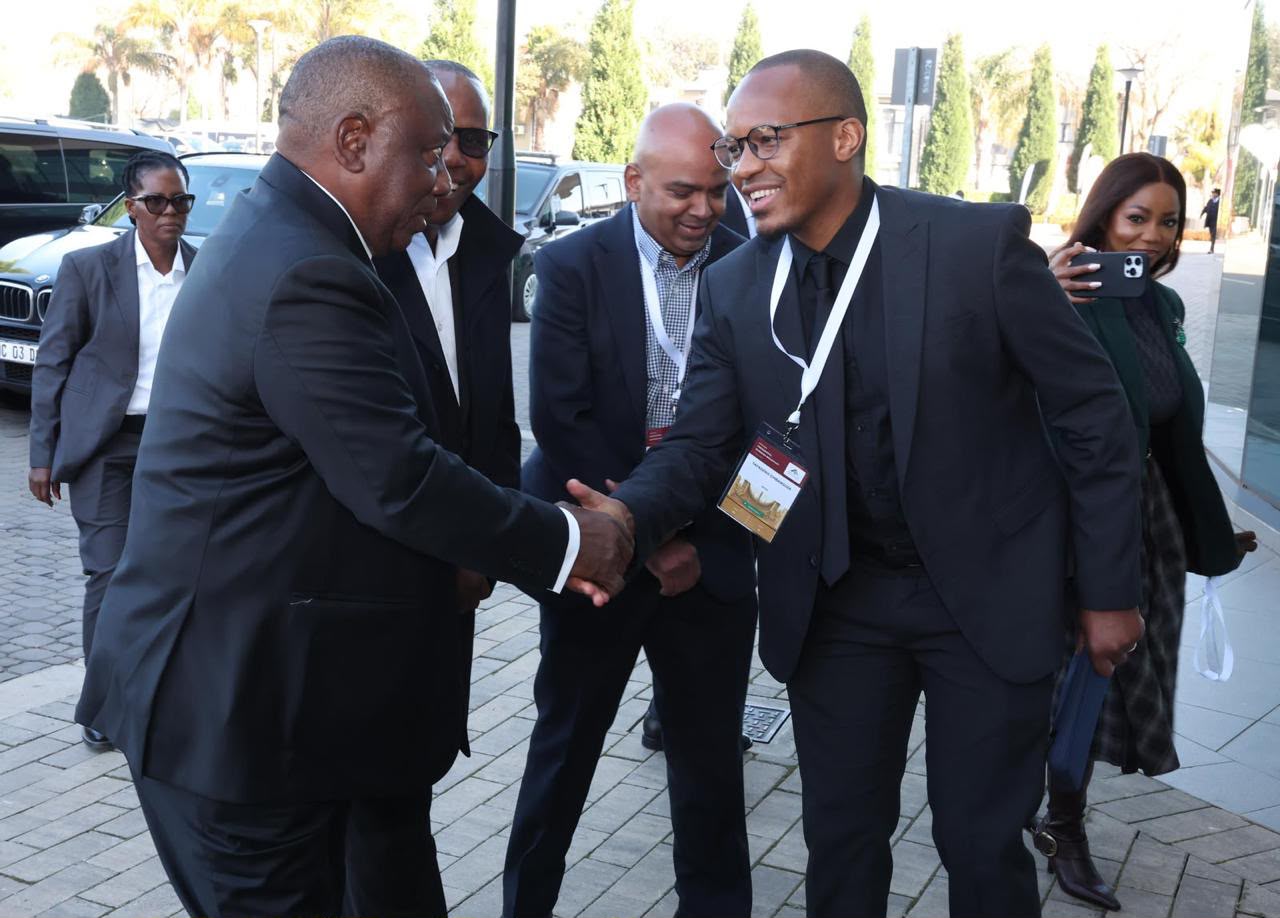
EKURHULENI, 13 August 2026 — President Cyril Ramaphosa has called for South Africa’s R1 trillion infrastructure programme to become the foundation of a new era of industrialisation, arguing that investment in electricity transmission, rail, ports and water infrastructure must simultaneously rebuild the country’s manufacturing capacity.
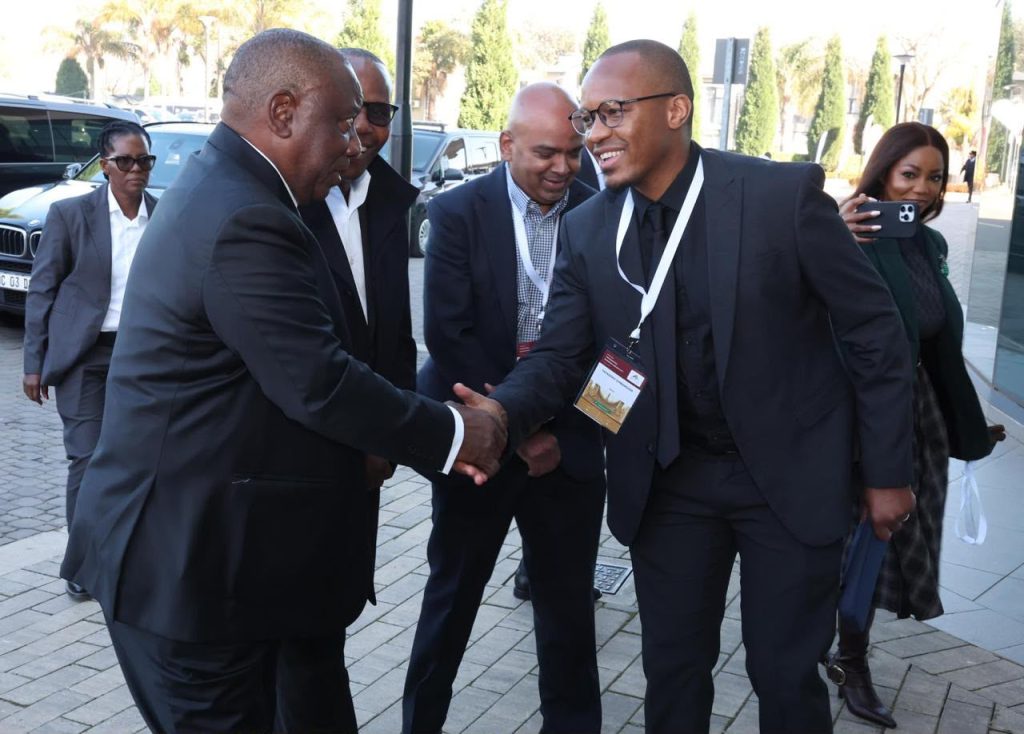
Addressing the Steel and Engineering Industries Federation of Southern Africa (SEIFSA) Presidential Business Breakfast at the Radisson Hotel OR Tambo in Ekurhuleni on Thursday, Ramaphosa said infrastructure investment should create factories, strengthen domestic supply chains, develop skills and generate productive employment.
With SEIFSA representing more than 1,300 companies across the metals, engineering and capital equipment industries, the President described the sector as strategically important to South Africa’s economic sovereignty.
“We cannot accept the continued erosion of South Africa’s industrial base,” Ramaphosa said, noting that manufacturers continue to face weak domestic demand, logistics constraints, high electricity costs, infrastructure bottlenecks and growing import competition.
Transmission expansion presents major manufacturing opportunity
Central to Ramaphosa’s address was South Africa’s planned expansion of its electricity transmission network.
The country requires approximately 14,000 kilometres of new transmission lines over the coming decade, alongside substantial investment in substations and transformation capacity.
Ramaphosa said the programme would create demand for transmission towers, fabricated steel, conductors, cables, transformers, insulators, switchgear, control systems and engineering services.
“This should become one of the great industrial projects of our generation,” he said.
The President warned against expanding the national grid while allowing domestic manufacturing capability to decline, saying the transmission programme should deliberately support South African steel fabrication and electrical equipment manufacturers.
He said it should also become a national skills programme, creating apprenticeships and opportunities for engineers, electricians, welders, boilermakers, toolmakers, technicians and project managers.
Electricity affordability remains critical
While Ramaphosa said government and its partners had succeeded in bringing load shedding to an end, he acknowledged that electricity affordability remained a major threat to energy-intensive industries.
He said electricity tariffs had increased substantially faster than inflation over the past two decades, contributing to the closure or scaling back of smelters and other industrial operations.
The next phase of electricity reform, he said, must therefore focus on both security of supply and reducing costs.
The South African Wholesale Electricity Market is expected to begin operating in 2027, introducing greater competition between electricity generators.
Ramaphosa also highlighted the recently established Eskom Restructuring Task Team, which is overseeing work towards establishing a fully independent, state-owned transmission company.
He said the restructuring would need to minimise financial and operational risks, strengthen energy security and contribute towards lowering electricity costs while safeguarding Eskom’s financial sustainability and treating workers fairly.
Rail, ports and water to drive industrial demand
The President said reforms under Operation Vulindlela were also opening opportunities for manufacturers in freight rail, ports and water infrastructure.
With multiple train operating companies gaining access to the freight rail network, Ramaphosa said significant investment would be required in locomotives, wagons, signalling systems, railway infrastructure and terminal capacity.
South Africa, he argued, should rebuild its historical railway engineering capabilities and manufacture more of the equipment required by its own transport system.
Similar opportunities were emerging from investment in port cranes, handling equipment and terminal modernisation.
In the water sector, Ramaphosa pointed to the National Water Action Plan and the operationalisation of the South African National Water Resources Infrastructure Agency.
Government is investing approximately R24 billion annually through national grants in municipal water and sanitation infrastructure, creating potential demand for locally produced pipes, pumps, valves, treatment equipment, structural steel and engineering services.
Taken together, infrastructure investment across transmission, rail, ports, water, renewable energy, mining, social infrastructure and defence amounts to approximately R1 trillion over the next three years.
“We should view this not simply as a construction programme. We should view it as an industrial strategy,” Ramaphosa said.
Government seeks predictable infrastructure pipeline
The President acknowledged concerns from manufacturers that major investments in new production capacity cannot be justified without certainty about future demand.
He said government needed to improve coordination and publication of its infrastructure pipeline, providing businesses with greater visibility over procurement planned by government departments, state-owned enterprises and public institutions over five, 10 and 15 years.
A manufacturer considering investing hundreds of millions of rand in a transformer factory, cable plant or steel fabrication facility needed confidence that sufficient future demand existed, he said.
“Predictability creates investment. Investment creates capacity. Capacity creates jobs.”
Ramaphosa reaffirmed government’s commitment to the Steel and Metal Fabrication Master Plan and described steel as a strategic industry fundamental to transmission, rail, mining, manufacturing, ports, bridges and water infrastructure.
However, he cautioned that localisation could not become a licence for inefficiency or excessive prices.
Domestic manufacturers seeking to benefit from public procurement would need to remain competitive, meet technical and quality standards and deliver products on time.
Trade policy must balance protection and competitiveness
Ramaphosa said South Africa could not ignore unfair international trade practices, particularly amid growing excess global steelmaking capacity.
At the same time, downstream manufacturers required competitively priced inputs.
Trade policy therefore needed to protect efficient domestic producers against unfair competition without penalising downstream businesses where domestic supply was unavailable, inadequate or uncompetitive.
He said work by the International Trade Administration Commission on steel tariffs and rebates was intended to strike this balance.
Where major equipment had to be imported, government would increasingly seek benefits for the domestic economy through mechanisms including the National Industrial Participation Programme and supplier-development requirements.
These could include technology transfer, research and development, skills development, local investment and export opportunities.
Call to rebuild South Africa’s artisan pipeline
Ramaphosa also challenged industry to revive the country’s historic culture of artisan training.
He said major industrial companies had previously produced generations of fitters and turners, electricians, boilermakers, welders, millwrights and toolmakers whose expertise spread throughout the economy.
Infrastructure contracts, he argued, should consequently be measured not only by the physical assets delivered but also by the industrial capabilities they leave behind.
Projects should demonstrate how many apprentices were trained, artisans qualified, young engineers gained experience, local suppliers were developed and how much new manufacturing capacity remained once construction was completed.
“That is how infrastructure investment becomes industrial development,” he said.
South Africa should become Africa’s ‘engineering workshop’
Looking beyond the domestic market, Ramaphosa said the African Continental Free Trade Area offered South African manufacturers access to a continental market of more than one billion people.
With African economies investing in cities, mines, electricity networks, railways, factories, water systems and ports, he said South African firms were well positioned to supply engineering products and expertise.
“South Africa should aspire to become the engineering workshop of the African continent,” Ramaphosa said.
He identified transformers, mining machinery, railway equipment, pumps, valves, fabricated steel and electrical equipment among the products South Africa could increasingly export across the continent.
The President said the combination of infrastructure investment, electricity and logistics reforms, the energy transition and the AfCFTA presented an opportunity to reverse decades of manufacturing decline.
Government, he said, needed to provide certainty, remove structural constraints and use public procurement strategically, while industry needed to invest, innovate, improve productivity, transform and train workers.
“For many years we have spoken about the decline of South African manufacturing. We must now speak about its renewal,” Ramaphosa said.
He concluded by calling for the infrastructure programme to become the foundation of a new industrial era in which South Africa manufactures more of the equipment required for its own development, transforms more of its minerals into higher-value products and expands exports into African and global markets.
“Let us build the transmission lines. Let us rebuild the railways. Let us modernise our ports. Let us secure our water infrastructure. But as we build them, let us also rebuild South African industry.”