What Triggered the Outage?
Cloudflare quickly confirmed that the outage was not caused by a cyberattack, but by an internal software failure stemming from an automatically generated configuration file.
Key technical factors:
- Cloudflare’s system generated an unusually large security-related configuration file, meant to help defend against threats such as DDoS attacks.
- The file grew far beyond its expected size, overwhelming the core traffic-routing software responsible for Cloudflare’s global network.
- This overload crashed essential processes, affecting Cloudflare’s DNS, CDN, security services, and API endpoints.
Cloudflare’s CTO, Dane Knecht, stated that while the timing coincided with scheduled maintenance at the Santiago (SCL) datacenter, the maintenance was not the cause—the issue originated in the centralized software layer that powers Cloudflare’s vast edge network.
How Big Was the Impact?
The outage was broad but not total. Because Cloudflare sits in front of countless websites and apps, the effects varied from mild slowdowns to complete service failure.
Major platforms disrupted included:
- X (formerly Twitter) — login problems, slow loading
- OpenAI / ChatGPT — intermittent downtime for both chat and API
- Spotify — app failures and streaming interruptions
- Canva
- Grindr
- Letterboxd
- Various online game servers
Outage trackers such as DownDetector—which rely on Cloudflare—also went down, making impact measurement difficult in real time.
Broader ripple effects:
- Portions of New York Times Games displayed errors.
- Numerous e-commerce, media, and government sites relying on Cloudflare DNS or security services became inaccessible.
- A spike in reports emerged across the US East Coast, then propagated globally.
For several hours, entire chunks of the internet felt slower, unstable, or unreachable.
Resolution: Rapid Recovery, Transparent Communication
Cloudflare engineers prioritized restoring traffic flow first. By 14:30 UTC (9:30 AM ET), network routing functionality was largely back online.
Recovery timeline:
- ~6:30 AM ET — Outage begins
- ~9:30 AM ET — Global traffic flow restored
- ~11:30 AM ET — Dashboard, APIs, and control plane fully operational
- Shortly after — Cloudflare declares incident resolved
Cloudflare issued:
- A formal apology
- A public incident report on the status page
- A commitment to publish a detailed post-mortem analysis
- Direct communication from CEO Matthew Prince on X, taking responsibility
By November 19, operations were stable globally, with only isolated login glitches reported by a handful of users.
Why Incidents Like This Keep Happening
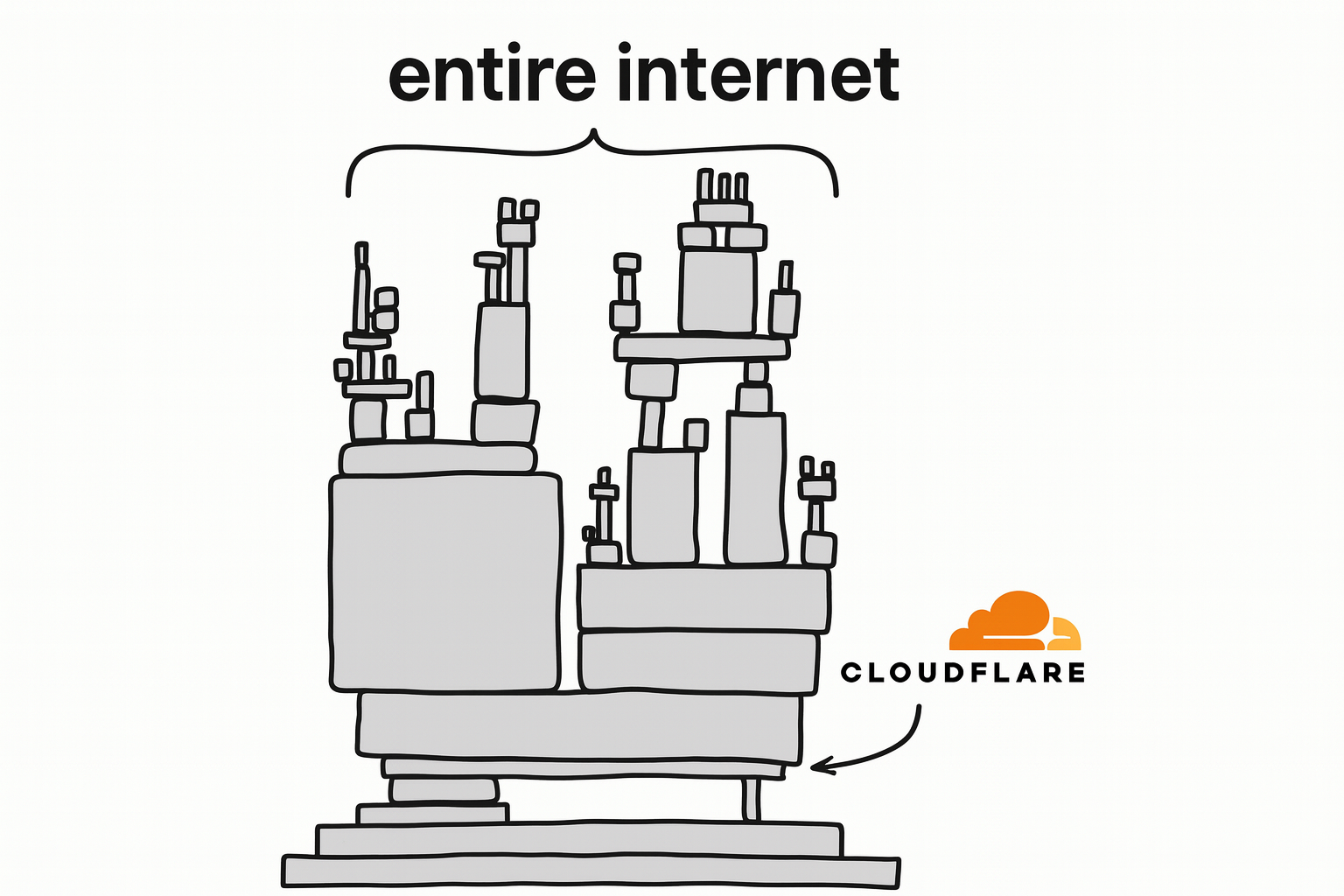
Cloudflare is not new to outages. Issues in 2022, 2023, and 2024 similarly highlighted how centralized traffic systems—no matter how robust—carry inherent fragility.
The 2025 outage added fuel to ongoing debates about:
- Internet centralization and single points of failure
- The dependency of thousands of businesses on a few major infrastructure providers
- The need for more decentralized, redundant, and fault-tolerant web systems
With AWS, Azure, Meta, and Google also suffering multiple outages this year, the internet’s resilience is under increased scrutiny.
Online, the moment sparked waves of memes, conspiracy jokes about “bot purges,” and serious commentary on the critical role Cloudflare plays in global connectivity.
What Users Should Do
If you or your business relies on Cloudflare, you can:
- Check Cloudflare Status Page for updates
- Review your system’s failover, redundancy, and secondary DNS setup
- Consider buffering critical services with multi-CDN or hybrid deployments
Incidents like this are a reminder that even the most reliable internet infrastructure can experience cascading failures.
Bottom Line
The Cloudflare Outage of November 18, 2025 was a stark illustration of how a single misbehaving configuration file can shake the global internet. While the issue was resolved within hours, the event reinforces an uncomfortable truth: the modern web is powerful—but still vulnerable.
If your organization depends heavily on Cloudflare or similar providers, now is an excellent time to revisit your resilience strategy.