


Business
Unpaid Wages and Assault at Ming Chang Sino-Africa
The recent violent altercation at Ming Chang Sino-Africa Mining Investments (source) in Gweru, Zimbabwe, has reignited concerns over labor conditions in Chinese-owned mining operations across the country. The incident, which took place on January 21, 2025, involved a heated confrontation between excavator operator Kholwani Dube and his supervisor, Liu Haifeng, reportedly over unpaid wages.
This case is not an isolated event but rather part of a broader pattern of labor disputes and alleged violations in Zimbabwe’s mining sector, where concerns about worker exploitation, poor safety standards, and weak labor protections have been raised repeatedly.

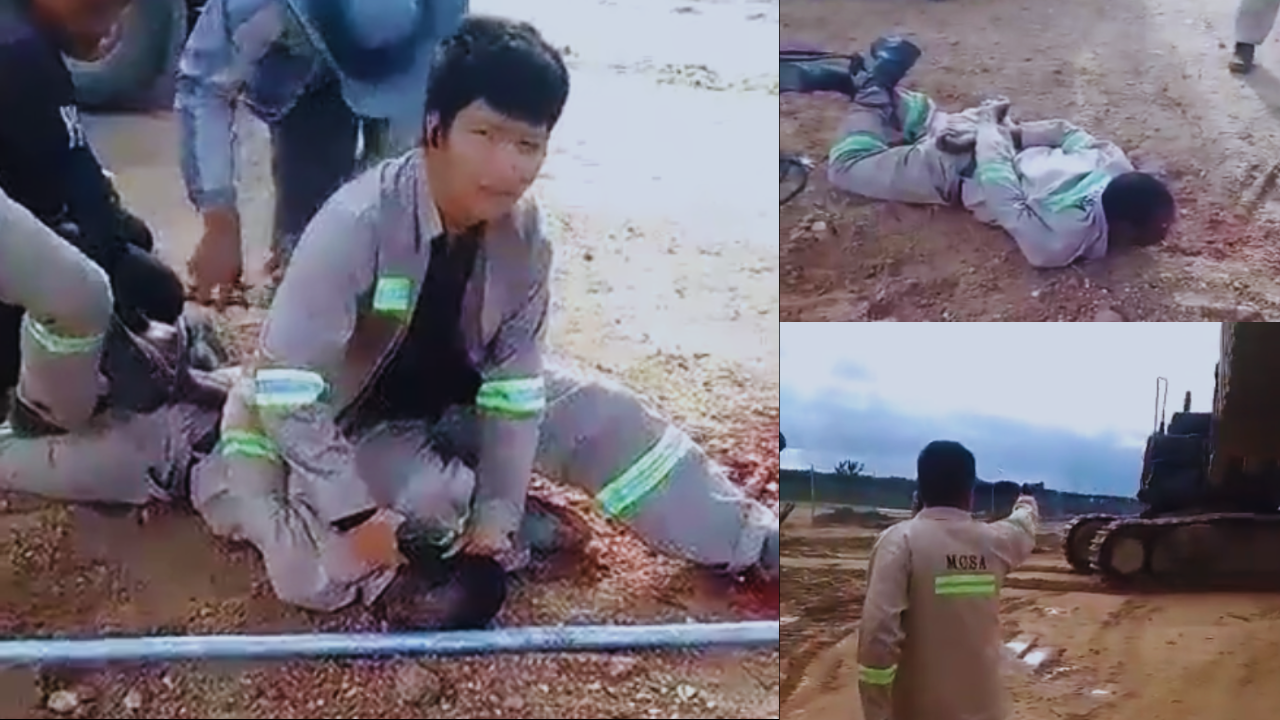
The recent violent altercation at Ming Chang Sino-Africa Mining Investments (source) in Gweru, Zimbabwe, has reignited concerns over labor conditions in Chinese-owned mining operations across the country. The incident, which took place on January 21, 2025, involved a heated confrontation between excavator operator Kholwani Dube and his supervisor, Liu Haifeng, reportedly over unpaid wages.
This case is not an isolated event but rather part of a broader pattern of labor disputes and alleged violations in Zimbabwe’s mining sector, where concerns about worker exploitation, poor safety standards, and weak labor protections have been raised repeatedly.
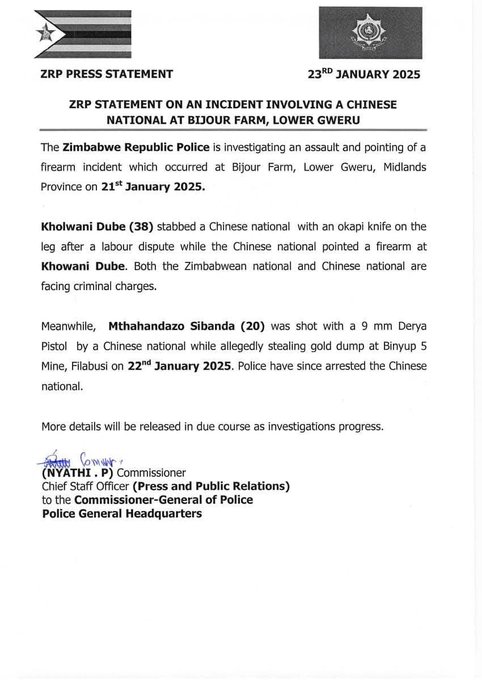
According to a statement from the Zimbabwe Republic Police (ZRP) (source), the dispute escalated into violence when Dube allegedly stabbed Liu Haifeng with an okapi knife, while Liu reportedly brandished a firearm at Dube. Both men are now facing criminal charges.
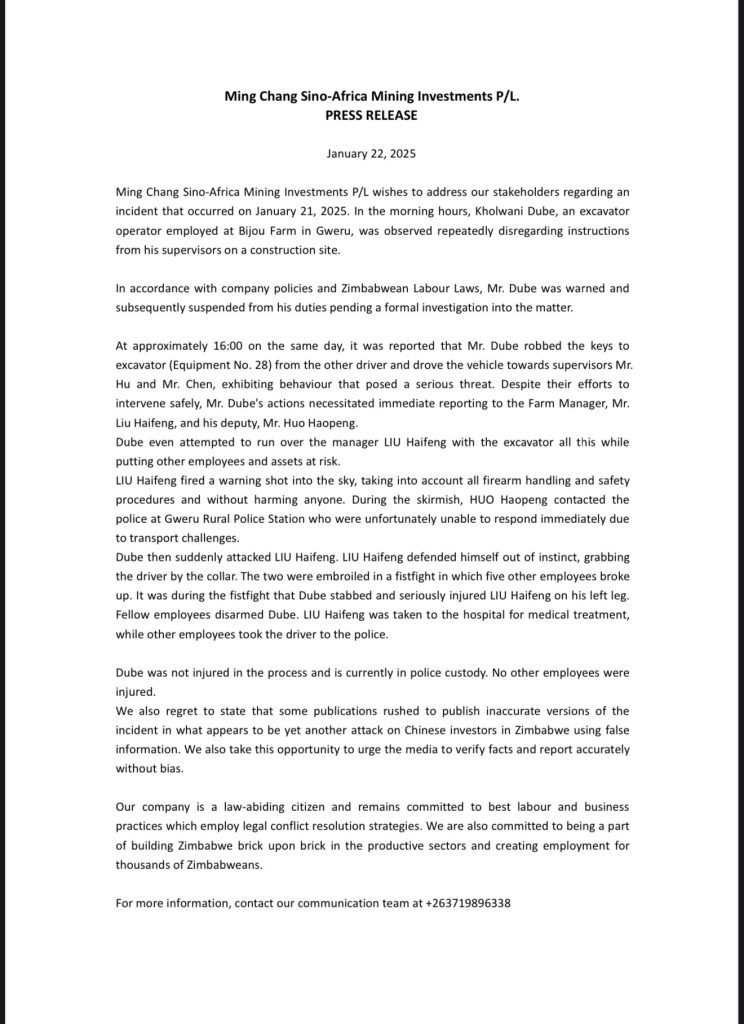
Ming Chang Sino-Africa Mining Investments has presented a different account of events. The company claims that:
- Dube had taken an excavator without authorization, disregarding instructions.
- In response, Liu Haifeng fired a warning shot into the air to prevent further escalation.
- During the ensuing struggle, Dube allegedly stabbed Liu, resulting in Liu’s hospitalization.
- Dube was restrained by other employees and handed over to the police.
While legal proceedings are still ongoing, this case has once again drawn attention to the treatment of Zimbabwean workers in foreign-owned mining companies, particularly those owned by Chinese investors.
This is not the first time Ming Chang Sino-Africa Mining Investments has been at the center of labor disputes.
- 2019: Workers at the company’s lime factory in Bubi District went on strike due to low wages, poor working conditions, and lack of protective equipment (source).
- Employees alleged harassment and exploitation, leading to a temporary halt in production.
These recurring issues suggest a systemic problem in the company’s labor policies, rather than an isolated incident.
The issues at Ming Chang Sino-Africa Mining Investments reflect wider concerns regarding Chinese investment in Zimbabwe’s mining sector.
A study published on Academia (source) highlights that:
- Chinese mining firms often pay lower wages than local or Western-owned companies.
- Reports of harsh working conditions, long hours, and physical abuse are common.
- Health and safety regulations are frequently ignored, leading to workplace accidents and illnesses.
This situation is exacerbated by:
- High unemployment rates, which leave workers with limited employment options.
- Weak labor laws and enforcement, allowing companies to violate worker rights with little consequence.
- Lack of government oversight, leading to minimal intervention in labor disputes.
One of the major concerns raised by human rights activists and labor unions is the failure of local authorities to protect workers from labor abuses in foreign-owned companies.
- Critics argue that the Zimbabwe Republic Police (ZRP) and other government bodies often fail to take swift action in labor-related disputes.
- Many believe that corruption and political interests influence how cases involving foreign investors are handled.
- The government’s focus on attracting foreign investment sometimes results in turning a blind eye to labor violations.
Zimbabwe does have labor laws that protect workers’ rights, including:
- The Labour Act (Chapter 28:01) – Governs employment conditions, wages, and workplace safety.
- The National Social Security Authority (NSSA) – Monitors workplace safety and ensures compliance with labor standards.
However, enforcement remains weak, and many workers fear retaliation if they report abuses.
The January 21 altercation has intensified public discourse on labor exploitation and the role of Chinese investors in Zimbabwe’s economy.
Public Outcry and Workers’ Rights Advocacy
- Labor unions and civil society organizations have demanded greater accountability from both the government and foreign investors.
- Social media discussions and protests have highlighted workers’ grievances and calls for reform (source).
Zimbabwe and China have a strong economic partnership, with China investing heavily in mining, infrastructure, and agriculture.
However, reports of labor abuses strain diplomatic relations and fuel resentment among local communities (source).
- Some activists have called for stricter regulations on foreign companies operating in Zimbabwe.
- Others advocate for stronger labor protections and harsher penalties for companies violating workers’ rights.
To prevent future incidents like the Ming Chang Sino-Africa Mining Investments altercation, key reforms must be implemented (source).
1. Strengthening Labor Law Enforcement
- Increased government oversight on foreign companies.
- More labor inspections to ensure compliance with wage and safety laws.
- Severe penalties for companies found guilty of labor violations.
2. Improving Worker Protection Mechanisms
- Establishing anonymous reporting channels for employees facing abuse.
- Enhancing labor unions’ power to negotiate better wages and conditions.
- Providing legal aid for workers involved in labor disputes.
3. Holding Foreign Companies Accountable
- Requiring mandatory labor rights training for foreign employers.
- Encouraging corporate social responsibility initiatives.
- Enforcing ethical labor practices as a condition for foreign investment.
FAQs
1. Why are Chinese-owned companies frequently accused of labor violations in Zimbabwe?
Chinese companies operate in high-risk industries like mining and often prioritize profit over labor rights. Weak enforcement of labor laws in Zimbabwe enables exploitative practices.
2. What legal actions are being taken against Ming Chang Sino-Africa Mining Investments?
Both Kholwani Dube and Liu Haifeng are facing criminal charges, but the broader issue of unpaid wages and labor rights violations remains under investigation.
3. What can Zimbabwean workers do to protect their rights?
Workers should join labor unions, report abuses, and demand government action to improve working conditions. Seeking legal assistance and raising awareness through media and advocacy groups can also help.
4. How does this case affect Zimbabwe’s relationship with China?
While Zimbabwe relies heavily on Chinese investment, continued labor disputes could damage diplomatic ties and lead to stricter business regulations for foreign companies.
5. What role does the Zimbabwe Republic Police play in labor disputes?
The ZRP is responsible for investigating labor-related crimes, but critics argue that lack of urgency and potential corruption often hinder justice.
For Zimbabwe’s economy to grow sustainably, foreign investment must align with fair labor practices. The government must enforce strict regulations to ensure workers are treated with dignity and paid fairly. Only then can Zimbabwe strike a balance between economic growth and human rights.