










Business & Economy
The dtic, Standard Bank, MTN and DHL Join Forces to Help African SMEs Compete Across Borders

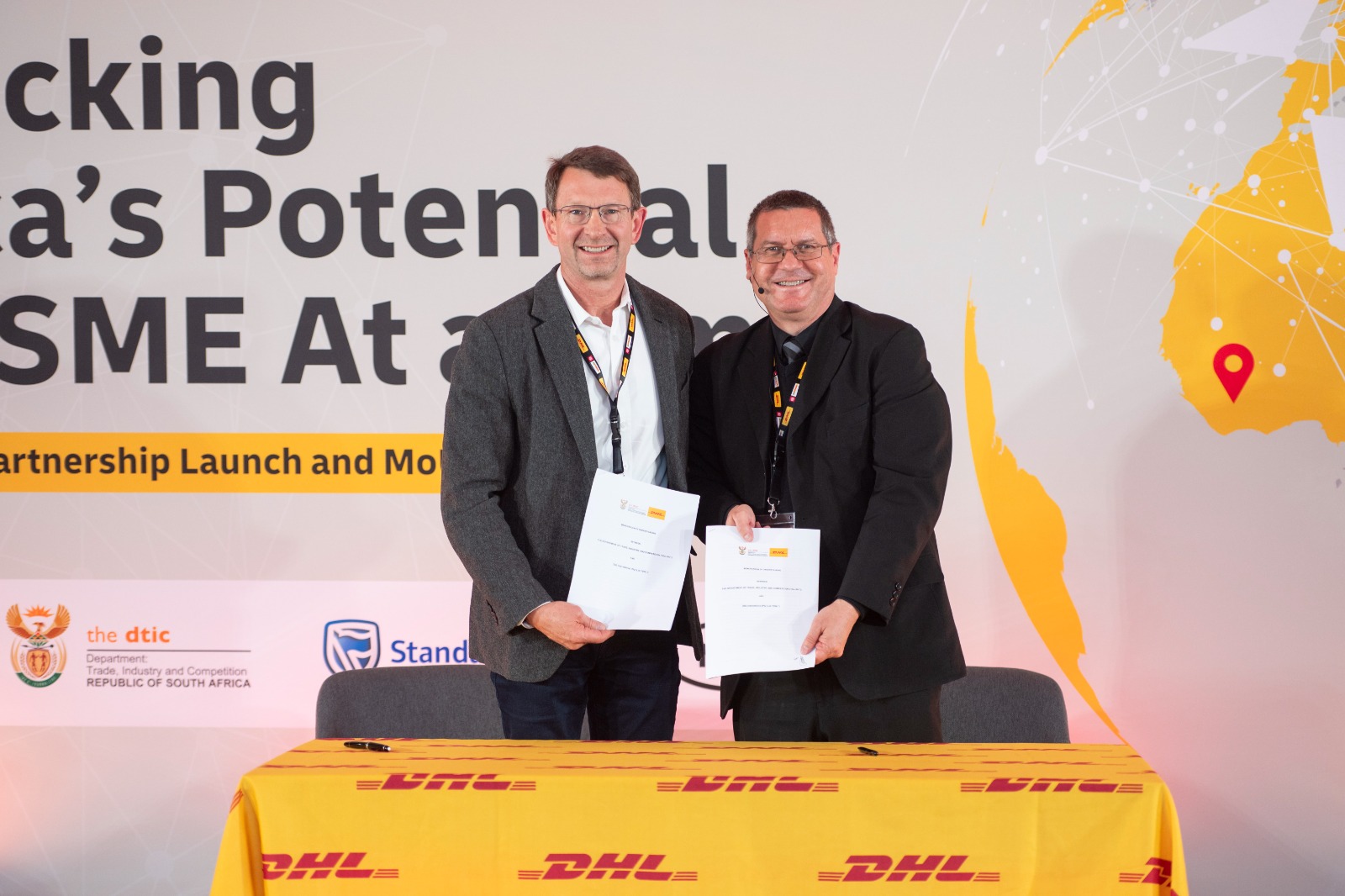
Johannesburg, South Africa — 12 August 2026
South Africa’s Department of Trade, Industry and Competition (the dtic), Standard Bank, MTN and DHL have joined forces in a series of strategic partnerships aimed at helping small and medium-sized enterprises across Sub-Saharan Africa scale their operations, enter new markets and participate more effectively in regional and global trade.
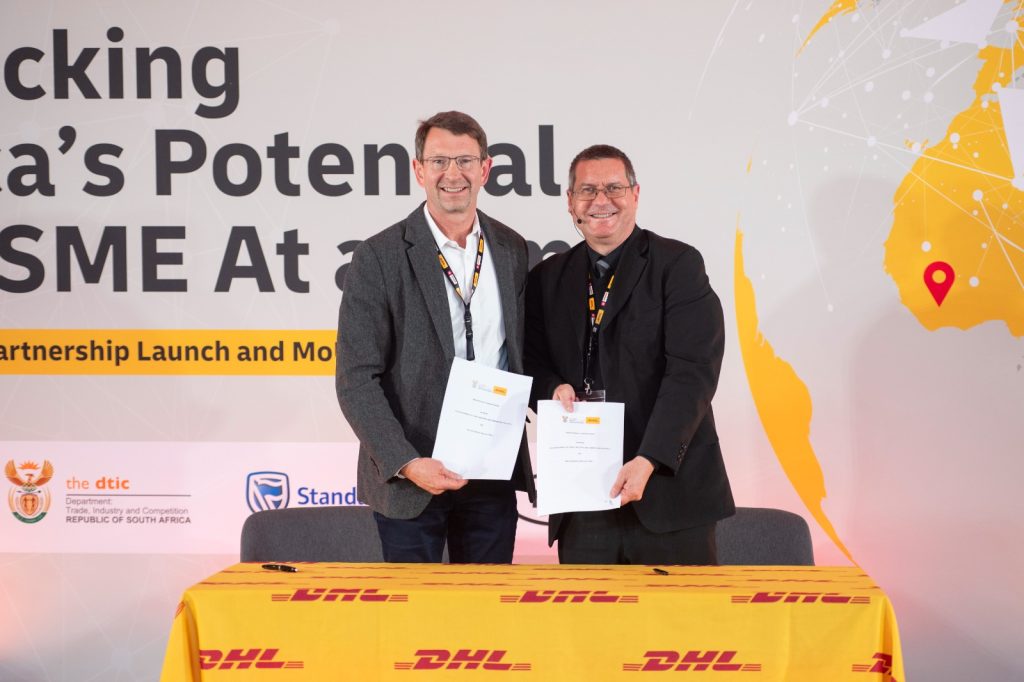
The initiatives, launched under DHL’s GoTrade programme, seek to address some of the persistent constraints facing African SMEs, including limited access to finance, insufficient export readiness, gaps in digital adoption and difficulties accessing international markets.
The partnership brings together government, banking, telecommunications and logistics capabilities in an effort to create a more integrated support ecosystem for businesses seeking to expand beyond their domestic markets.
SMEs at the Centre of African Trade
SMEs account for more than 90% of businesses across Sub-Saharan Africa and approximately 70% of employment, according to figures cited in the partnership announcement.
Despite their economic importance, many businesses struggle to convert entrepreneurial activity into sustainable cross-border enterprises because of financing constraints, limited trade knowledge, inadequate digital capabilities and difficulties identifying and reaching buyers.
GoTrade is intended to help close some of these gaps.
Since its launch in 2021, the programme has expanded to more than 50 countries and supported more than 24,000 SMEs globally, including over 8,000 women-owned businesses. More than 8,000 SMEs in Sub-Saharan Africa have participated in GoTrade programmes and capacity-building initiatives.
DHL has also committed to investing €300 million in Africa by 2030, with part of its broader investment programme expected to support initiatives aimed at expanding participation in trade and enabling sustainable business growth.
Building Export-Ready Enterprises
The collaboration between the dtic and DHL will support South Africa’s industrialisation, export development and emerging-exporter objectives.
Activities are expected to include trade education, capacity-building programmes, business clinics, trade missions and trade-corridor initiatives.
Another major focus will be improving business understanding of trade frameworks such as the African Continental Free Trade Area (AfCFTA) and other agreements that potentially provide African businesses with preferential access to new markets.
The initiative positions government primarily as a convenor and policy enabler while private-sector partners provide complementary capabilities required to translate export opportunities into actual commercial transactions.
Finance Must Connect to Markets
Standard Bank will contribute its African banking footprint, trade-finance capabilities and cross-border networks to help SMEs move from export ambition towards commercially executable opportunities.
The bank’s Export Readiness Programme provides businesses with knowledge, advisory services and practical tools for international expansion. First introduced in KwaZulu-Natal in 2025, the programme has subsequently expanded into Gauteng and the Western Cape.
The partnership also recognises that access to capital alone does not create an exporter.
Businesses require buyers, reliable payment systems, market intelligence, trade networks and the ability to execute transactions across jurisdictions.
Standard Bank’s strategic relationship with the Industrial and Commercial Bank of China has, for example, been used to connect African businesses with Chinese buyers. In 2025, businesses from four African markets were linked with Chinese importers across products including rooibos tea, coffee, cocoa, nuts and wine.
Trade and cross-border payment capabilities will form another component of the initiative, helping SMEs manage the movement of money associated with international commerce.
Digital Capability as Trade Infrastructure
MTN will focus on strengthening the digital capabilities required by SMEs seeking to scale.
Its contribution will include digital-skills development, connectivity, cloud-based solutions, digital payments and online marketing support.
Participating businesses are also expected to gain access to mentorship and guidance on entering new markets through exports.
Digital capability has increasingly become part of the infrastructure of international trade. Businesses seeking customers outside their home markets must be able to communicate, market, transact, collaborate and manage information securely across borders.
For smaller enterprises, closing that capability gap can therefore be as important as obtaining finance.
Logistics Completes the Export Chain
DHL brings the international logistics component necessary to move products from producers to customers across borders.
Through its global logistics network and GoTrade initiative, the company seeks to combine logistics expertise with capacity building and trade advocacy, particularly for SMEs that have historically struggled to participate in international supply chains.
The broader partnership consequently attempts to address several components of the export journey simultaneously: government creates the enabling trade framework; financial institutions provide finance, payments and trade networks; telecommunications providers enable digital participation; and logistics providers connect products physically with markets.
From Small Business to Cross-Border Enterprise
The collaboration comes as African governments and businesses seek to translate the promise of AfCFTA into measurable commercial activity.
Removing tariffs and establishing trade agreements can create opportunities, but businesses must still possess the productive capacity, financing, technology, knowledge, standards compliance, logistics capability and market relationships required to exploit them.
The partners aim to develop a stronger pipeline of export-ready African SMEs capable of participating in regional and global value chains.
If successful, the initiative could contribute not only to increased SME exports but also to enterprise growth, employment creation and deeper economic integration across African markets.
The central proposition behind the partnership is therefore straightforward: African SMEs do not merely need encouragement to trade across borders. They need an ecosystem capable of equipping them to do it.
And for thousands of businesses seeking to move from serving a local market to competing internationally, that ecosystem could determine whether the promise of African trade becomes commercial reality.



