










Business & Economy
Doing Business with Kenya: Reflections on South Africa’s Gateway to East Africa

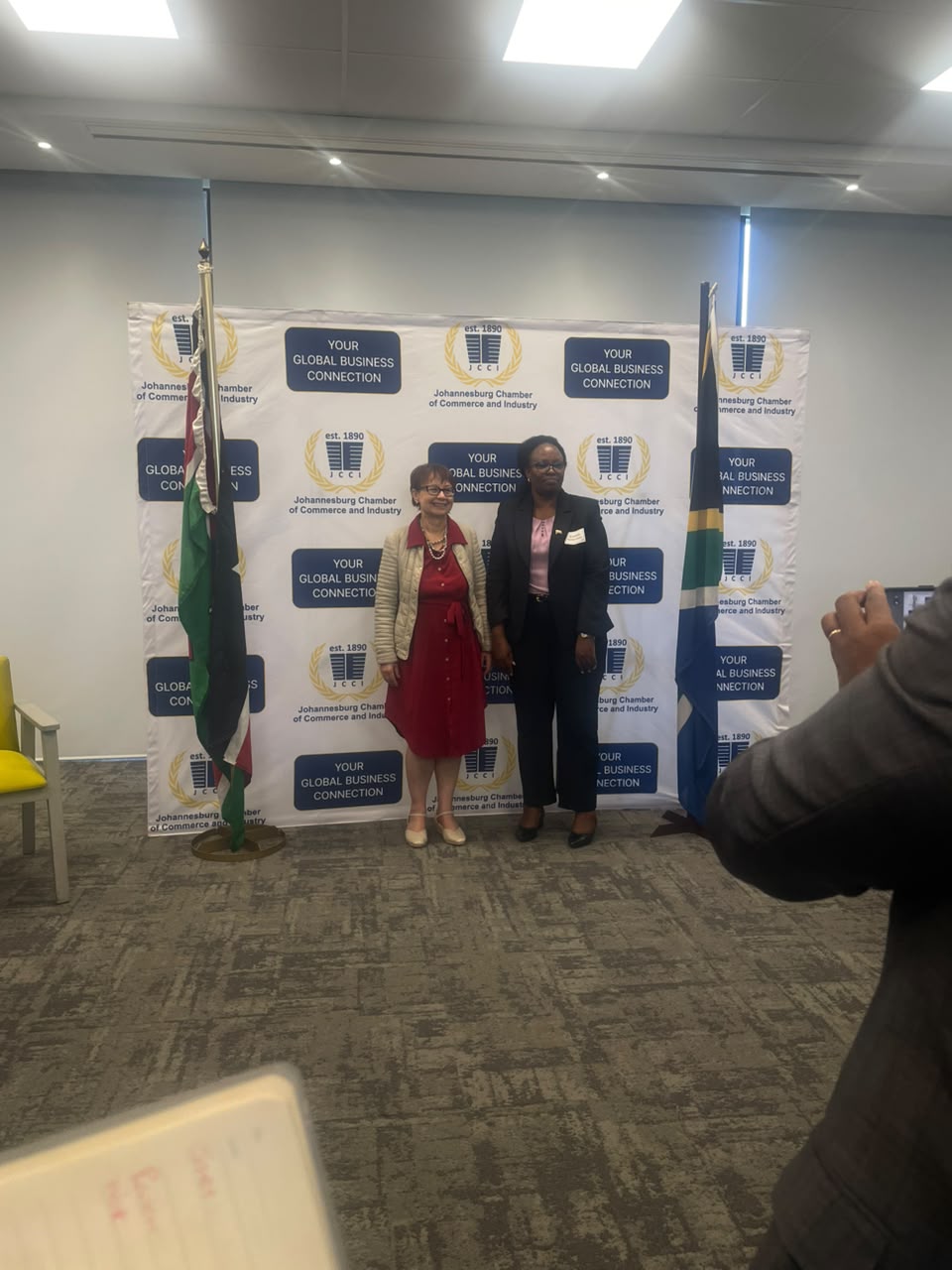
On 18 March 2026, I attended the “Doing Business with Kenya” event, hosted by the Johannesburg Chamber of Commerce and Industry (JCCI) in partnership with the Kenya High Commission. The session brought business leaders, entrepreneurs and officials together to explore how South Africa and Kenya can deepen trade and investment ties.
I left with one clear takeaway: Africa’s economic integration is no longer only a policy conversation. It is becoming a practical business opportunity.
The engagement was led by JCCI CEO Bernadette Zeiler and Events Coordinator Thandeka Dumani, alongside the Kenya High Commission delegation: High Commissioner Jane W. Ndurumo, Trade Attaché Jackline Marangu and Minister Counsellor Mathew Kaikai.
Chambers of commerce and diplomatic missions do important work of turning introductions into relationships and relationships into commercial opportunities, and thus, for a young entrepreneur, these are exactly the rooms where the conversation shifts from “Is this possible?” to “How do we begin?”
In terms of numbers, the South Africa–Kenya Relationship is already substantial since in 2024, South Africa contributed about $104 million in FDI inflows to Kenya making it the 7th largest FDI source country, with more than 60 South African companies have invested in Kenya.
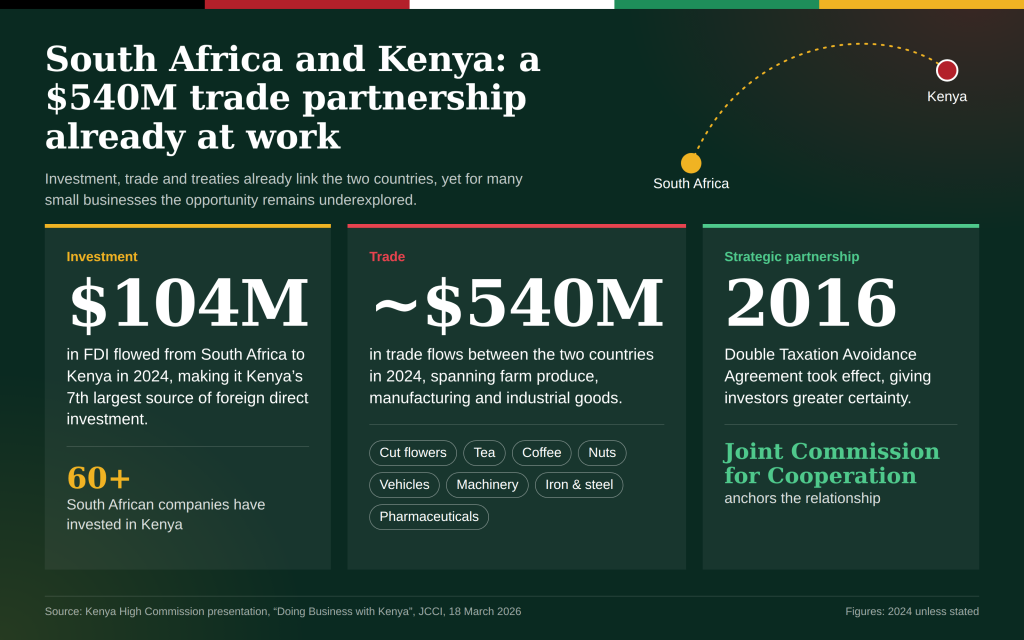
Trade flows between the two countries were about $540 million in 2024 spanning cut flowers, tea, coffee, nuts, vehicles, machinery, iron and steel, and pharmaceuticals.
This trade success has been largely enabled by the fact that South Africa and Kenya have a Double Taxation Avoidance Agreement effective 2016, anchored on a Joint Commission for Cooperation.
The trade figures between these two countries show a mix of agriculture, manufacturing and industrial goods, and a framework that gives investors greater certainty. Despite all this success, I could not help feeling that, for many South African small businesses, this relationship remains underexplored.
Kenya was described as “a gateway to Africa and beyond” at the “Doing Business with Kenya” event because of its sizable population of about 55 million, USD 136 billion GDP averaging about 5% growth. The 43 bilateral trade agreements, 15 double taxation agreements and more than 25 bilateral investment agreements also make it a lucrative spot for South Africa entrepreneurs.
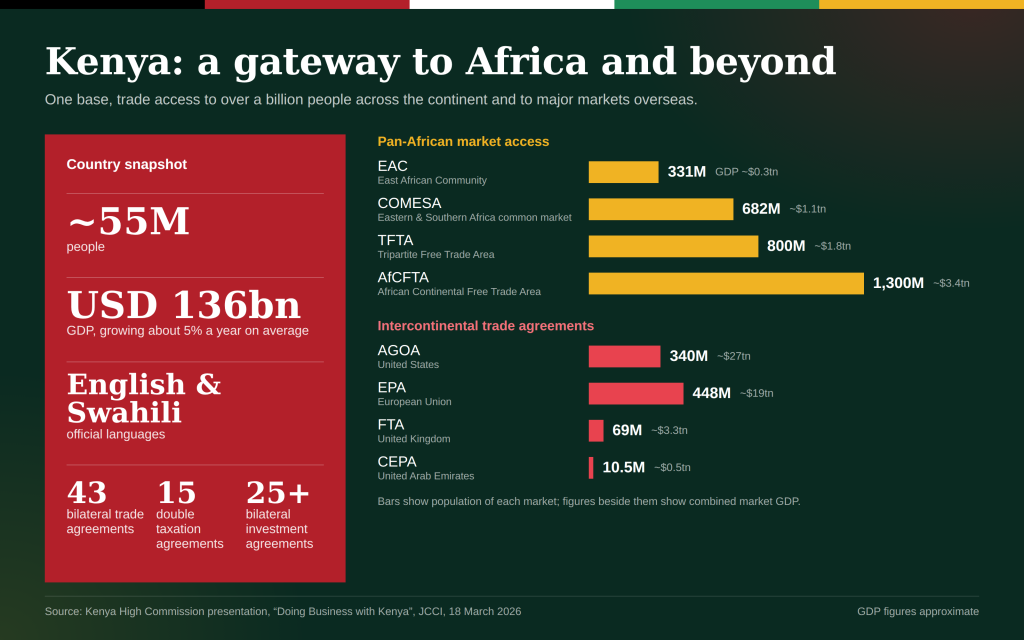
Through regional and continental frameworks including the East African Community (EAC) COMESA, the Tripartite Free Trade Area and the African Continental Free Trade Area (AfCFTA), a business in Kenya can reach a market of well over a billion people.
Beyond Africa, arrangements such as AGOA, the EU Economic Partnership Agreement, a UK trade agreement and a partnership agreement with the UAE connect Kenya to global markets.
Having studied the AfCFTA through my NTB certification, and as someone with an interest in trade corridors, I see how agreements only matter when entrepreneurs understand and use them since a framework on paper is not an opportunity until someone builds a product, finds a buyer and moves goods across a border.
The “Doing Business with Kenya” event also included a presentation from Kenya Airways, which has passenger and cargo offices in Johannesburg.
It was a useful reminder that trade depends on connectivity since air links, cargo capacity and reliable logistics help determine whether a small business can realistically sell across borders.
Three reflections stayed with me from attending the “Doing Business with Kenya” event.
- 1. Intra-African trade is a real growth path. Too often, young businesses look outward for validation while overlooking opportunities on our own continent. Markets like Kenya offer scale, a growing consumer base and regional reach.
- 2. Understanding the system is a competitive advantage. Trade agreements, tax treaties and market access arrangements can look intimidating. But entrepreneurs who take the time to understand them are better positioned to expand with confidence.
- 3. Relationships come before transactions. Business across borders is built on trust. Events like this give founders direct access to officials and chambers who can guide them, and sometimes open doors.
As I move forward as the entrepreneur, I am increasingly interested in how African businesses, especially those led by women and young people, can grow beyond domestic markets and participate meaningfully in regional value chains.
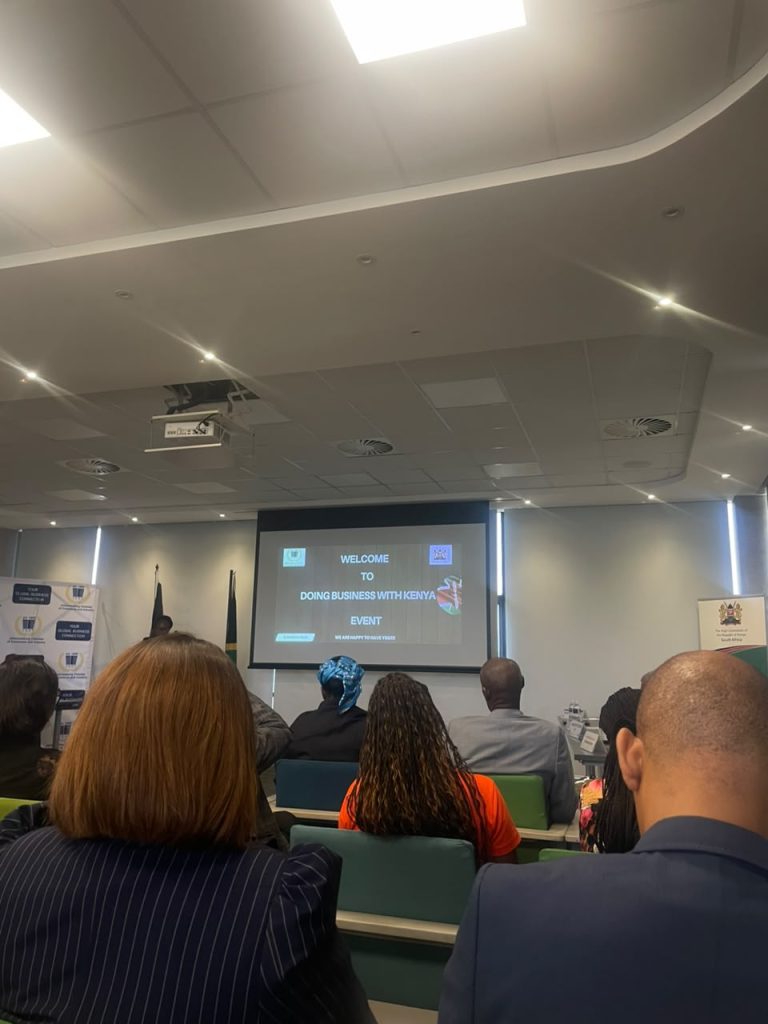
I am grateful to the JCCI and the Kenya High Commission for creating the space for this dialogue. The real measure of such an event is what happens afterwards, in follow-up conversations, new partnerships and businesses that take their first step across a border.
As the African continental market continues to take shape, my hope is that more young entrepreneurs will see themselves not only as participants in it, but as people helping to build it.
About the Author – Isabela Pereira is a South African entrepreneur, speaker and Founder & CEO of SHE FITS, a women’s activewear and wellness business. She was recognised among the Mail & Guardian 200 Young South Africans 2026 in the Entrepreneurship category. Her work sits at the intersection of entrepreneurship, women’s economic empowerment, youth development, regional trade and community building.













You must be logged in to post a comment Login