AI
Top 18 Reasons GPT-OSS is the AI Breakthrough Businesses Need in 2025
Discover GPT-OSS, OpenAI’s open-weight AI models. Learn how GPT-OSS works, its benefits for businesses and developers, and why it’s set to transform AI in 2025.

Introduction to GPT-OSS: Artificial intelligence (AI) has been racing ahead, but until recently, the most powerful models were locked behind paywalls.
OpenAI’s GPT-OSS changes that game. Short for GPT Open Source Specialist, GPT-OSS is a family of open-weight AI models that anyone can download, customize, and run — whether on powerful servers or a decent gaming PC.
For businesses, developers, and researchers, GPT-OSS is a chance to access GPT-4-level reasoning without recurring subscription fees. It’s also a way to take AI development fully in-house, protecting sensitive data while gaining ultimate flexibility.
History and Background of GPT-OSS
OpenAI’s Journey to Open-Weight Models
OpenAI began by building cutting-edge closed models like GPT-3 and GPT-4, which were only accessible through paid APIs. While powerful, they limited experimentation and independent hosting.
GPT-OSS marks a philosophical shift. By releasing open-weight models, OpenAI is giving the community tools to innovate without the barrier of licensing costs.
From Closed Models to GPT-OSS
Before GPT-OSS, developers often turned to alternatives like Meta’s LLaMA or Stability AI’s open models. GPT-OSS is OpenAI’s direct answer — combining elite reasoning ability with the freedom to deploy anywhere.
Understanding GPT-OSS Models
GPT-OSS-120b Overview
This powerhouse has 117 billion parameters — think of them as brain cells. Thanks to its Mixture-of-Experts (MoE) system, it only uses about 5 billion parameters per request, making it far more efficient than traditional models of similar size.
GPT-OSS-20b Overview
A smaller sibling with 21 billion parameters, GPT-OSS-20b is ideal for developers and smaller businesses that need speed and efficiency without heavy hardware costs.
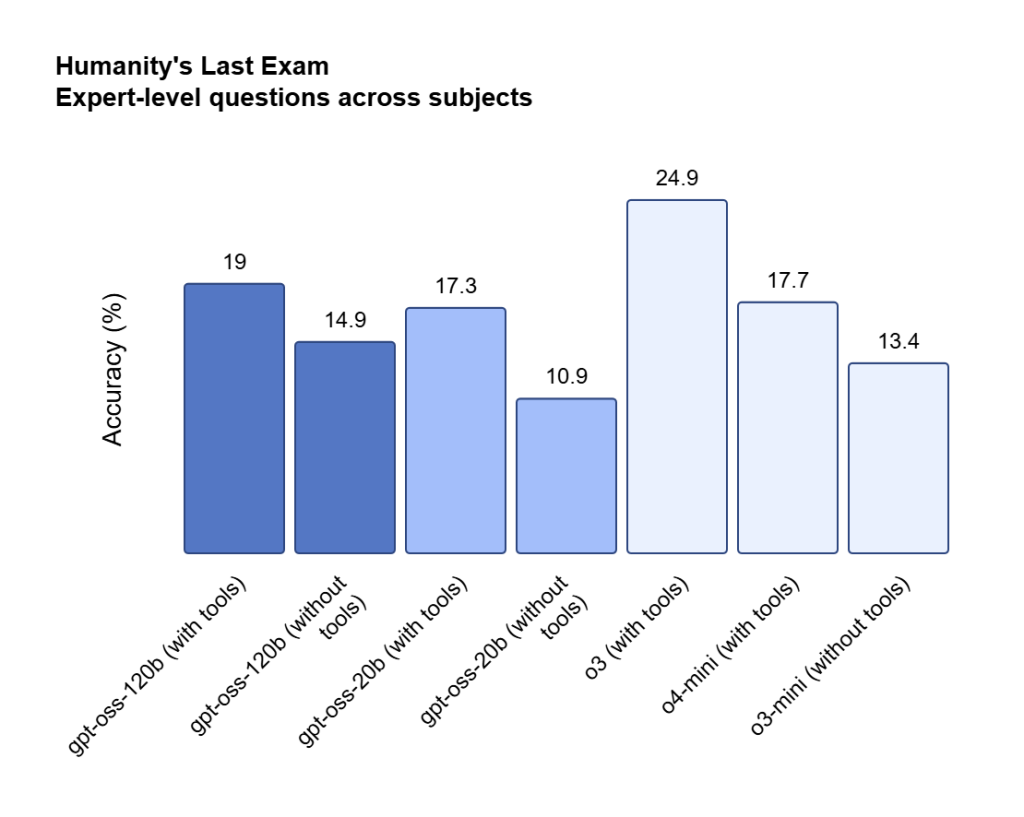
How GPT-OSS Works
Mixture-of-Experts (MoE) Architecture
Instead of using all parameters for every task, GPT-OSS activates only the most relevant “experts” for your request. This cuts computing costs while maintaining accuracy.
Imagine a law firm asking GPT-OSS to analyze a contract: it will call its “legal language” expert rather than waking up all its “math” experts.
Token Capacity and Processing Speed
GPT-OSS can handle up to 128,000 tokens — around 100,000 words — in a single request. This is ideal for processing entire books, large codebases, or lengthy legal documents in one go.
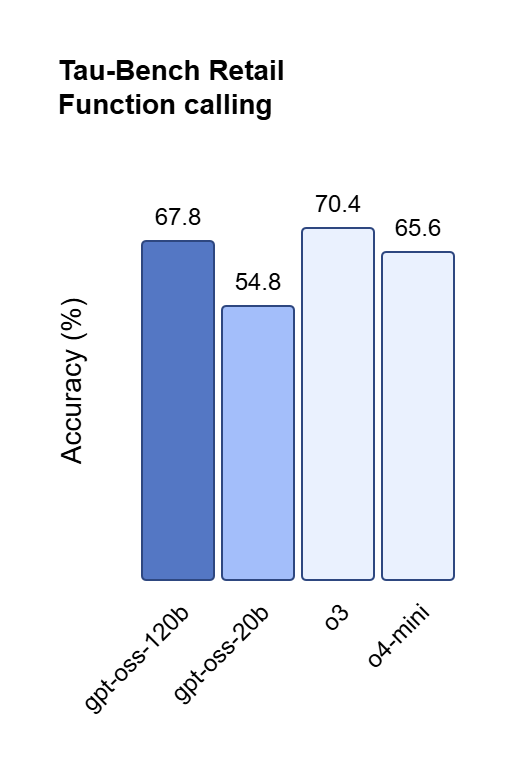
Key Features of GPT-OSS
- Open-weight Freedom: Download, modify, and deploy anywhere.
- Apache 2.0 License: Free for personal and commercial use.
- Scalable: Works on local hardware, cloud servers, or embedded devices.
- Energy-Efficient: Uses fewer resources per query than many competitors.
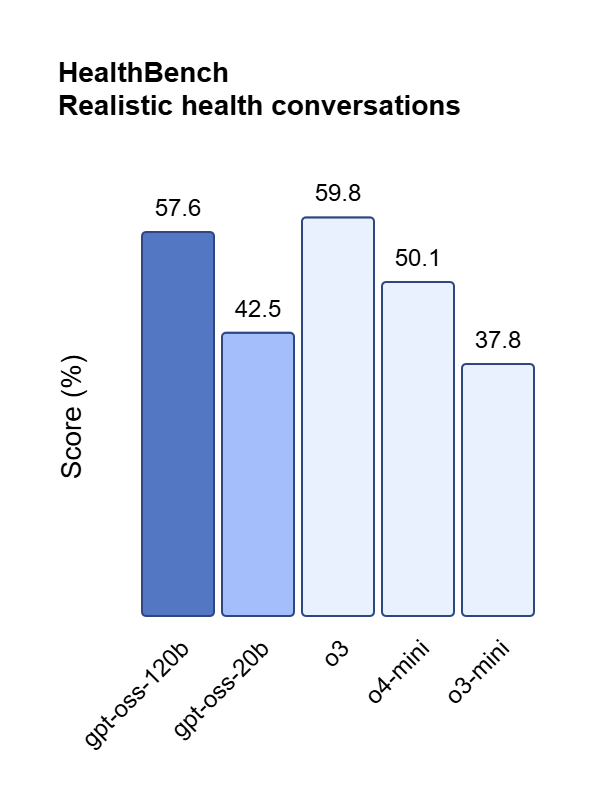
Performance Benchmarks
Coding Skills and Competitions
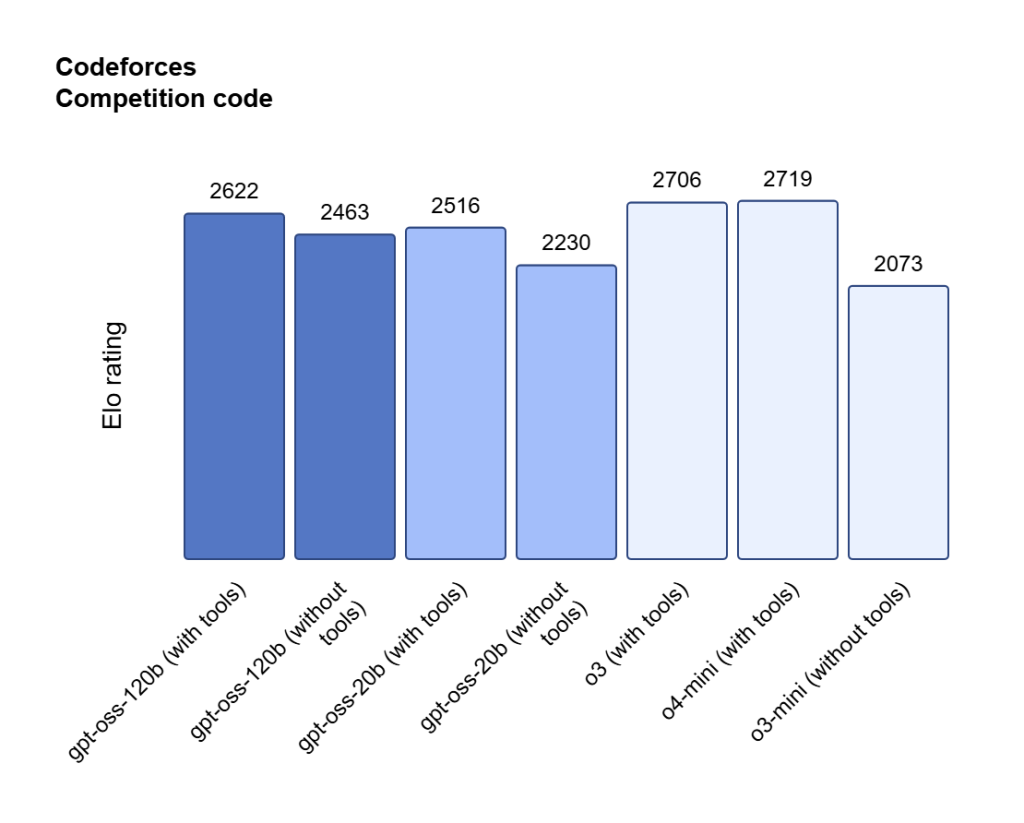
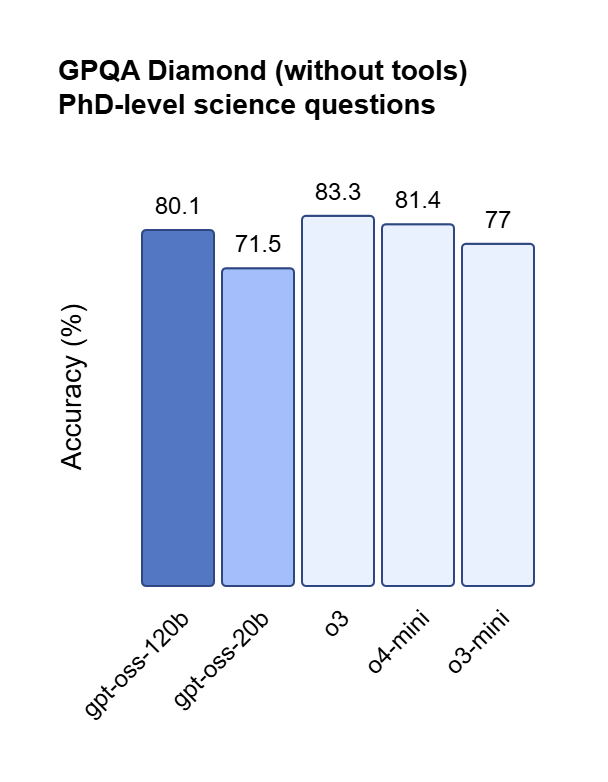
GPT-OSS-120b scored at expert-programmer levels in coding benchmarks, beating even GPT-4 in some software development tasks.
Math and Problem-Solving Abilities
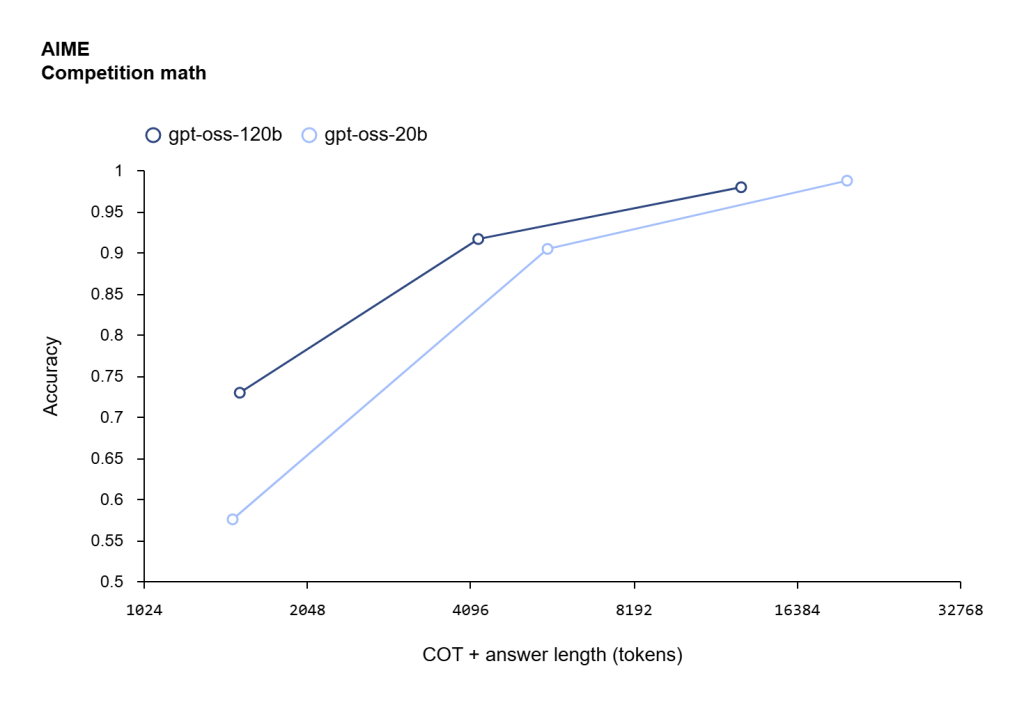
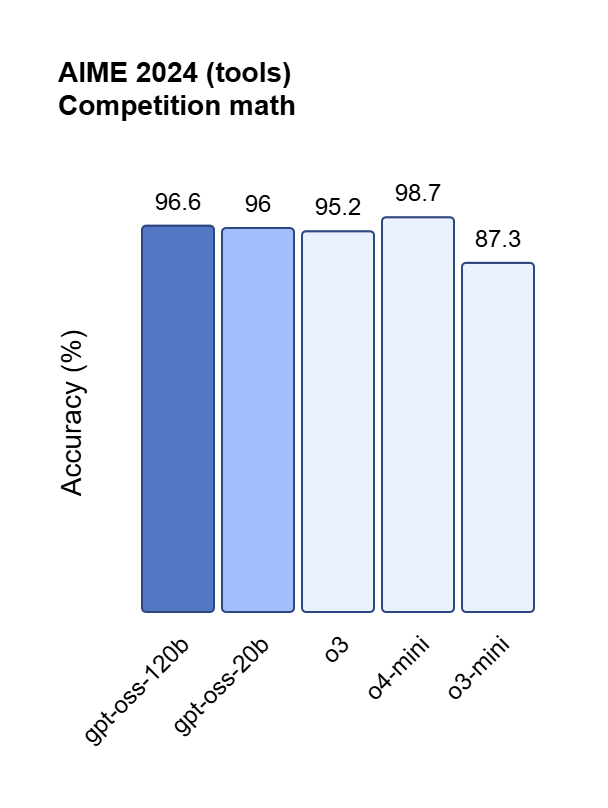
It solved high school-level math problems with near-perfect accuracy — useful for education tech and analytics.
Medical Knowledge and Industry Tasks
In healthcare tests, GPT-OSS demonstrated the ability to suggest diagnoses and analyze research at a professional level.
Business Applications of GPT-OSS
- Enterprise AI Solutions: Build secure, in-house AI assistants that never send data to third-party servers.
- Small Business Advantages: Affordable AI for marketing, customer service, and automation without subscription fees.
Developer Use Cases
Running GPT-OSS Locally
For maximum control and privacy, run it on your own hardware. Ideal for industries with strict compliance requirements.
Cloud Deployment Options
Use AWS, Google Cloud, or Azure for scalability. Spin up as many instances as your workload demands.
Edge and Embedded Device Uses
Deploy GPT-OSS on smaller devices for instant, offline responses in consumer electronics or IoT systems.
Technical Requirements
Minimum Hardware Setup
For small-scale testing:
- High-end gaming PC (RTX 3090 or better)
- 64GB RAM
- Fast SSD storage
Scalability for Large Deployments
For enterprise workloads:
- Multi-GPU servers
- Distributed compute clusters
- Kubernetes orchestration for load balancing
Cost Efficiency of GPT-OSS
Running GPT-OSS locally can save up to 98% compared to paid API services.
Example:
A business processing 100 million tokens per month could spend millions on GPT-4 API calls — or a fraction of that with a one-time hardware investment for GPT-OSS.
Security and Safety Features
Built-In Safety Measures
Includes harmful output filters and self-check mechanisms.
Customizing Security for Specific Needs
Since you control the deployment, you can add domain-specific guardrails and logging to meet compliance standards.
Getting Started with GPT-OSS
- Install Dependencies: Python, PyTorch, CUDA drivers.
- Download from Hugging Face: Models are hosted for easy access.
- Test Your Setup: Ask “What’s AI?” to confirm it works.
- Scale Up: Use Docker or Kubernetes for large projects.
For more details, see the Hugging Face GPT-OSS repository.
Real-World Case Studies
- Finance: Banks cut loan risk assessment from days to hours.
- Healthcare: Researchers review studies 10x faster.
- Legal: Contract analysis in minutes instead of hours.
- Manufacturing: Predictive maintenance saves millions in downtime.
Future Developments for GPT-OSS
- Multimodal AI: Soon capable of processing images, audio, and video.
- Larger Models: A 400-billion-parameter GPT-OSS is in the works.
Risks and Challenges of GPT-OSS
- High Initial Hardware Costs for enterprise setups.
- Need for Technical Expertise in AI deployment and tuning.
Comparison with Other AI Models
| Feature | GPT-OSS | GPT-4 | LLaMA 2 |
|---|---|---|---|
| Open-Weight | ✅ | ❌ | ✅ |
| License | Apache 2.0 | Proprietary | Custom |
| Reasoning Ability | High | Very High | Moderate |
| Efficiency | Very High | Medium | Medium |
Industry Impact of GPT-OSS
Experts predict GPT-OSS could help businesses save $2.1 trillion globally by 2028, cutting operational costs by up to 45% while enabling new AI-driven products and services.
FAQs About GPT-OSS
What is GPT-OSS?
An open-weight AI model from OpenAI that anyone can download and run.
How is GPT-OSS licensed?
Under Apache 2.0 — free for personal and commercial use.
What’s the difference between GPT-OSS-120b and GPT-OSS-20b?
120b is larger and more powerful; 20b is faster and lighter on resources.
Can GPT-OSS run on a laptop?
For small tests, yes — but serious workloads need a high-end GPU or cloud deployment.
Is GPT-OSS better than GPT-4?
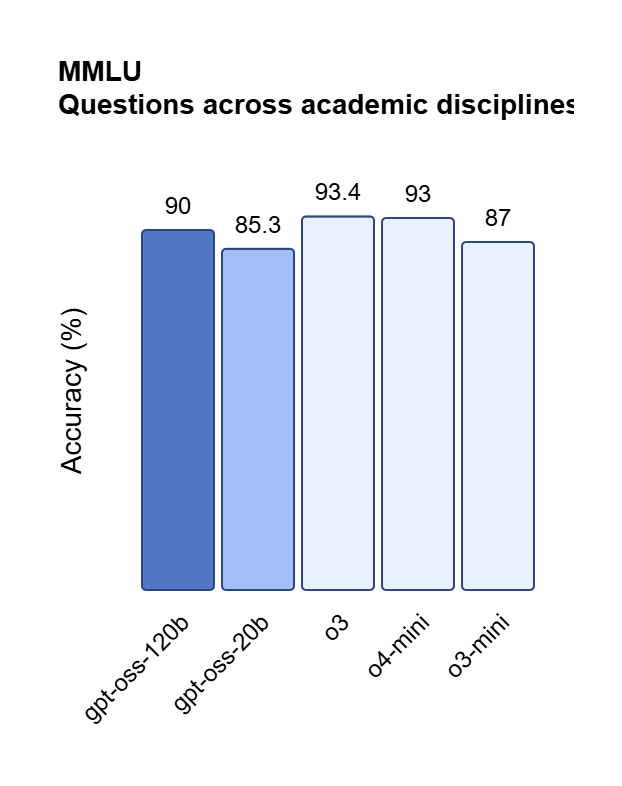
In reasoning-heavy tasks like coding, it can match or even beat GPT-4.
Can I modify GPT-OSS?
Absolutely — that’s the point of open-weight models.
Conclusion: The Future with GPT-OSS
GPT-OSS isn’t just another AI model — it’s a turning point. For the first time, anyone can access top-tier AI reasoning without being tied to a commercial API. Businesses can slash costs, developers can innovate freely, and researchers can push boundaries without license restrictions.
As OpenAI expands GPT-OSS into multimodal AI and larger architectures, the line between enterprise and open-source AI will blur. In 2025 and beyond, GPT-OSS may well become the gold standard for open, scalable, and intelligent AI systems.