





South Africa
The Wicknell Chivayo Files: The Billion-Rand Election Deal, Political Protection and the Dirty Money Trail
Wicknell Chivayo’s death has left behind more than luxury cars and political connections. An investigation into over R800 million in payments linked to Zimbabwe’s election procurement raises urgent questions about public money, political influence and financial accountability across Southern Africa. Mandla Wedu examines the evidence, the denials and the unanswered questions.

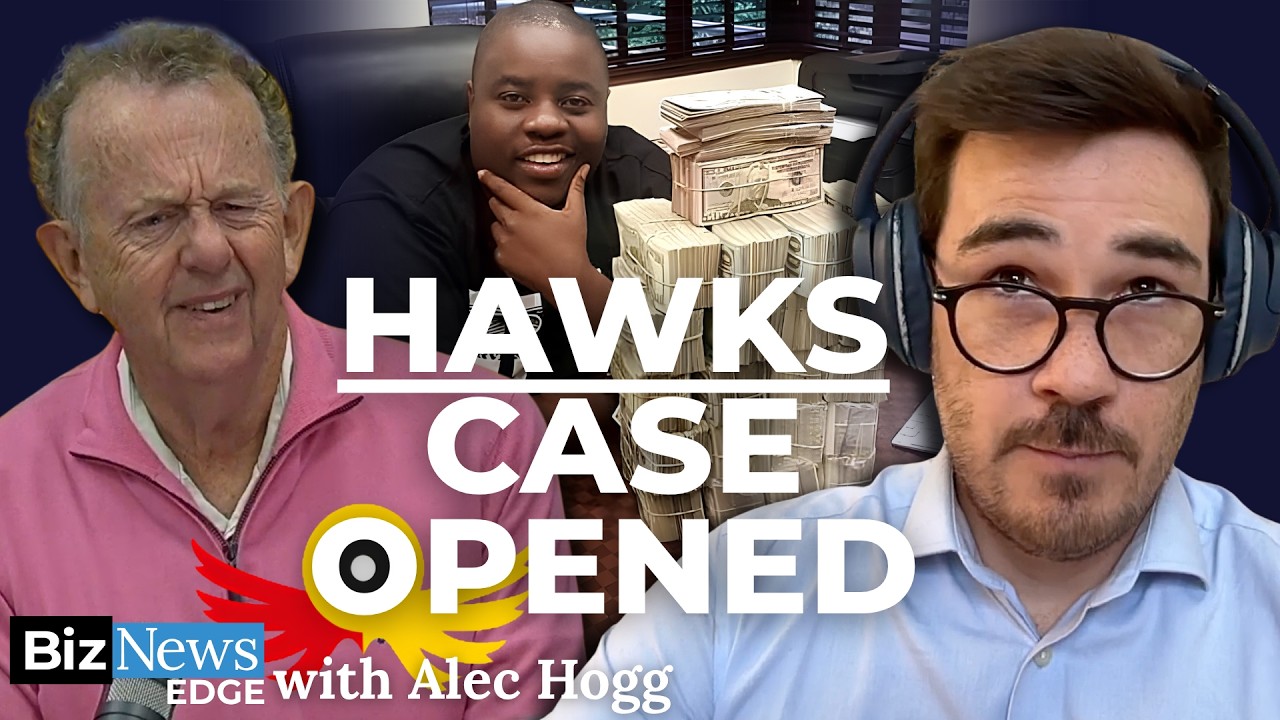
When a politically connected businessman can allegedly extract hundreds of millions from a public contract, purchase extraordinary luxury assets abroad and shower powerful politicians with expensive gifts, the question is no longer simply how he became rich. It is who enabled him, who benefited and why the institutions entrusted with protecting public money failed to stop the transactions.
ZIMBABWE • SOUTH AFRICA • CORRUPTION • PUBLIC PROCUREMENT • FINANCIAL ACCOUNTABILITY
There are two Zimbabwean realities.
In one, ordinary citizens wake before sunrise to queue for transport, struggle to pay school fees, search for affordable medicine and wonder whether the next electricity interruption will destroy another day’s income.
In the other, politically connected individuals display fleets of luxury vehicles, acquire multimillion-rand properties and appear alongside the very officials responsible for managing the country’s resources.
Between those two realities lies a question Zimbabweans have been asking for decades:
Where does all the money come from?
The controversy surrounding Wicknell Chivayo offers an extraordinary opportunity to examine that question.
In a wide-ranging BizNews interview, Open Secrets investigations head Michael Marchant discussed allegations involving Chivayo, Zimbabwean election procurement, South African financial institutions and a reported R800 million in payments associated with a R1 billion contract.
The interview raises uncomfortable questions not only about the conduct of one businessman but about the entire political and financial ecosystem that makes questionable public contracts possible.
However, there is an important distinction between what investigators allege, what financial records may establish and what a court has actually proved. That distinction matters enormously, particularly where allegations involve identifiable individuals, businesses and public officials.
The real story is bigger than Wicknell Chivayo.
It concerns a system in which proximity to political power may become more commercially valuable than productive enterprise, public procurement can become a vehicle for private enrichment, and financial institutions across borders may help move the resulting wealth.
And ultimately, it concerns the Zimbabwean taxpayer.
1. The day the helicopter fell — and the questions that survived
On 30 September 2026, a helicopter crashed near Marondera, east of Harare.
Among those killed were Wicknell Chivayo and his wife, Lucy Muteke. Zimbabwean authorities subsequently revised the reported death toll from six to five. The other victims were Muteke’s aide, Senelisiwe Magagula, and pilots Kelvin Soda and Courage Mutavirwa.
The cause of the crash remained under investigation in the reporting reviewed for this article. There is no verified evidence establishing sabotage or political assassination.
SABC News


8
The accident ended the life of one of Zimbabwe’s most flamboyant and politically connected businessmen.
It did not end the questions surrounding his wealth.
Indeed, his death may have made some questions more urgent.
What happens to assets potentially connected to disputed public contracts when their owner dies? Who controls the companies through which payments passed? Can investigators recover money if it has already been transferred to relatives, associates, trusts or other entities? And can criminal proceedings continue against surviving participants?
These questions are especially significant because, shortly before Chivayo’s death, Open Secrets had been pressing South African authorities to investigate financial transactions connected to Zimbabwe’s election procurement.
In the interview supplied to iniAfrica, Marchant argued that Chivayo’s death should not be treated as the end of the investigation.
He was right to raise the distinction.
The death of a person does not erase bank records, invalidate procurement documents or extinguish potential criminal liability for other participants.
But equally, death does not transform allegations into proven facts.
The obligation now is to establish what happened through evidence, lawful investigation and independent judicial scrutiny.
2. Who was Sir Wicknell?
Wicknell Chivayo cultivated an image of extraordinary personal success.
He was known for expensive cars, lavish gifts, social media displays of wealth and proximity to senior political figures.
His public identity was built around the idea of spectacular upward mobility: a man who had emerged from modest circumstances to enter a world of presidential audiences, luxury homes and multimillion-rand transactions.
To supporters, his generosity represented success worth celebrating. Some saw him as a benefactor who rewarded musicians, religious leaders, public personalities and ordinary people.
To critics, those same gifts raised a different question.
Why would a businessman whose wealth was closely associated with government contracts distribute luxury vehicles to politically influential individuals?
There is nothing inherently unlawful about being wealthy, purchasing expensive property or giving gifts.
The concern arises when substantial private benefits intersect with public procurement, political decision-making and undisclosed financial relationships.
Marchant described Chivayo as unusual because, rather than concealing his political connections, he publicly advertised them.
This is a crucial feature of the story.
In many corruption investigations, investigators must painstakingly reconstruct hidden relationships. With Chivayo, some connections were displayed openly.
Photographs, public appearances and social media posts became part of his public brand.
But political access is not, by itself, evidence of corruption. The necessary investigative questions concern the purpose of that access, the origin of the money, the timing of payments and whether any official decision was improperly influenced.
3. The R1 billion election contract: Follow the money
THE REPORTED MONEY TRAIL
Paid to Ren-Form
R1bn+
Reported Zimbabwe Finance Ministry payments
Transferred to Chivayo-linked businesses
R800m+
According to the reported FIC findings
Approximate share passed to Chivayo-linked businesses
80%
Illustrative ratio using R1 billion and R800 million. Actual reported figures exceed both thresholds.
The central financial allegation concerns a contract involving the Zimbabwe Electoral Commission (ZEC) and South African printing and election-materials supplier Ren-Form.
Investigations by Open Secrets and The Sentry examined procurement records, alleged pricing irregularities and financial transactions.
In April 2025, Open Secrets reported findings from a leaked South African Financial Intelligence Centre report.
According to that reporting, Ren-Form received more than R1 billion from Zimbabwe’s Ministry of Finance and Economic Development, while more than R800 million was transferred to business bank accounts associated with Chivayo.
The report also identified approximately R157 million in direct payments from Zimbabwe’s Finance Ministry to Edenbreeze, a South African-registered company linked to Chivayo. Those payments were reported separately and should not automatically be treated as part of the R800 million flow.
opensecrets.org.za
This distinction matters.
An investigative article must not simply add together every reported payment and present the result as confirmed stolen money.
Financial transfers establish that money moved. Determining whether those transfers were lawful commissions, legitimate subcontracting payments, disguised kickbacks or proceeds of crime requires additional evidence.
Nevertheless, the reported scale demands explanation.
Why would a company supplying election materials transfer such a substantial proportion of its government receipts to an intermediary?
What precisely did the intermediary deliver?
Were the services documented?
Who authorised the commercial arrangements?
And did the public receive goods and services corresponding to the amounts paid?
These are not partisan questions.
They are basic procurement questions.
4. The server that reportedly cost R23 million
Some of the most startling allegations concern the prices charged for election-related equipment.
Earlier Open Secrets reporting identified examples of potentially extreme markups.
Reported procurement price comparisons
| Item | Reported invoice | Comparison price |
| Central server | R23 million | About R90,000 |
| Portable toilet | R68,700 each | About R10,000 each |
Figures reported by Open Secrets based on leaked procurement material. These comparisons do not establish whether specifications, bundled services, installation, logistics or other contractual costs were equivalent.
opensecrets.org.za
A server allegedly invoiced at R23 million, compared with a much cheaper commercially available alternative, immediately attracts attention.
But proper scrutiny requires comparing like with like.
Was the invoice for a single physical machine? Did it include specialised software, security, implementation, support or additional infrastructure? Were the specifications comparable?
The same applies to the portable toilets.
The comparisons are serious red flags, not conclusive proof of fraud.
A credible investigation should obtain the original tender specifications, supplier quotations, invoices, delivery notes, acceptance certificates and evidence of actual deployment.
If the goods were overpriced, who approved the prices?
If they were not overpriced, why have the relevant authorities failed to provide a sufficiently transparent public explanation?
Public procurement should never require citizens to accept extraordinary prices on faith.
5. The defence: What Chivayo, Ren-Form and ZEC said
The right of reply is essential in a story of this magnitude.
Ren-Form has denied wrongdoing and maintained that its election-related business was legitimate. Its representatives acknowledged an agency relationship with Chivayo but disputed suggestions that the payments necessarily indicated corruption.
Chivayo previously denied that payments made by him or his businesses were kickbacks. He also disputed leaked material used in reporting and challenged the inference that unusually large transactions automatically established wrongdoing.
ZEC maintained that its procurement was conducted properly and denied directly contracting with Chivayo.
Significantly, Open Secrets’ reporting states that the Zimbabwe Anti-Corruption Commission closed its Chivayo investigation in December 2025, saying it had not found contractual evidence connecting him to the deal. That finding does not resolve every question about the financial flows, but it is a material development that must be acknowledged.
opensecrets.org.za
The fact that a financial transaction appears unusual does not automatically make it criminal.
Conversely, the absence of a direct contract between a public institution and an intermediary does not, on its own, establish that all downstream transactions were legitimate.
Both propositions can be true.
The task of investigators is to bridge that evidentiary gap.
6. South Africa: Where did the money go?
The Zimbabwean election contract is only one half of the story.
The other half lies in South Africa.
Chivayo reportedly owned a luxury property in Clifton valued at approximately R160 million, purchased expensive vehicles and maintained business interests within the South African economy.
The interview raises an important issue: the capacity of South Africa’s financial system to identify and respond to potentially suspicious wealth entering from abroad.
Financial institutions, estate agents and certain high-value-goods businesses operate under anti-money-laundering obligations.
These may include customer due diligence, identification of beneficial owners, assessment of politically exposed persons and reporting suspicious transactions to the Financial Intelligence Centre.
Such reporting does not mean that a transaction is necessarily criminal.
It means that authorities may need to examine it.
According to Open Secrets, the leaked FIC report indicated that some South African banks had made suspicious transaction reports. Marchant acknowledged that his organisation could not establish whether every relevant estate agent or vehicle dealership had fulfilled its own reporting obligations.
That uncertainty must not be replaced with accusations of proven complicity.
However, the public-interest question remains compelling.
If an individual is the subject of longstanding, serious procurement allegations, and very large sums enter accounts connected to that individual, what enhanced due diligence is performed?
If suspicious transactions are reported, what happens next?
And if investigators identify possible proceeds of crime, are preservation measures pursued before the assets disappear?
South Africa’s financial system cannot reasonably regard foreign corruption as someone else’s problem when the associated money may be entering its own economy.
7. Political patronage: When gifts and government contracts collide
One of the most politically sensitive aspects of Chivayo’s public life was his relationship with senior figures in Zimbabwe’s ruling ZANU-PF.
He was publicly associated with President Emmerson Mnangagwa and frequently presented himself as a supporter of the ruling party.
His gifts to politicians and politically connected individuals became part of his public reputation.
The concern is not that political affiliation is unlawful.
It is whether financial benefits, political influence and public procurement became intertwined in ways that compromised the independence of government decision-making.
Consider a hypothetical sequence.
A politically connected individual secures access to government procurement opportunities. A company receives a substantial public contract. An intermediary receives unusually large payments. Some of the money is subsequently used to benefit individuals with political influence.
If evidence established that those benefits were intended to influence official decisions, the transactions could raise serious bribery and corruption concerns.
But investigators must prove those connections rather than assume them.
In his BizNews interview, Marchant also discussed the political contest between factions associated with Mnangagwa and Vice-President Constantino Chiwenga.
He suggested that Chivayo’s political relationships had become entangled in Zimbabwe’s succession politics.
That interpretation is relevant because disputes within governing parties can sometimes expose financial information that would otherwise remain concealed.
However, factional accusations are not automatically reliable evidence.
An allegation does not become true merely because a political opponent makes it.
Equally, an allegation does not become false simply because the person making it has political motives.
The answer lies in independently verifiable documents, bank records and testimony.
8. The death of Chivayo does not mean the death of accountability
There is a fundamental difference between personal criminal responsibility and the recovery of assets connected to alleged wrongdoing.
Criminal proceedings against a deceased individual cannot proceed in the ordinary way.
But investigators may still examine surviving participants, corporate entities and transactions.
Where applicable law permits, authorities may also seek to preserve or recover assets shown to be proceeds of unlawful activity.
That makes the administration of Chivayo’s estate particularly important.
Marchant warned that disputed assets could potentially be transferred or dissipated before investigators complete their work.
The appropriate response is not indiscriminate confiscation.
It is timely, evidence-based legal action, subject to judicial oversight and the rights of legitimate beneficiaries and creditors.
For Zimbabweans, the questions are straightforward.
Who ultimately benefited from the Ren-Form payments?
What legitimate services justified the amounts?
Were any public officials improperly rewarded?
Did financial institutions comply with their legal obligations?
And if unlawful enrichment is established, can the money be recovered for the public?
Those questions remain relevant regardless of whether the central public figure is alive.
9. Why this matters to South Africa’s international reputation
South Africa was removed from the Financial Action Task Force grey list on 24 October 2025, following reforms to its anti-money-laundering framework.
That was an important achievement.
But removal from the grey list was not a declaration that financial crime had disappeared.
National Treasury subsequently emphasised that South Africa would need to demonstrate sustained improvements, including effective investigations, prosecutions and sanctions, during the next FATF mutual evaluation, expected to conclude in October 2027.
The Chivayo-related financial investigation therefore presents a practical test.
Can authorities follow complex cross-border transactions?
Can they distinguish legitimate business payments from disguised proceeds of corruption?
Can they investigate politically sensitive cases without interference?
And can they achieve outcomes that demonstrate the effectiveness of the country’s financial-crime controls?
South Africa’s international credibility depends on more than the existence of laws.
It depends on enforcement.
10. The real victims are not the politicians
Political scandals often become stories about personalities.
Who attended whose funeral?
Which president was photographed with which businessman?
Who received the most expensive car?
Who publicly defended whom?
Those details attract attention, but they can obscure the most important issue.
Public money has an opportunity cost.
Every rand spent on an inflated contract, if inflation is proved, is a rand unavailable for another public purpose.
That money could otherwise contribute to medicines, schools, roads, water systems, agricultural support or electricity infrastructure.
It would be irresponsible to claim that the entire R800 million was stolen or that it could automatically have funded specific projects. Those conclusions have not been established.
But the principle remains.
When public procurement fails to deliver fair value, ordinary citizens bear the cost.
For a struggling household, corruption is not an abstract governance problem.
It can mean a clinic without supplies.
A school without adequate facilities.
A road that remains impassable.
A small business that cannot operate because essential infrastructure has failed.
This is why the Chivayo investigation matters beyond the headlines.
11. Ten questions Zimbabweans deserve answers to
The next phase of public scrutiny should focus on documentary evidence and institutional accountability.
- What was the complete value of the ZEC procurement arrangement, including all amendments and related contracts?
- Who approved the suppliers, prices, contract variations and payments?
- What specific services did Chivayo-linked companies provide to justify the reported transfers?
- What did Ren-Form actually deliver, and how were the goods and services independently valued?
- Who were the ultimate beneficiaries of the payments transferred through the relevant companies?
- Were any politically exposed individuals recipients of funds, assets or benefits connected to these transactions?
- What action did Zimbabwean authorities take following the financial intelligence disclosures, and why was the earlier investigation closed?
- What is the current procedural status of the South African Hawks investigation?
- Have investigators identified assets that may lawfully be subject to preservation or recovery proceedings?
- Will Zimbabwean and South African authorities publish sufficient findings to establish public confidence without compromising legitimate investigations?
These questions are not demands for predetermined convictions.
They are demands for transparency.
12. The helicopter fell. The financial records remain.
Wicknell Chivayo lived a life designed to attract attention.
His cars attracted attention.
His gifts attracted attention.
His political connections attracted attention.
His reported property acquisitions attracted attention.
And his death attracted enormous attention.
But perhaps the most consequential part of his legacy will not be the luxury he displayed.
It may be the financial questions that investigators, journalists and ordinary citizens continue asking.
Zimbabwe does not need another scandal that becomes a political spectacle before disappearing into institutional silence.
It needs answers supported by evidence.
It needs procurement systems that can withstand scrutiny.
It needs independent institutions capable of investigating powerful individuals and their commercial partners.
And it needs a political culture in which public office is not confused with private entitlement.
There is also a responsibility on citizens and journalists to resist the temptation to turn tragedy into unsupported conspiracy.
The helicopter crash deserves a proper aviation investigation. The financial allegations deserve proper criminal and regulatory investigations. Neither investigation should be distorted to serve the other.
The deaths of five people are a human tragedy.
The unresolved financial questions are a matter of public accountability.
Both truths can coexist.
The most important question is no longer how Sir Wicknell lived so extravagantly. It is whether the institutions responsible for safeguarding public money can establish where the money came from, why it was paid and who ultimately benefited.
A country serious about fighting corruption must be able to answer those questions even when the person at the centre of the controversy is no longer alive.
The helicopter fell. The questions did not.









You must be logged in to post a comment Login