





Education & Youth
MASHATILE RALLIES YOUTH TO LEAD DEVELOPMENT AT G20 INTERGENERATIONAL ROUNDTABLE

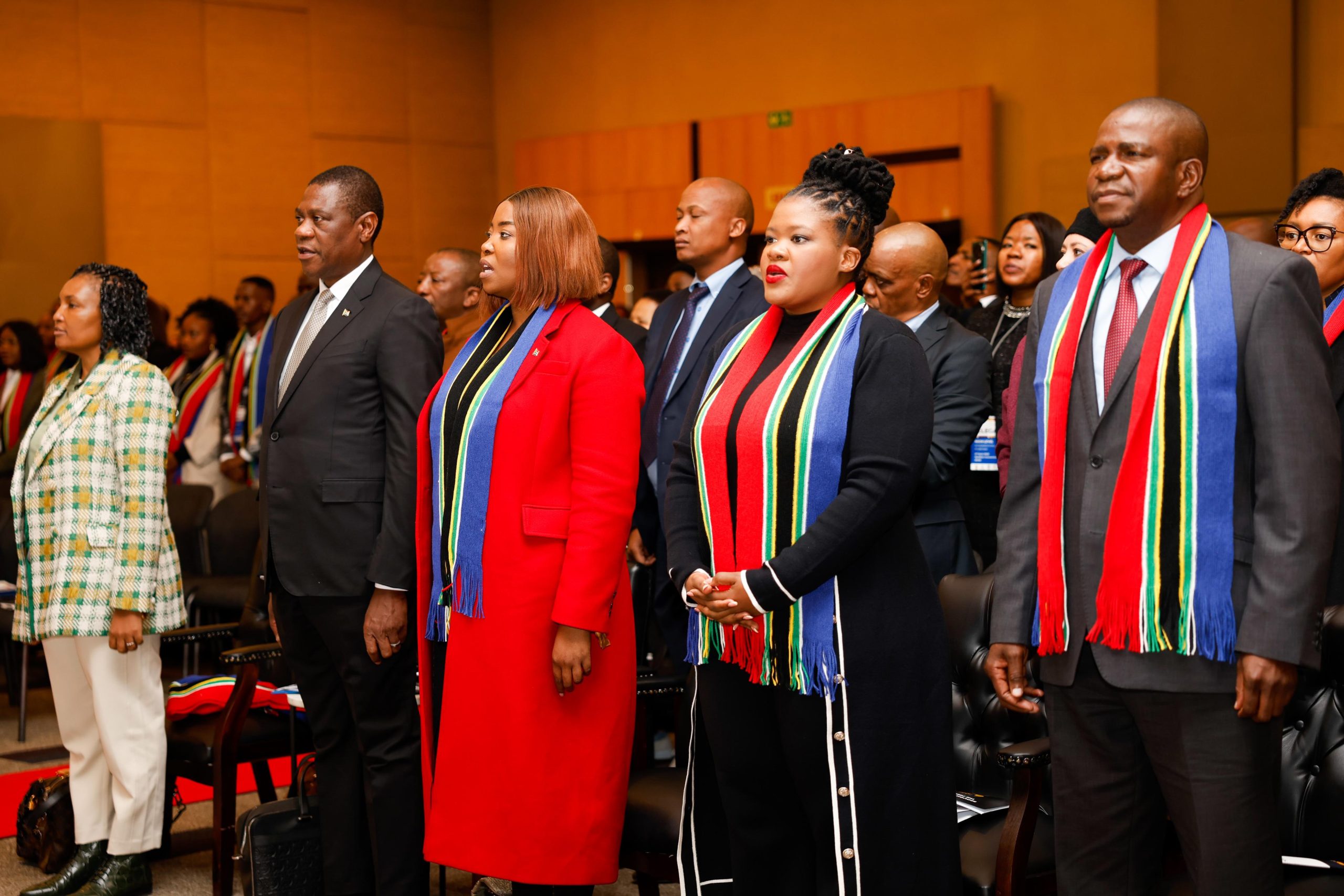
Sandton, Gauteng – 27 June 2025
By Tinashe Mpasiri
In a rousing keynote address at the G20 High-Level Intergenerational Roundtable, held at the Sandton Convention Centre today, South Africa’s Deputy President Shipokosa Paulus Mashatile called on youth to take up the mantle of leadership and become active architects of a developmental state, not passive beneficiaries of policy.
Returning from a strategic visit to the Russian Federation, where he strengthened bilateral relations and explored cooperation in education and digital innovation, Mashatile brought back a strong message: South Africa must invest in artificial intelligence, science, and skills development if it is to remain globally competitive.
He praised the efforts of Russian institutions like Saint Petersburg University for embracing South African languages such as isiZulu and isiXhosa, a step he described as “a powerful act of cultural diplomacy.” Mashatile also commended the SPIEF Youth Academy for its inspiring engagement with young global leaders and urged South Africa to adopt similar platforms to advance youth development.
“A Nation Cannot Be Built Without Its Youth”
Reflecting on South Africa’s turbulent history, the Deputy President invoked the legacy of youth icons like Hector Pieterson, Tsietsi Mashinini, and Solomon Mahlangu. He declared that political freedom was won through the blood and courage of the youth, and now the fight must shift to economic freedom.
“We must involve young people in tackling unemployment, inequality, and poverty — with the same urgency and sacrifice as those who fought apartheid,” he said.
The roundtable, themed “Building Youth Capabilities for a Developmental State: Advancing Solidarity, Equality, and Sustainability”, brought together youth leaders, policymakers, and government officials to chart a way forward for inclusive development.
G20 as a Platform for Youth-Led Transformation
Mashatile framed South Africa’s 2025 G20 Presidency as a critical opportunity to reshape global policy narratives around youth potential, particularly from the Global South.
“We must insist that Africa’s youth are not recipients of aid or spectators to global policy — they are agents of innovation, enterprise, and governance,” he declared to loud applause.
Citing South Africa’s ratification of the Protocol on Women and Youth in Trade under the African Continental Free Trade Area (AfCFTA), Mashatile said the country was committed to rewriting trade systems that include and uplift youth-led and women-led enterprises.
Removing Red Tape, Unlocking Opportunity
In his address, Mashatile also outlined new government interventions to remove bureaucratic hurdles that stifle youth entrepreneurship. He announced a Presidency-led unit focused on improving the business climate, which will streamline regulatory processes across key sectors, including mining licenses, tourism permits, and early childhood development.
“Youth entrepreneurs face red tape when they should be scaling up. That ends now. We are creating an enabling ecosystem for you to thrive,” he assured.
Government efforts already underway include:
R70 billion in support for no-fee universities and TVET colleges, through NSFAS and the National Skills Fund.
1.7 million jobs created since 2020 via the Presidential Youth Employment Initiative.
4 million young job-seekers connected to opportunities through the SAYouth.mobi platform.
The Deputy President committed to further investment in green manufacturing, sustainable infrastructure, and digital services to ensure young people are prepared for both the jobs of today and tomorrow.
“Nothing for Us Without Us”
Calling for a radical shift from youth consultation to co-leadership in governance, Mashatile emphasized that inclusion should no longer be a moral imperative — it must be a measurable policy outcome.
“Let us embed youth inclusion in every pillar of our G20 Presidency — from climate finance to digital transformation,” he stated. “Youth are not a side agenda; they are the main agenda.”
A Rallying Cry for the Continent
Referencing the African Union’s Agenda 2063 and its vision of Africa as a global powerhouse, Mashatile urged African nations to leverage their demographic dividend, reminding delegates that Africa is the world’s youngest continent.
“Young people can build the Africa we want. The AfCFTA gives us a golden opportunity to support youth-owned businesses through simplified trade regimes and youth quotas in procurement,” he said.
Mashatile ended his speech with a heartfelt message to the youth of South Africa and the world:
“Stand up. Persevere. Confront every challenge with persistence. The future is yours, and you are the future.”
As South Africa prepares to host the G20 Leaders’ Summit in November, today’s roundtable was a strong signal that under its presidency, youth empowerment and intergenerational solidarity will take centre stage in shaping the global development agenda.



