





Legacy
16 December and the Forgotten Legacy of uMkhonto weSizwe

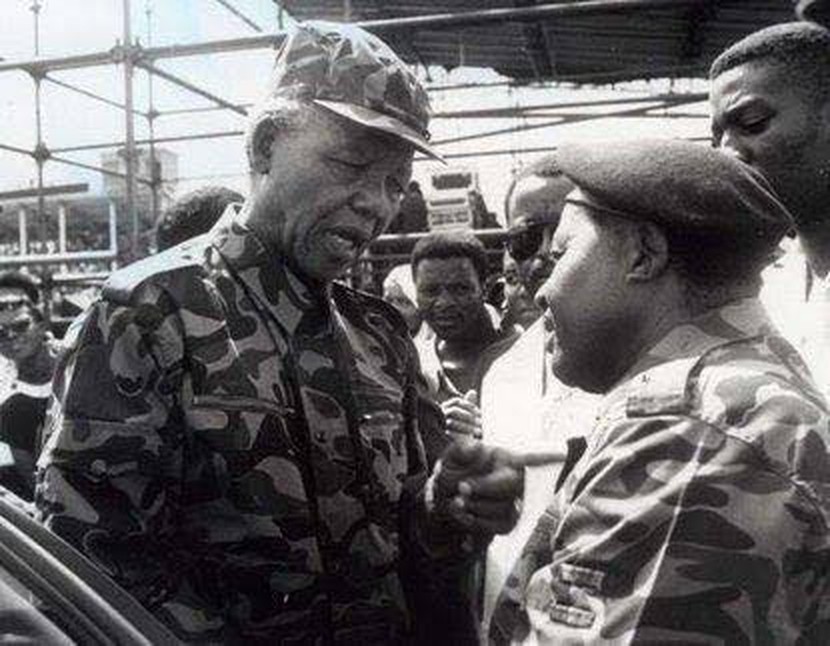
Sixteen December occupies a unique and layered place in South Africa’s historical consciousness. It is observed today as the Day of Reconciliation, a public holiday intended to foster unity, healing, and social cohesion in a country still negotiating the deep fractures of its past. Yet long before it was institutionalised as a day of reconciliation, 16 December marked one of the most consequential moments in the struggle against apartheid, the founding of uMkhonto weSizwe (MK), the armed wing of the African National Congress (ANC).
To understand the significance of this day fully, one must confront both its symbolic and practical meaning in the liberation struggle, and acknowledge how its legacy has faded in public discourse, particularly among post-apartheid generations.
The Birth of uMkhonto weSizwe
uMkhonto weSizwe, meaning “Spear of the Nation,” was established on 16 December 1961 in the aftermath of the Sharpeville massacre of 1960, where apartheid security forces killed 69 unarmed protesters. Sharpeville marked a turning point. It exposed, beyond doubt, the willingness of the apartheid state to employ lethal violence to preserve racial domination.
Until that point, the ANC had pursued a strategy rooted primarily in non-violent resistance. However, sustained repression, bannings, arrests, and the closure of all legitimate political space forced a strategic re-evaluation. MK was born not out of a rejection of peace, but from the grim recognition that peaceful protest alone could no longer confront a system sustained by violence.
Nelson Mandela, along with other senior ANC leaders, played a central role in the formation of MK. Its mission was carefully articulated: to undertake acts of sabotage against state infrastructure, avoiding loss of life wherever possible, while signalling that the oppressed majority would no longer submit passively to institutionalised brutality.
A Moral and Strategic Choice
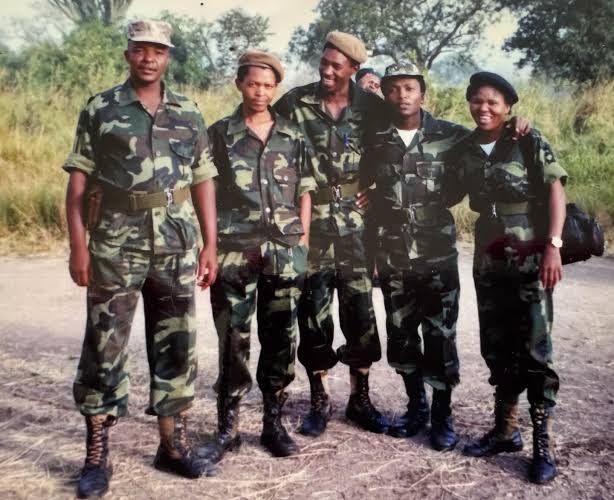
It is critical to understand MK within its historical context. It was not conceived as a reckless militant force, but as a disciplined liberation army operating under strict political oversight. Early MK operations targeted symbols and instruments of apartheid power, government installations, communication lines, and economic infrastructure, rather than civilians.
MK represented a moral and strategic response to a state that had criminalised Black political existence. It embodied the assertion that dignity, freedom, and citizenship were non-negotiable, even if their pursuit demanded sacrifice.
Thousands of South Africans paid dearly for this decision. MK cadres endured exile, imprisonment, torture, and death. Many never returned home. Their contributions were not abstract; they were lived, embodied, and costly.
Erasure and Post-Apartheid Amnesia
Despite this history, the role of MK is increasingly marginalised in contemporary public consciousness. Among many South Africans born after 1994, MK is either poorly understood or reduced to caricature, divorced from its ethical foundations, historical necessity, and political discipline.
This amnesia is dangerous. It creates a vacuum in which liberation history becomes distorted, politicised, or selectively remembered. It also weakens the intergenerational transmission of values such as sacrifice, collective responsibility, and principled resistance to injustice.
The challenge is not to romanticise armed struggle, but to contextualise it honestly. Reconciliation without historical truth is shallow. Unity without memory is fragile.
Reclaiming the Meaning of 16 December
The Day of Reconciliation should not dilute the meaning of 16 December; it should deepen it. True reconciliation requires acknowledging why reconciliation became necessary in the first place. It requires honouring those who were compelled to take up the spear because every other avenue to justice had been violently closed.
Remembering MK is not an endorsement of violence, it is a recognition of historical reality and moral courage under extreme conditions. It is an affirmation that freedom was not gifted, but fought for.
Toward an Honest National Memory
As South Africa continues to grapple with inequality, injustice, and social fragmentation, reclaiming an honest narrative of MK matters. It reminds us that rights are defended through vigilance, that democracy is fragile, and that silence in the face of injustice is never neutral.
Sixteen December should therefore stand as both a bridge and a mirror: a bridge between a painful past and a hopeful future, and a mirror reflecting the costs that were paid so that reconciliation could even be imagined.
To honour uMkhonto weSizwe is to honour the courage of a generation that refused to accept oppression as destiny, and to challenge the present generation to treat freedom with the seriousness it deserves.



