






Business & Economy
Toyota’s R10.4 Billion Hilux Investment Signals Confidence in South Africa’s Industrial Future

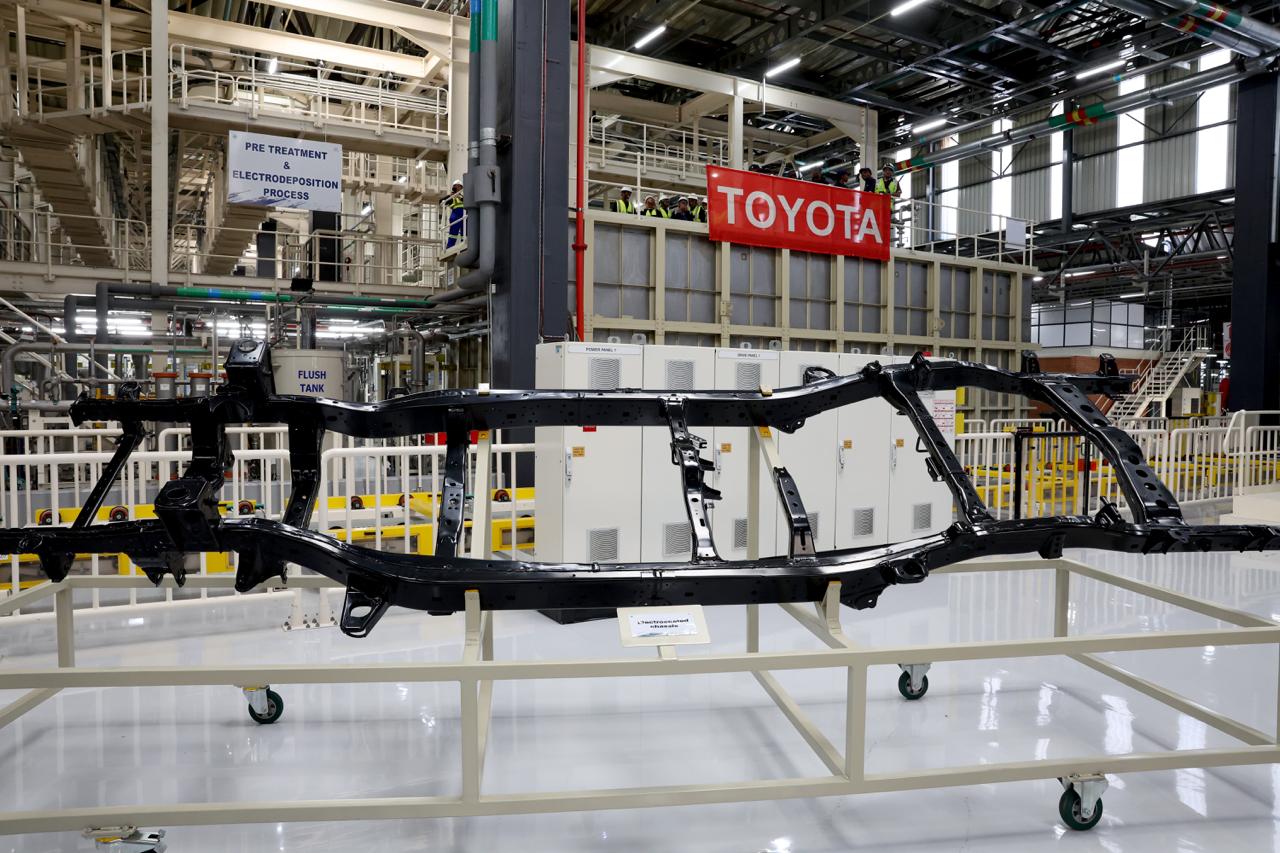
Prospecton, eThekwini | 16 July 2026
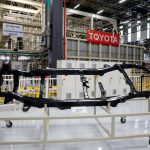
President Cyril Ramaphosa has hailed Toyota South Africa Motors’ R10.4 billion investment in the ninth-generation Hilux as a powerful vote of confidence in South Africa’s economy, describing the official line-off launch at the Prospecton manufacturing plant as evidence that the country remains an attractive destination for long-term industrial investment.
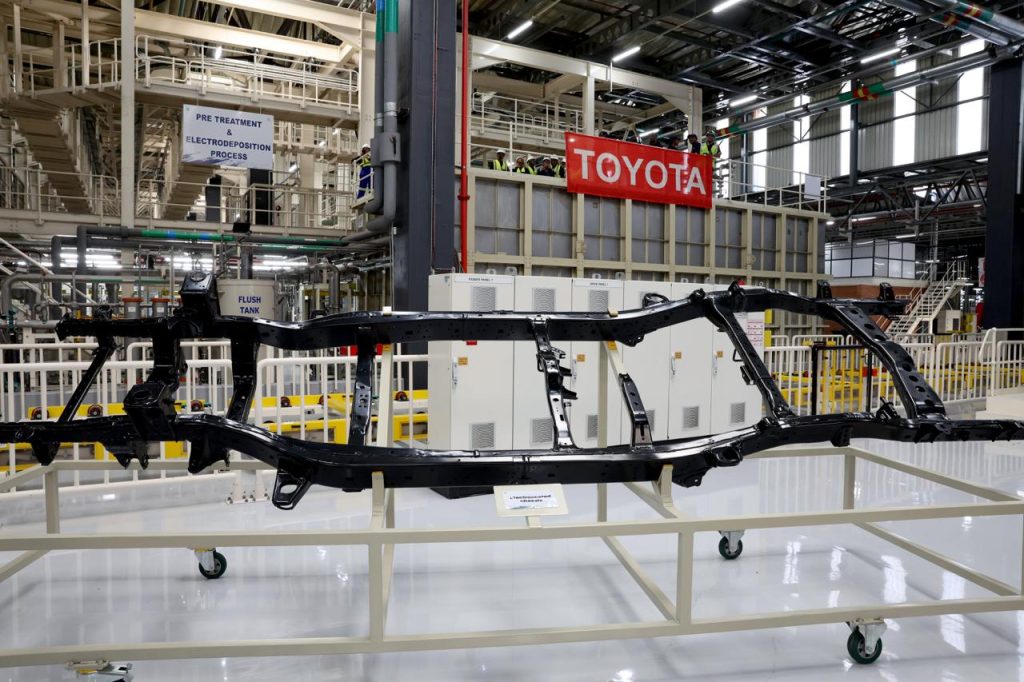
Addressing government leaders, business executives, organised labour and automotive industry stakeholders, the President said the occasion represented far more than the launch of a new vehicle. Instead, it reflected confidence in South Africa’s productive capacity, the resilience of its manufacturing sector, and the country’s ability to compete in an increasingly complex global economy.
“The true value of this investment is not found in machinery or buildings,” Ramaphosa said. “Its value lies in the opportunities it creates—for workers, supplier companies, entrepreneurs, communities and young South Africans seeking employment.”
The President noted that the Toyota Hilux has become part of South Africa’s national identity. For more than five decades, the vehicle has served farmers, miners, construction companies, businesses and families across the country. While carrying one of the world’s most respected automotive brands, he argued that the Hilux has become a proudly South African product—designed for local conditions, built by South African workers and exported to international markets from South African factories.
The investment further strengthens Toyota South Africa’s Prospecton plant within the company’s global manufacturing network while reinforcing South Africa’s position as one of the continent’s leading automotive manufacturing hubs.
Ramaphosa highlighted that approximately one-third of Toyota’s investment has been directed towards strengthening local supplier capacity, tooling and localisation. In addition, supplier companies have invested a further R2 billion to expand their manufacturing capabilities.
According to the President, this demonstrates how industrial investment creates a multiplier effect throughout the economy by expanding domestic production, strengthening small and medium-sized enterprises, deepening local manufacturing capabilities and supporting sustainable economic development.
The President used the occasion to reflect on South Africa’s broader automotive sector, which contributes approximately five per cent of national Gross Domestic Product, supports more than 115,000 direct manufacturing jobs and sustains over half a million jobs across the broader automotive value chain. South Africa currently ranks as the world’s twenty-first largest vehicle producer, an achievement he attributed to decades of cooperation between government, manufacturers, organised labour and component suppliers.
However, Ramaphosa cautioned that the global automotive industry is entering one of its most significant periods of transformation since the invention of the motor vehicle. The transition towards cleaner mobility, rapidly advancing technologies, changing consumer preferences and evolving global trade patterns demands continuous adaptation.
Rather than merely responding to these changes, he said South Africa must position itself as a leader by leveraging its competitive advantages.
Government, he said, is strengthening incentives for component manufacturing, supporting the development of battery value chains, investing in research and innovation for new-energy vehicles, and providing policy certainty that encourages localisation, industrial expansion and long-term investment.
The President also pointed to South Africa’s rich endowment of critical minerals required for future mobility technologies. By combining mineral resources with local beneficiation, advanced manufacturing, technological innovation and world-class automotive production, he believes South Africa can establish itself as a globally competitive centre for future mobility industries.
Ramaphosa further emphasised that industrial competitiveness depends not only on manufacturing excellence but also on efficient logistics. Reliable ports, modern rail infrastructure and effective freight systems are essential for sustaining export-led growth.
He welcomed improvements in Transnet’s performance, revealing that the company’s vehicle terminals in Durban, Gqeberha and East London handled more than 792,000 fully built vehicles during the ten months to February 2026—the highest productivity levels recorded in recent years. Continued public-private partnerships in rail and port infrastructure, he said, will further strengthen South Africa’s competitiveness as a global automotive export platform.
In an increasingly competitive global investment environment, Ramaphosa acknowledged that countries across the world are competing aggressively for capital, technology and talent. South Africa’s response, he argued, must be grounded in macroeconomic stability, structural reforms, improved infrastructure, stronger institutions and enduring partnerships with long-term investors.
Toyota South Africa, he said, has consistently demonstrated such confidence over many decades.
Concluding his address, the President paid tribute to Toyota South Africa’s leadership, the Department of Trade, Industry and Competition, the KwaZulu-Natal Provincial Government, the eThekwini Metropolitan Municipality, organised labour, suppliers, contractors and, most importantly, the workforce at the Prospecton plant.
He said every ninth-generation Hilux leaving the production line carries with it the craftsmanship, discipline, skill and pride of South African workers.
The new Hilux, he concluded, should carry an equally powerful message to international markets: that South Africa remains open for business, that its workforce can compete with the best in the world, and that collaboration between government, business and labour remains the foundation upon which sustainable industrial growth and national prosperity will be built.



