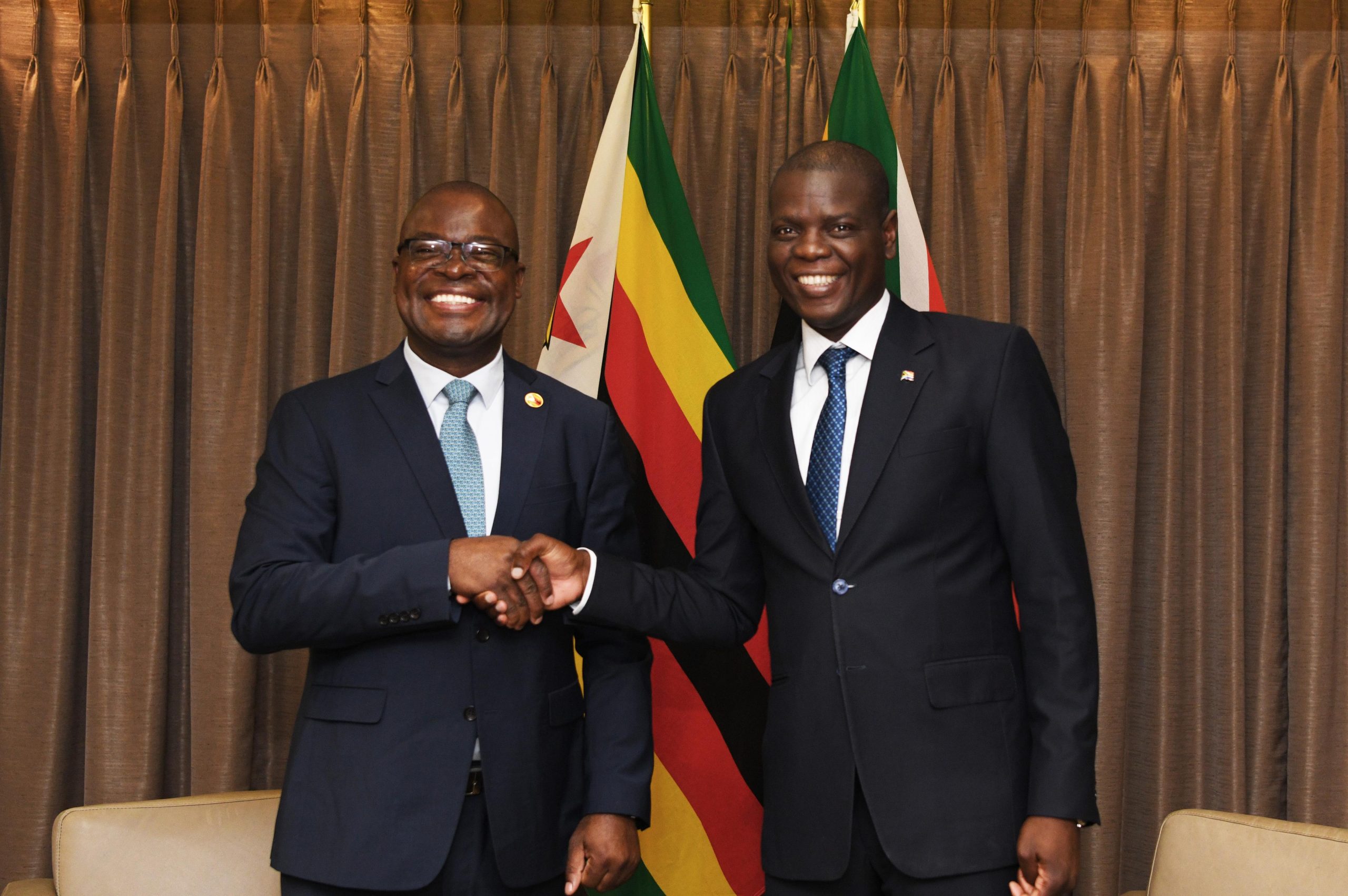
PRETORIA, 20 August 2026 — South Africa and Zimbabwe have moved to convert their longstanding bilateral relationship into an implementation-driven economic partnership, identifying a pipeline of high-impact projects spanning border infrastructure, fertiliser production, automotive manufacturing, mineral beneficiation and industrial development.
Closing the Ministerial Segment of the Fourth Session of the South Africa–Zimbabwe Bi-National Commission (BNC) in Pretoria on Thursday, South African Minister of International Relations and Cooperation Ronald Lamola said the two neighbouring countries had reached a point where bilateral ambition needed to produce tangible results.
“Our partnership must now translate ambition into implementation,” Lamola said.
The ministerial meeting preceded the Leaders’ Session of the BNC, which is expected to take place on Friday, 21 August.
Lamola said ministers had received and reviewed the Agreed Minutes prepared by senior officials following several days of assessment of bilateral relations. The draft minutes contain decisions and recommendations intended to strengthen cooperation between the two countries.
High-Impact Projects Identified
Among the most significant outcomes of the economic discussions was a decision to identify a number of High-Impact Priority Projects.
These include the construction of the Third Limpopo Bridge, operationalisation of the Beitbridge One Stop Border Post, establishment of a fertiliser manufacturing plant, development of regional automotive component manufacturing, platinum group and precious metals value-addition plans, and the development of industrial parks or Special Economic Zones.
Lamola cautioned that further work and consultation would still be required to advance the projects.
The proposed initiatives potentially move the bilateral relationship beyond conventional diplomatic cooperation towards physical infrastructure, industrial capacity and cross-border value chains.
South Africa and Zimbabwe are strategically positioned along the North–South Corridor, with Beitbridge serving as a critical gateway for trade and movement between the two countries and the wider Southern African region.
Lamola said cooperation on transport infrastructure, border efficiency, energy connectivity and the movement of goods and people could strengthen regional integration and support industrialisation across SADC.
He also called for greater cooperation in manufacturing, mineral beneficiation, agricultural modernisation and food security, alongside increased economic participation by small enterprises, women and young people.
Agreements to Provide Legal Framework
Several agreements are expected to be signed during the meeting of the two countries’ leaders.
Lamola said the agreements would provide a legal framework for cooperation across various sectors while strengthening institutional collaboration, expanding trade and investment, promoting industrialisation and deepening regional value chains.
Additional agreements remain under negotiation, with officials encouraged to accelerate their conclusion.
The BNC discussions were conducted through four committees covering political and diplomatic cooperation, social matters, defence and security, and economic cooperation.
On political and diplomatic relations, the two countries reaffirmed their commitment to Pan-African solidarity and coordinated engagement in regional, continental and international institutions.
The countries also welcomed an agreement on diplomatic training aimed at strengthening cooperation between their diplomatic academies and developing a new generation of diplomats capable of advancing the African agenda.
The Social Committee addressed cooperation in education, arts and culture, women’s empowerment, youth development and higher education, while the defence and security discussions focused on transnational crime, border protection, peace and regional stability.
Migration Discussed Frankly
Migration, one of the most sensitive issues in relations between the neighbouring countries, also featured prominently.
Lamola said discussions had been conducted with mutual respect and recognition of shared responsibility and international and regional obligations.
Both governments reaffirmed their commitment to managing migration in a lawful, humane and coordinated manner while rejecting xenophobia, vigilantism and violence against foreign nationals.
Electronic System to Track Implementation
Perhaps one of the most consequential institutional outcomes of the session is an agreement to introduce an electronic monitoring system to track implementation of BNC decisions.
Lamola said the real test of the Fourth BNC would not be the number of decisions adopted but whether they produced measurable improvements in people’s lives.
He called for rigorous implementation, effective monitoring and sustained coordination between institutions in the two countries.
The mechanism could become important in addressing a recurring challenge confronting bilateral commissions: ensuring that agreements reached at political and ministerial level are subsequently converted into programmes, investments and completed projects.
Lamola described the relationship between South Africa and Zimbabwe as one of the strongest pillars of regional cooperation in Southern Africa, saying their shared history, geography and aspirations created a responsibility to deliver tangible economic results for current and future generations.
The ministerial session now clears the way for Friday’s meeting of the two countries’ leaders, where several agreements are expected to be signed and the political direction for the next phase of bilateral cooperation established.