








Opinion
From Kampala to City Hall: Lessons on Identity, Democracy, and the Human Possibility

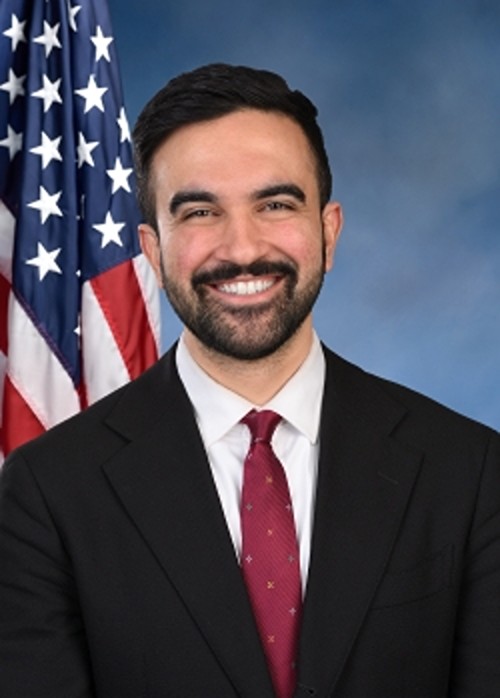
When Zohran Kwame Mamdani was born in Kampala, Uganda, in 1991, few could have imagined that one day he would be elected Mayor of New York City — the beating heart of global modernity. His journey from East Africa to one of the world’s most powerful offices is more than a political story. It is a human story — one that speaks to the boundless potential of identity, the power of democratic systems, and the promise of inclusive societies.
The Making of a Global Citizen
Mamdani’s life defies linear narratives. The son of postcolonial scholar Mahmood Mamdani and filmmaker Mira Nair, he was raised across continents — Africa, Asia, and North America. He lived in Kampala, studied in Cape Town, and grew up politically in New York City. Each place left its imprint, shaping not only who he is but what he stands for: justice, dignity, and representation.
His name — Zohran Kwame Mamdani — itself carries symbolism. Kwame honors Kwame Nkrumah, Ghana’s founding father, while Mamdani connects him to a lineage of postcolonial thinkers who challenged the architecture of inequality. It is a reminder that one can be born of many worlds and still belong wholly to each.
Birthplace is Not Destiny
If there is one message from Mamdani’s rise, it is this: geography is not destiny.
He was not born into the privileges of the American political class. Yet, through education, purpose, and participation, he carved a path that led from the Bronx to City Hall. His story affirms that the place of one’s birth need not confine the scope of one’s becoming.
This lesson carries deep resonance for Africa. Too often, our youth inherit systems that tell them where they were born determines how far they can go. But Mamdani’s story disrupts that logic. It shows that the human spirit, when given freedom and opportunity, transcends borders. If a child born in Kampala can lead New York, then surely a child born in Katlehong or Kisangani can lead their nation.
Democracy as an Instrument of Possibility
The United States, for all its contradictions, remains an experiment in democracy — a project constantly negotiating the ideals of liberty and the pursuit of happiness.
Mamdani’s election is a testament to that promise: that a nation’s greatness is not measured by its wealth or its military power, but by the extent to which it allows all its people to dream, participate, and lead.
His journey invites us to reflect on the moral architecture of democracy. True democracy is not merely the counting of votes; it is the cultivation of opportunity. It is a system that makes it possible for the son of immigrants — of Indian descent, born in Africa — to become mayor in the world’s most diverse city. That is the real miracle of liberty: when possibility is democratized.
Lessons for South Africa: Building a Nation of Belonging
South Africa’s own democratic journey is young but deeply spiritual — rooted in the belief that every citizen, regardless of color, creed, or class, has an equal claim to dignity. Yet, the promise of 1994 remains incomplete. Inequality persists, and opportunity remains unevenly distributed.
From Mamdani’s story, South Africa can draw several lessons:
- Diversity as an Asset: A thriving democracy must mirror its people. Leadership that reflects our multiplicity strengthens trust and unity.
- Opportunity as a Birthright: Talent must not be confined to privilege. When a child in rural Limpopo or Khayelitsha has the same access to education and mentorship as one in Sandton, the nation moves closer to its ideal self.
- Democracy Beyond Politics: We must democratize access to education, entrepreneurship, and technology — the true foundations of modern power.
- Liberty as Inclusion: Freedom is not the privilege of the few; it is the collective responsibility of a society that believes in the dignity of all.
The Human Promise
At its heart, Mamdani’s story is not only about politics — it is about what it means to be human in a connected world. It reminds us that home is not where you are born, but where you choose to serve. That identity is not a limitation but a lens through which one contributes meaningfully to humanity. And that democracy, when lived fully, becomes a bridge between who we are and what we can become.
Conclusion: The New Geography of Possibility
From Kampala to New York, Mamdani’s life traces the new geography of possibility — one not bound by birth but by belief. It challenges every society, especially ours in South Africa, to look beyond the accidents of history and geography and to build nations where the child of a domestic worker can dream without apology, and the grandchild of a miner can become a mayor, minister, or president.
That is the essence of democracy.
That is the spirit of liberty.
And that is the pursuit of happiness — not for the privileged few, but for all who dare to believe that humanity’s truest borders are the boundaries of our imagination.



