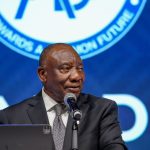
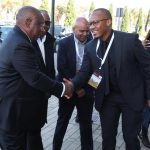
President Cyril Ramaphosa has launched South Africa’s year-long Milestones of Freedom Programme, calling on citizens to reflect on the country’s liberation journey while recommitting themselves to addressing the challenges of poverty, unemployment, inequality, crime and corruption.
Speaking at the Union Buildings in Tshwane on Thursday, Ramaphosa said the programme would commemorate four pivotal anniversaries that collectively define South Africa’s democratic story: the 70th anniversary of the 1956 Women’s March, the 60th anniversary of the declaration of District Six as a whites-only area, the 50th anniversary of the 1976 Soweto Uprising, and the 30th anniversary of the adoption of South Africa’s democratic Constitution.
Honouring the Foundations of Freedom
Ramaphosa described the four milestones as chapters in a single national story of oppression, resistance, sacrifice and renewal.
Reflecting on the historic Women’s March of 9 August 1956, he paid tribute to the approximately 20,000 women who marched to the Union Buildings in protest against apartheid pass laws.
“The women taught us that there can be no freedom for our nation while half of our people are not free,” he said, honouring leaders such as Lilian Ngoyi, Helen Joseph, Rahima Moosa and Sophie De Bruyn.
He said South Africa’s democratic project remains incomplete until women enjoy full equality, dignity and safety.
Remembering District Six and Forced Removals
The President also reflected on the 60th anniversary of the apartheid government’s declaration of District Six as a whites-only area under the Group Areas Act in 1966.
More than 60,000 residents were forcibly removed from the vibrant Cape Town community, which was subsequently demolished.
Ramaphosa said the tragedy of District Six mirrored the experiences of communities across the country, including Sophiatown and Cato Manor.
As restitution efforts continue, he said government remains committed to achieving meaningful redress for those dispossessed by apartheid-era land policies.
Youth Remembered
Marking the 50th anniversary of the Soweto Uprising, Ramaphosa honoured the students who confronted the apartheid education system on 16 June 1976.
“The youth of 1976 changed the course of our history,” he said.
He described the young protesters as pioneers whose courage exposed the brutality of apartheid and demonstrated that injustice could not endure indefinitely.
The President said young people continue to play a vital role in shaping South Africa’s future and should not be viewed merely as leaders of tomorrow but as active participants in the present.
Constitution Remains a Guiding Compass
Ramaphosa highlighted the significance of the 30th anniversary of the adoption of South Africa’s Constitution in 1996, describing it as the culmination of decades of struggle.
Quoting the opening words, “We, the people of South Africa,” he said the Constitution affirms that the country belongs to all who live in it, united in diversity.
The Constitution, he said, remains the nation’s most important instrument for healing past divisions, promoting equality and protecting human dignity.
Progress Since Democracy
While acknowledging persistent challenges, Ramaphosa pointed to notable gains achieved since 1994.
He said millions of households now have access to electricity, clean water, housing, healthcare and education. Social grants and free basic services have improved living conditions for vulnerable citizens, while expanded educational opportunities have opened pathways for young people from disadvantaged backgrounds.
The President also highlighted advances in women’s empowerment, noting increased representation of women in leadership positions across government, the judiciary, academia and business.
“Through our collective efforts the daughters of Lilian Ngoyi, Helen Joseph, Rahima Moosa and Sophie de Bruyn are rising,” he said.
Economic Growth and Job Creation
Central to the government’s future agenda, Ramaphosa said, is the creation of a more inclusive economy.
He outlined ongoing efforts to improve electricity supply, rebuild rail and port infrastructure, attract investment and support entrepreneurship.
“An economy that creates jobs, particularly for young people, is the greatest guarantor of a secure and prosperous future,” he said.
The President also reaffirmed government’s commitment to land reform, education, healthcare and youth employment initiatives.
Fight Against Crime and Corruption
Ramaphosa pledged that government would continue strengthening law enforcement institutions and pursuing individuals implicated in corruption.
He said stolen public funds deprive citizens of essential services and undermine development.
“We are pursuing those who stole from the people, because money looted through corruption is money taken from a clinic, a classroom, a child,” he said.
The President added that government remains focused on building a capable, ethical and service-oriented state.
Call to Active Citizenship
Beyond government programmes, Ramaphosa urged South Africans to become active participants in nation-building.
He encouraged citizens to volunteer in schools, mentor young people, participate in local governance, report corruption, combat gender-based violence and engage in the ongoing National Dialogue process.
He also called on eligible citizens to register to vote during the voter registration weekend scheduled for 20 and 21 June.
“Freedom is not a monument we visit once a year. It is a responsibility we carry every day,” he said.
Renewing the Democratic Promise
Launching the Milestones of Freedom Programme, Ramaphosa said the commemorations are not merely about remembering the past but about drawing inspiration for the future.
“We are the inheritors of their courage. We are the keepers of their dream. And we are, every one of us, the authors of what South Africa will become.”
The programme will run over the next year, commemorating the defining moments that shaped South Africa’s democratic journey while encouraging citizens to help build a more equal, prosperous and united nation.
Over the years, I have found it challenging to define myself solely by an academic qualification, trade, or occupation. My eagerness to learn, especially about how to build and deploy capital, has allowed me to accumulate diverse experiences in a short span of time. Through this journey, I have discovered that at my core, I am a storyteller.
I tell the stories of corporations, their heritage, and the individuals who act in their name. I explore the role of these institutions in fulfilling the promise of a better Africa, and, most importantly, the causal link between the rule of law and economic development.
As a fellow believer in Africa’s potential, can I count on you to be a point of light in securing our continent’s future?