



International Relations
South Africa and Uganda Seek Tangible Results from Bilateral Cooperation

Published
1 hour agoon
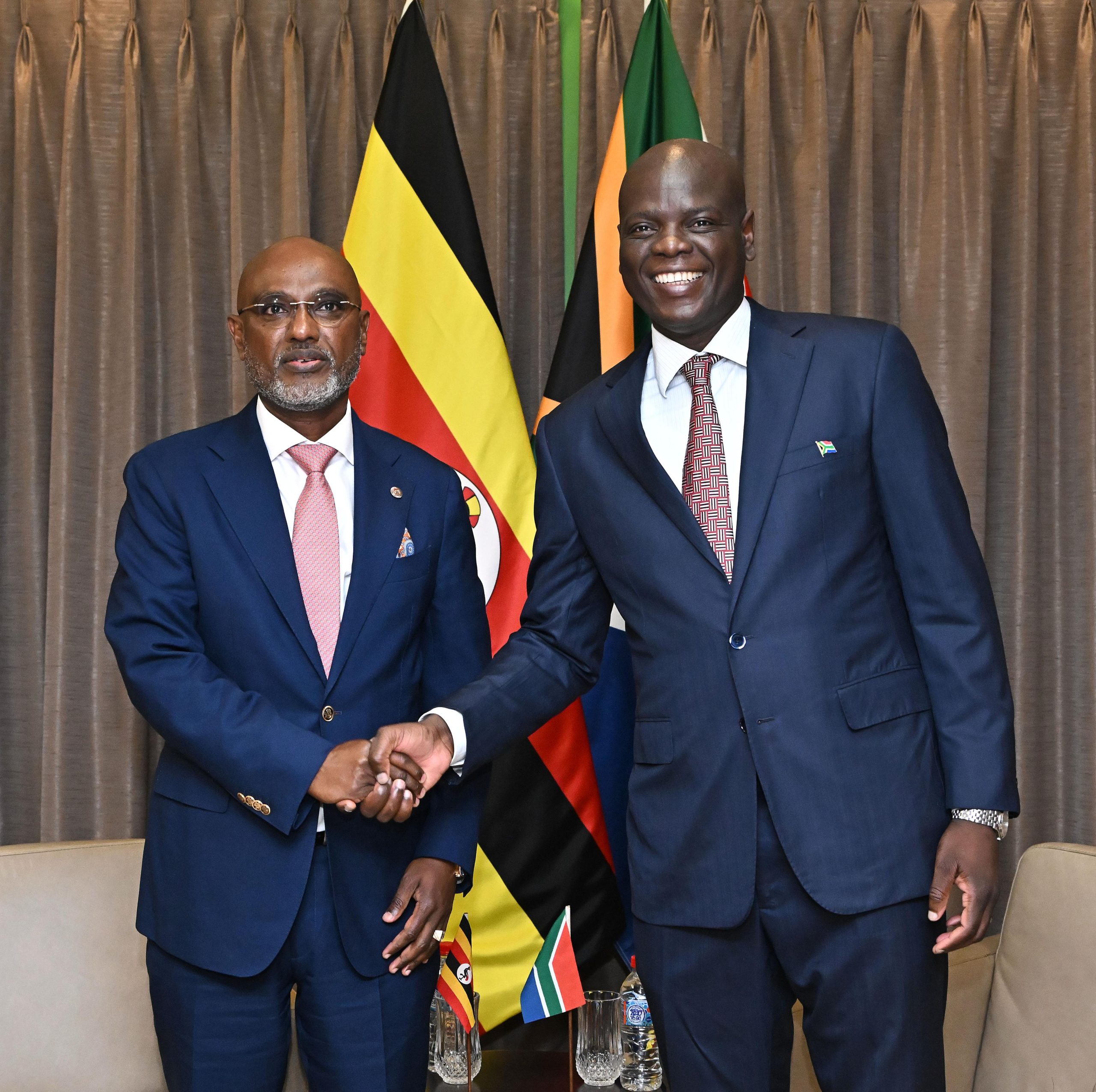
Lamola calls for implementation-focused diplomacy as Pretoria hosts third Joint Commission for Cooperation
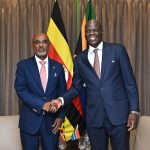
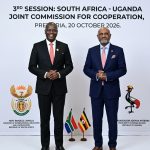
PRETORIA, 20 October 2026 — South Africa and Uganda are seeking to translate longstanding diplomatic relations into stronger trade and investment ties, improved connectivity and practical economic opportunities, with International Relations and Cooperation Minister Ronald Lamola urging both countries to prioritise implementation over open-ended commitments.
Opening the third session of the South Africa–Uganda Joint Commission for Cooperation (JCC) in Pretoria on Tuesday, Lamola said the meeting’s value would ultimately depend on whether the commitments made by the two delegations produced tangible results.
He welcomed Uganda’s Minister of Foreign Affairs, Adonia Ayebare, and the accompanying delegation, conveying President Cyril Ramaphosa’s greetings to Ugandan President Yoweri Museveni. He also congratulated Uganda on the conclusion of its 2026 electoral process and Ayebare on his appointment.
From agreements to implementation
Lamola called for a more disciplined approach to bilateral cooperation, arguing that agreements should lead to measurable progress rather than remain unfinished business.
He acknowledged that some memoranda of understanding still required legal and technical work. Where outstanding issues remained, he urged the two sides to establish clear pathways to conclusion, supported by defined responsibilities and timeframes.
The priority, he indicated, was to move beyond the signing of agreements towards their practical implementation.
For the JCC, this means assessing progress not simply by the number of commitments secured, but by whether they strengthen commercial relations, improve institutional cooperation and make it easier for people, goods and capital to move between the two countries.
Investment relationship yet to reach its potential
South African businesses have maintained a presence in Uganda across several sectors. Lamola cited MTN, which entered the Ugandan market in 1998, alongside Stanbic Bank Uganda, part of Standard Bank Group, Absa and Sanlam.
Despite this established presence, he acknowledged that bilateral investment remained below its potential.
During Museveni’s State Visit to South Africa in 2023, Ramaphosa highlighted concerns about a decline in the number of South African companies operating in Uganda and the need to address the challenges confronting investors. Lamola noted that Standard Bank had recently reaffirmed its commitment to Uganda, including through financing for major infrastructure projects.
He called for practical measures to improve the investment environment in both countries. These include removing regulatory and administrative obstacles, strengthening trade facilitation and cooperation on standards, improving access to investment information and ensuring that legitimate investor concerns reach the relevant authorities.
The relationship, he stressed, should also create opportunities for Ugandan businesses seeking to enter or expand in the South African market.
A proposed Joint Working Group on Trade and Investment could provide a structured mechanism for addressing these issues, facilitating engagement between the two governments and monitoring challenges experienced by existing investors.
Priority areas for cooperation include transport, mining, energy, agriculture, agro-processing, manufacturing, infrastructure, financial services, telecommunications and tourism.
Connectivity and movement of people
Improved connectivity is another priority in strengthening commercial relations.
Lamola highlighted the proposed Bilateral Air Services Agreement as an instrument for facilitating the movement of businesspeople, tourists and goods. Better air links, combined with efficient customs procedures and predictable regulatory requirements, could support closer commercial engagement.
He also welcomed South Africa’s extension of its Electronic Travel Authorisation (eTA) system to Ugandan passport holders, presenting the development as part of broader efforts to improve mobility and facilitate business.
The challenge is to ensure that improvements in travel arrangements translate into more frequent business engagement, stronger commercial networks and greater opportunities for investment.
Strengthening security and technical cooperation
The two countries are also pursuing cooperation across defence, security and legal affairs.
Lamola highlighted work involving extradition, mutual legal assistance in criminal matters, the transfer of sentenced persons and immigration. These areas require sustained institutional coordination to support the administration of justice and address cross-border challenges.
He also called for continued engagement in mining, geology, hydrocarbons and energy, subject to the completion of the necessary technical and institutional processes.
Such cooperation could complement the broader economic agenda by strengthening the frameworks within which investment and cross-border commercial activity take place.
Regional peace and a stronger African voice
Beyond bilateral relations, Lamola recognised Uganda’s contribution to regional peace and security, particularly in South Sudan, Somalia, the wider Horn of Africa and the eastern Democratic Republic of the Congo (DRC).
He reaffirmed South Africa’s support for African-led and regionally owned approaches to conflict resolution, alongside the continental objective of silencing the guns.
On Sudan, eastern DRC and other conflict-affected areas, he emphasised the protection of civilians, humanitarian access, dialogue and political solutions. He also called for sustained support for African Union-led initiatives in Somalia.
At the global level, Lamola reiterated South Africa’s support for a two-state solution and Palestinian self-determination. On the war in Ukraine, he emphasised diplomacy and respect for the United Nations Charter.
These conflicts, he noted, have consequences beyond the immediate areas of hostilities, affecting food security, energy markets and trade, particularly in developing economies.
Lamola renewed South Africa’s call for reform of the UN Security Council, arguing that Africa should not remain underrepresented in an institution whose decisions have far-reaching consequences for the continent.
He urged South Africa and Uganda to coordinate their positions within the United Nations, the African Union and other multilateral forums, including on development finance, climate finance, technology access and international markets.
African solidarity in public health
The minister also highlighted the importance of continental cooperation in responding to public health emergencies.
He cited the Ebola outbreaks in Uganda and the DRC in May 2026 as an illustration of the need for coordinated African responses. In his capacity as African Union Champion on Pandemic Prevention, Preparedness and Response, Ramaphosa announced an initial US$5 million contribution to the Africa Centres for Disease Control and Prevention (Africa CDC) to support the continental response.
Lamola congratulated Uganda on containing its outbreak. According to the timeline presented in his remarks, the last patient was discharged on 16 July 2026, and Uganda announced the interruption of local transmission on 28 July.
The episode underscored the importance of cooperation that extends beyond diplomatic declarations to the mobilisation of resources, institutional capacity and coordinated action.
Building on three decades of diplomatic relations
South Africa and Uganda established formal diplomatic relations in 1994. Their relationship also has historical roots in Uganda’s support for South African liberation activists during the struggle against apartheid.
The previous JCC session took place in Kampala in 2022. It was followed by a mid-term review in Pretoria and Museveni’s State Visit to South Africa in February 2023.
Senior officials from both countries have already engaged through the JCC’s Diplomatic and Political, Defence and Security, and Economic and Social committees ahead of the ministerial session.
The latest meeting therefore provides an opportunity to assess existing commitments, resolve outstanding issues and establish priorities for the next phase of cooperation.
The central test is whether the renewed engagement produces measurable economic and institutional gains. Stronger trade, reciprocal investment, improved connectivity and more effective cooperation would give practical meaning to the diplomatic relationship. The task facing both governments is to turn those priorities into commitments with clear responsibilities, timelines and demonstrable outcomes.
Over the years, I have found it challenging to define myself solely by an academic qualification, trade, or occupation. My eagerness to learn, especially about how to build and deploy capital, has allowed me to accumulate diverse experiences in a short span of time. Through this journey, I have discovered that at my core, I am a storyteller. I tell the stories of corporations, their heritage, and the individuals who act in their name. I explore the role of these institutions in fulfilling the promise of a better Africa, and, most importantly, the causal link between the rule of law and economic development. As a fellow believer in Africa’s potential, can I count on you to be a point of light in securing our continent’s future?



You must be logged in to post a comment Login