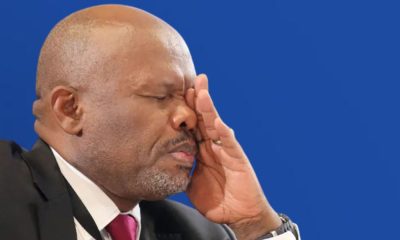
A War Veteran Turned Dissident in Zimbabwe’s Political Turmoil
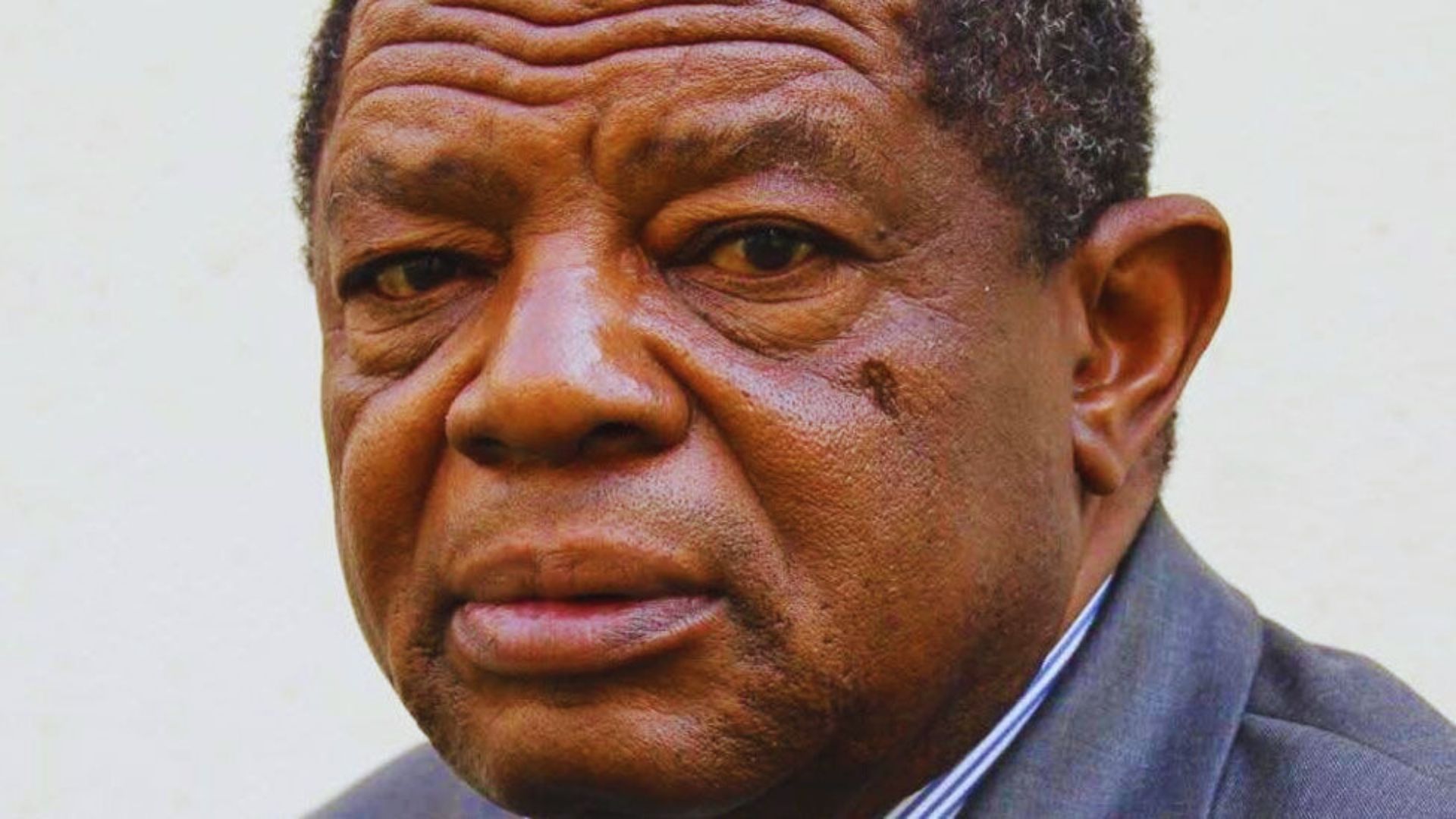
April 8, 2025 – As Zimbabwe grapples with a deepening political crisis, Blessed “Bombshell” Geza has emerged as a polarizing figure, leading a faction within the ruling ZANU-PF party to challenge President Emmerson Mnangagwa’s leadership. A liberation war veteran, former Member of Parliament, and once a senior member of ZANU-PF’s Central Committee, Geza has transitioned from a party loyalist to a vocal critic, accusing Mnangagwa of corruption, mental incapacity, and orchestrating a fraudulent 2030 agenda that critics label as a heist on the people’s rights and natural resources. This article explores Geza’s background, his recent actions, and his role in Zimbabwe’s escalating political unrest, while critically examining the narratives surrounding his motivations and impact.
Background and Political Journey
Blessed Geza, born in 1943, is an 82-year-old Zimbabwean liberation war veteran who played a significant role in the Second Chimurenga, the armed struggle against Rhodesian colonial rule in the 1970s. His involvement in the war earned him a respected status among Zimbabwe’s independence fighters, a group that holds considerable influence in the country’s politics. Following Zimbabwe’s independence in 1980, Geza joined ZANU-PF, the party that has dominated the nation’s political landscape since its inception.
Geza’s political career spans decades, marked by both prominence and controversy. He served as a Member of Parliament for Sanyati, a constituency in Mashonaland West Province, where he represented ZANU-PF’s interests at the grassroots level. His tenure as an MP allowed him to build a strong local support base, leveraging his war veteran status to connect with communities. Additionally, Geza held a senior position within the Central Intelligence Organisation (CIO), Zimbabwe’s intelligence agency, which gave him access to the inner workings of the state’s security apparatus and likely shaped his understanding of power dynamics within ZANU-PF.
As a member of ZANU-PF’s Central Committee, Geza was part of the party’s decision-making elite, a position that placed him at the heart of its political machinery. His loyalty to ZANU-PF was evident in his initial support for Mnangagwa, particularly during the 2017 coup that ousted Robert Mugabe, where Geza and other war veterans backed Mnangagwa’s rise to power. However, his relationship with Mnangagwa has since deteriorated, leading to his expulsion from the party on March 7, 2025, after he began publicly criticizing the President.
Recent Actions and Role in the Political Crisis
Geza’s transformation into a dissident figure began in early 2025, when he started voicing concerns over Mnangagwa’s alleged attempts to extend his presidency beyond the constitutional two-term limit, which ends in 2028. Mnangagwa’s supporters have popularized the slogan “2030 he will still be the leader,” a move that Geza and other critics view as a direct assault on Zimbabwe’s constitution. On February 12, 2025, police announced their intention to arrest Geza on charges of incitement to commit public violence, undermining the authority of the President, and alleged theft of three vehicles, following his call for Mnangagwa to “go now.” This marked the beginning of his public break with the party.
Geza’s dissent escalated in March 2025, when he organized a series of protests aimed at forcing Mnangagwa to resign. On March 30, 2025, he called for Zimbabweans to “fill up the streets” in a nationwide demonstration, dubbed M31, to stand against what he described as “corrupt rule.” The protests, held on March 31, saw widespread stay-aways, with businesses and schools closing and many citizens opting to stay home due to safety concerns. In Harare, small groups of youths gathered in the Rotten Row area, chanting slogans and barricading roads, but riot police intervened, using tear gas to disperse protesters and arresting 95 individuals on charges of promoting public violence and breaching peace. Geza, who has reportedly gone into hiding since his expulsion, thanked his followers on social media for heeding his call, urging them “not to be cowards” despite the low turnout.
On April 2, 2025, Geza announced plans to table an impeachment motion against Mnangagwa, alleging the President’s “inability to perform the functions of the office of President because of lack of mental capacity” and corruption. He claimed Mnangagwa, also 82, had been diagnosed with “vascular dementia,” a condition that Geza alleged had diminished Mnangagwa’s capacity to lead, citing an incident where the President reportedly failed to recognize Energy Minister July Moyo. Geza further accused Mnangagwa’s allies, including controversial businessman Kudakwashe Tagwirei, of exploiting the President’s condition to sign off on multi-million-dollar deals, selling state-owned companies, and firing and hiring state employees in Mnangagwa’s name. The draft impeachment motion, publicized by Geza’s faction, also accused Mnangagwa of shielding individuals involved in the Zimbabwe Electoral Commission fraud scandal, where ally Wicknell Chivayo allegedly benefited by over $100 million, and irresponsibly increasing the national debt without sustainable repayment plans.
Geza’s criticisms extend beyond Mnangagwa to other influential figures within ZANU-PF’s orbit. On March 28, 2025, he admitted to setting alight several vehicles parked outside the offices of Tagwirei and Chivayo, describing his actions as a “revolutionary” intent to confront the “Zvigananda” (a term he uses for corrupt elites) and “political criminals” associated with Mnangagwa. He named Tagwirei, Chivayo, and gold dealer Scott Sakupwanya—three wealthy businessmen with close ties to the government—as part of this corrupt network. On April 4, 2025, Geza accused Tagwirei of destabilizing the Seventh-Day Adventist (SDA) Church in Zimbabwe and harboring clandestine political ambitions, claiming that Mnangagwa was grooming Tagwirei to succeed him, sidelining Vice President Constantino Chiwenga.
Geza has positioned himself as a supporter of Chiwenga, arguing that the Vice President, who led the 2017 coup against Mugabe, would be the “right tonic” to address Zimbabwe’s rampant corruption. However, Chiwenga has not publicly commented on Geza’s push to oust Mnangagwa, and government officials deny any rift between the two leaders. Geza’s capacity to organize a rebellion from within Parliament remains questionable, as Zimbabwe’s constitution requires a three-stage impeachment process that would need significant support from lawmakers, many of whom remain loyal to Mnangagwa.
Motivations and Public Perception
Geza’s motivations are a subject of intense debate. On one hand, his criticisms of Mnangagwa resonate with many Zimbabweans who are frustrated by the country’s economic collapse—marked by 95% unemployment, hyperinflation, and a 98% depreciation of the Zimbabwe dollar since 2020—and the pervasive corruption within ZANU-PF. Analyst Takura Zhangazha noted that Geza’s opposition gains traction because it coincides with the nation’s economic struggles, which citizens blame on the ruling government. The 2023 Al Jazeera investigation revealing that Zimbabwean officials were using smuggling gangs to sell the country’s gold to soften the impact of sanctions further fuels public discontent, lending credence to Geza’s accusations of corruption.
On the other hand, critics argue that Geza’s dissent lacks “organic or popular authenticity,” as Zhangazha put it, because he is a product of the same ZANU-PF establishment that has long controlled Zimbabwe. Political analyst Ibbo Mandaza has suggested that the economic shutdown on March 31, despite low protest turnout, sent a message to political leaders, but others, like ZANU-PF’s Farai Murapira, dismissed the protests as a failure, claiming social media does not reflect reality. Special Presidential Investment Advisor Dr. Paul Tungwarara described Geza as a “failed politician” motivated by “selfish interests,” a sentiment echoed by ZANU-PF officials who have labeled his actions “treasonous.”
Geza’s allegations of a plot to frame him for terrorism add another layer of complexity. On March 31, 2025, he called off further protests, citing intelligence reports that Major Sean Mnangagwa, the President’s son, was planning to frame him for terrorism. This claim, while unverified, reflects the high stakes of Zimbabwe’s political infighting, where dissenters often face severe repercussions, including fabricated charges and arrests.
Critical Analysis of Geza’s Role and the 2030 Agenda
Geza’s role as a dissident must be critically examined within the broader context of Zimbabwe’s political and economic crisis. His accusations against Mnangagwa, particularly regarding the 2030 agenda, align with widespread criticisms that the agenda is a fraudulent scheme designed to extend Mnangagwa’s rule while enabling the plundering of Zimbabwe’s natural resources. Reports from the Zimbabwe Environmental Law Association (ZELA) and Transparency International Zimbabwe (TIZ) have documented how ZANU-PF elites have secured lucrative mining contracts under Vision 2030, often through opaque deals that displace local communities and cause environmental degradation. For instance, lithium mining concessions in Mashonaland East, granted to Chinese firms linked to Mnangagwa’s allies, have displaced over 1,500 villagers in Mutoko, while gold mining operations in Matabeleland South have generated millions for party loyalists with little benefit to the national treasury.
However, Geza’s own history within ZANU-PF raises questions about his credibility as a reformer. As a former Central Committee member and CIO operative, he was part of the same system he now critiques, benefiting from its patronage networks during his tenure. His support for Chiwenga, a military figure with his own controversial past, suggests that Geza’s dissent may be more about factional power struggles than a genuine commitment to systemic change. Political analyst Stanford Nyatsanza has noted that Zimbabwe’s politics have long been a “conflation between ZANU-PF and the military,” and the current crisis may hinge on which faction secures the military’s support—a dynamic that Geza, with his war veteran status, is well-positioned to influence.
The 2030 agenda’s broader implications extend beyond Zimbabwe’s borders. South Africa, Zimbabwe’s largest trading partner, faces potential disruptions to its $111.6 million trade relationship if the country’s instability worsens, while Mnangagwa’s unilateral suspension of U.S. import tariffs on April 6, 2025, has fractured the Southern African Development Community’s (SADC) response to U.S. trade policies, highlighting the difficulty of forging a unified African front. Geza’s opposition to the agenda, while rooted in legitimate grievances, risks further destabilizing the region if it leads to a coup or civil conflict, as some analysts warn.
Blessed Geza is a complex figure in Zimbabwe’s political landscape—a liberation war veteran, former MP, and ZANU-PF insider who has turned against the party he once served. His recent actions, from organizing protests to pushing for Mnangagwa’s impeachment, have made him a focal point of the country’s escalating crisis, positioning him as a dissident challenging a corrupt regime. However, his own history within ZANU-PF and his alignment with Chiwenga suggest that his motivations may be tied to factional power struggles rather than a genuine push for democratic reform. The 2030 agenda, which Geza opposes, is indeed a fraudulent scheme that advances corruption and undermines Zimbabwe’s constitution, but Geza’s role as a potential agent of change remains questionable. As Zimbabwe teeters on the brink of further instability, Geza’s legacy will depend on whether his dissent can catalyze meaningful reform—or merely deepen the nation’s descent into chaos.