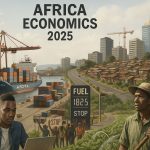
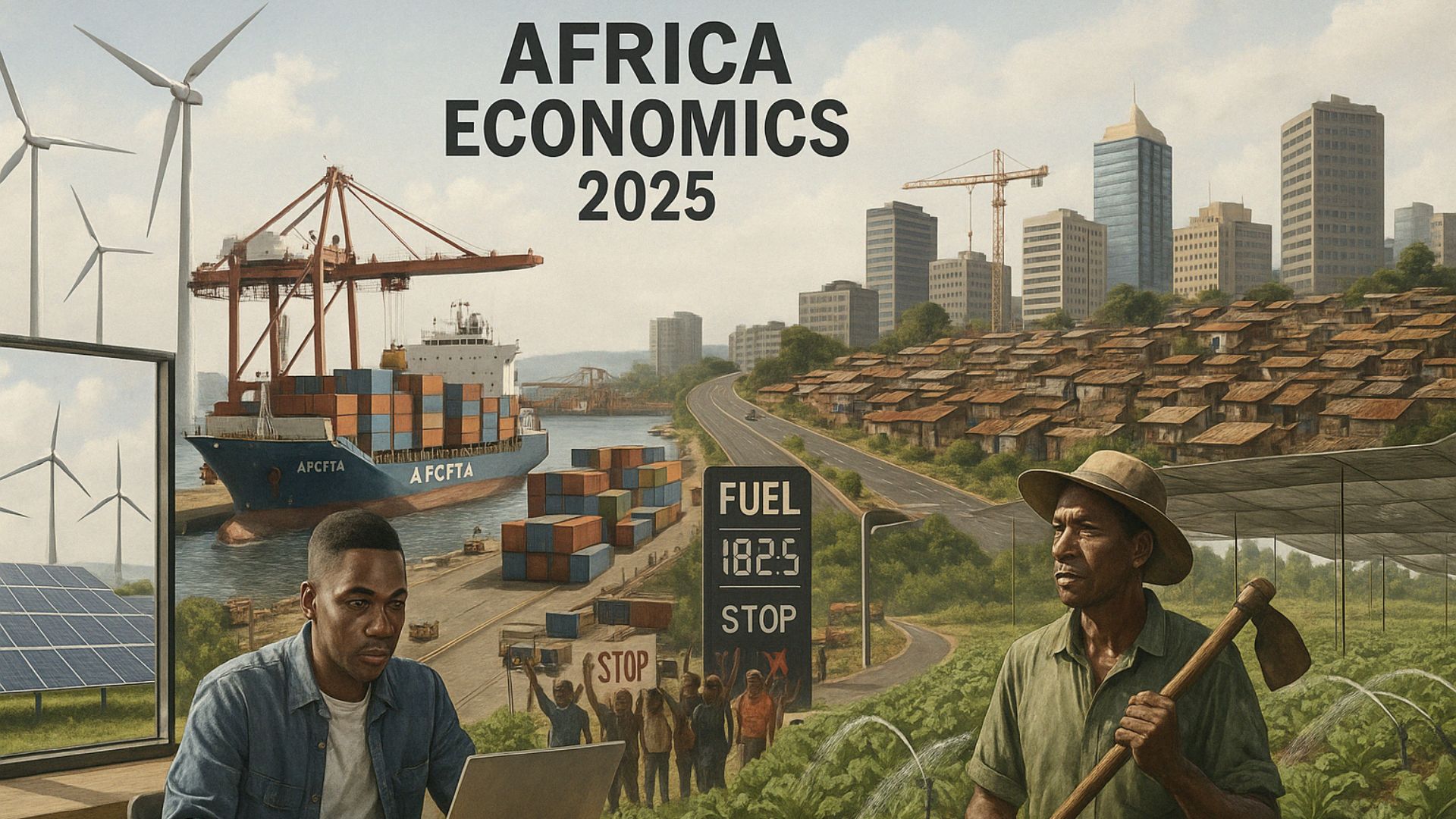
Africa in 2025 stands on the edge of transformation. With a projected growth rate of 3.7% to 4.3%, the continent is set to outpace the global average, becoming the second-fastest-growing region in the world. Major initiatives like the African Continental Free Trade Area (AfCFTA), a vibrant youth-driven tech sector, and an expanding green economy offer promising momentum.
But this growth story isn’t without turbulence. High debt burdens, climate change, political instability, and infrastructure gaps continue to test the resilience of African economies.
This article unpacks the complex landscape — the forces powering growth, the challenges impeding progress, and real-world stories of individuals shaping Africa’s economic destiny.
📈 Drivers of Growth in 2025
1. 🌐 AfCFTA and Regional Integration
Launched in 2021, AfCFTA is reshaping Africa’s trade landscape.
- 39 countries now trade under the Guided Trade Initiative.
- Intra-African trade hit $192.2 billion in 2023 — up 3.2% from the previous year.
- The Pan-African Payment and Settlement System (PAPSS) has saved $5 billion annually, easing currency barriers.
💬 Ama Kwarteng, Ghanaian textile exporter:
“AfCFTA opened doors for me to sell in Kenya and Nigeria. But delays at customs still hurt my bottom line.”
2. 👥 Demographic Dividend
Africa’s youth is its engine.
- 60% of the population is under 25.
- By 2050, Africa will host the world’s largest working-age population — 740 million strong.
- Countries like Rwanda are capitalizing with tech hubs like Kigali Innovation City.
3. 💻 Digital & Fintech Revolution
Africa’s digital economy is exploding.
- Worth $115 billion in 2024, projected to reach $712 billion by 2050.
- 70% of Sub-Saharan Africans use mobile money.
- Startups like Flutterwave, Paystack, and Chipper Cash are reshaping finance and SME support.
4. ⚡ Natural Resources & Green Energy
Africa is central to the global energy transition.
- The DRC supplies over 60% of the world’s cobalt.
- Ethiopia’s GERD is powering East Africa.
- Countries like Namibia and Morocco are investing in solar and hydrogen, attracting Gulf investment.
5. 📊 Recovery of Major Economies
The rebound of giants like Nigeria, South Africa, and Egypt is stabilizing the region:
- Nigeria: 3.2% growth via agriculture and tech.
- South Africa: 1.5% growth post-energy reforms.
- Egypt: 4.1% growth through infrastructure and tourism.
Discover: Youth, tech, trade, and green energy are Africa’s growth engines.
Understand: These drivers leverage internal strengths for long-term impact.
Connect: Entrepreneurs like Ama reveal how integration changes lives.
🚨 Obstacles to Sustained Growth
1. 💸 Debt & Financing Gaps
- 21 African nations exceed 60% debt-to-GDP ratios.
- Over 70% are in or near debt distress.
- Africa faces a $402 billion annual financing gap until 2030.
2. 🌦️ Climate Change Risks
- 900 million Africans face climate hazards.
- Annual losses: $7–15 billion due to droughts, floods, and extreme weather.
- In Kenya, 2024 floods devastated tea exports.
- In South Africa, past droughts crippled mining.
3. 🏛️ Political Instability & Governance
- Africa has experienced 220 coup attempts since 1950.
- Burkina Faso (2022) and Niger (2023) triggered investor fear.
- Mozambique’s 2024 election violence led to 300 deaths and economic damage.
4. 🔌 Infrastructure & Energy Deficits
- Trade costs are 50% higher than global averages.
- Only 43% of Africans have reliable electricity.
- South Africa still faces breakdowns of 12,000 MW, while Nigeria’s grid remains under strain.
5. 📉 Inflation & Inequality
- Inflation fell from 7.1% to 5.1% in 2024, but food inflation stays above 5% in many countries.
- 464 million Africans live in extreme poverty.
- Africa’s Gini index ranks second highest globally, after Latin America.
Discover: Debt, climate, and instability constrain momentum.
Understand: Structural inequality slows poverty reduction.
Connect: Communities feel the brunt, from Lusaka to Nairobi.
🌍 Country Snapshots: Growth in Context
🇨🇮 Côte d’Ivoire: Agricultural Boom with Infrastructure Gains
- 7% growth driven by cocoa exports, Abidjan port expansion, and EBRD capital flows.
- Challenges: Rainfall variability, rising debt, and governance tension post-elections.
💬 Koffi Yao, cocoa farmer:
“Prices are up, but floods ruined my yield. Roads are better, but we need more climate help.”
🇿🇦 South Africa: Reform Amid Fragility
- Growth returns after energy policy overhaul and load-shedding suspension.
- $5.3 billion FDI in 2023 highlights investor optimism.
💬 Naledi Molefe, solar entrepreneur:
“Policy shifts help, but power still cuts production. We need consistent infrastructure.”
🇪🇹 Ethiopia: Green Energy and Post-Conflict Recovery
- 6.5% growth from energy exports and agricultural revival.
- Challenges: Tigray conflict scars and unpredictable weather.
💬 Aster Gebremedhin, farmer in Tigray:
“Peace let us plant again, but droughts hit us hard. Power from GERD brings hope.”
Discover: Case studies reveal distinct growth paths.
Understand: From cocoa to solar to hydro, economies hinge on context.
Connect: Individuals like Koffi, Naledi, and Aster symbolize Africa’s resilience.
🗣️ Expert Voices on Africa’s Economic Future
Dr. Landry Signé, Brookings Institution:
“Africa’s growth is driven by youth, innovation, and integration. But bold reforms are needed to tackle debt and climate risks.”
Ama Kwarteng, Ghanaian SME exporter:
“AfCFTA is a breakthrough, but infrastructure and red tape still slow us down.”
Li Junhua, UN DESA Under-Secretary-General:
“Africa’s mineral wealth is key for the energy transition—but must be managed sustainably.”
❓ FAQs: Africa’s Economy in 2025
What are the key growth drivers?
AfCFTA, youth workforce, digital innovation, green minerals, and the recovery of major economies.
What’s holding Africa back?
Debt distress, climate vulnerability, governance issues, energy shortages, and high poverty.
Is AfCFTA delivering?
Yes — intra-African trade has grown by 3.2%, and PAPSS has reduced transaction costs significantly.
Can Africa adapt to climate risks?
Investments in renewables, climate-smart agriculture, and early warning systems are key, but challenges remain.
🔚 Conclusion: Africa’s Moment to Seize
In 2025, Africa’s economic journey reflects both potential and peril. With robust growth drivers — from trade integration and tech innovation to green energy — the continent is on an upward path. But its success depends on confronting entrenched challenges.
Côte d’Ivoire, South Africa, and Ethiopia show how local leadership, reform, and community resilience can pave the way. Whether it’s a cocoa farmer weathering climate shifts, a solar entrepreneur adapting to policy change, or a post-conflict farmer banking on peace, these stories illustrate the human side of economic transformation.
As Dr. Signé said, “Africa’s diversity is its strength.” Harnessing that diversity — of people, resources, and ideas — is key to building an inclusive, prosperous future.
📢 Call to Action:
Support African businesses. Demand fair global finance. Stay engaged. Africa’s economic rise is a global opportunity — one that belongs to all of us.
📚 Sources
- African Development Bank Group – African Economic Outlook 2024
- UNCTAD – Economic Development in Africa Report 2024
- World Bank – Africa Overview
- United Nations – World Economic Situation and Prospects 2025
- Brookings – Foresight Africa 2025
- McKinsey & Company – Reimagining Economic Growth in Africa
- IMF – South Africa Country Report 2025
- CNBC Africa, Nature, PwC, The Conversation, Development Reimagined
This article was produced by iniAfrica’s investigative desk. For more insights, follow us on X, LinkedIn, and TikTok @iniafrica. Want to republish or adapt this content? Contact us for syndication options.